বাংলা
 English
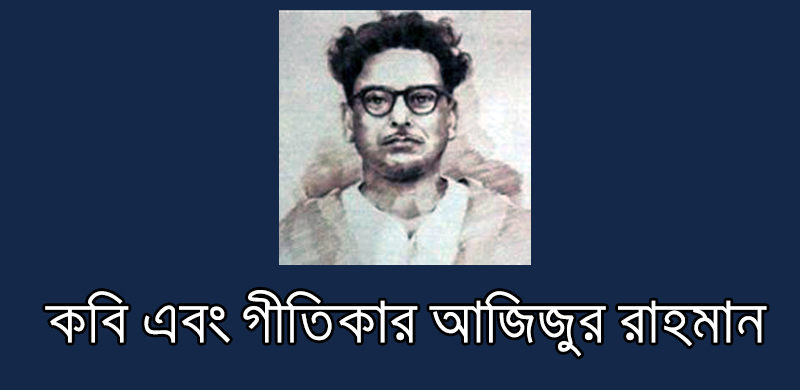
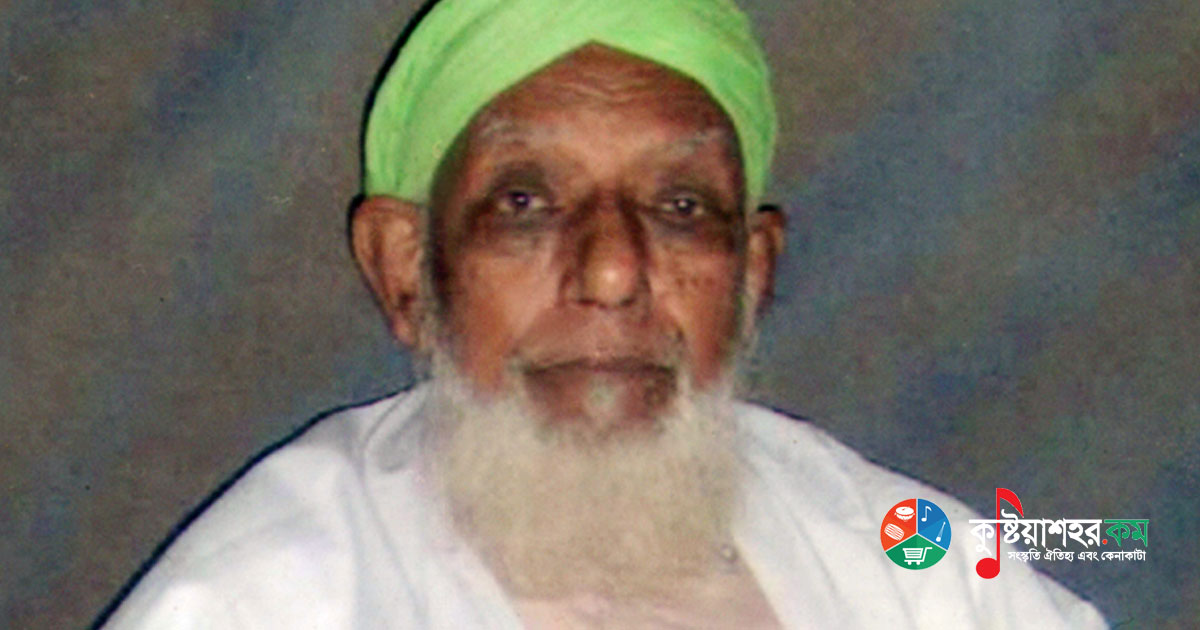
Azizur Rahman (born: October 18, 1914; died: September 12, 1978) was a Bangladeshi poet and lyricist. He received the Ekushey Padak in 1979.
Even 36 years after the death of poet Azizur Rahman, winner of the country's highest honour the 'Ekushey Padak', no step has been taken by the government to preserve and commemorate his memory. His homestead and his burial compound lie neglected. All his memorial places and works, his grave included, stand on the verge of vanishing. However, an observance committee has been formed with the chairman of Hatsh Haripur Union at its head, together with conscious citizens at all levels.
Poet Azizur Rahman wrote more than 3,000 songs. Notable among his popular songs are-
'Knowing a person in this world's theatre is a hard task, O mind',
'Never wound anyone's heart,
that wound lands in the Kaaba's house',
'With those twinkling stars of the sky I would talk, if only you would come',
'In this wayside inn of the world, alas, poet who lost the path',
'I am the princess of Rupnagar, I have brought the magic of beauty',
'Don't you realise, O mind, how it sways to the flute's melody',
'Think it over, O mind — another may be better than your own',
'Carpeted with palash, echoing with cuckoos — that is my own country, brother' and others.

Yet these popular songs today stand on the verge of being lost for lack of preservation. So the residents of the area strongly demand initiatives to preserve the poet's songs and to observe poet Azizur Rahman's birth and death anniversaries officially every year under the supervision of the district administration.
The Ekushey Padak-winning poet, lyricist and radio personality Azizur Rahman was born on 18 October 1914 in Hatsh Haripur village of Kushtia Sadar upazila. His father's name was Basir Uddin Pramanik and his mother's Saburun Nesa. The natural beauty of the Gorai river always kept him enchanted. At the age of 13, in 1927, he lost his father. Though fortune did not grant him higher education, through powerful will and insatiable curiosity he read books on many subjects at home and became a self-taught man.
Before beginning his literary career his enthusiasm lay more in acting in plays. He formed a theatre troupe. The troupe staged plays at the Thakur House at Shilaidaha. Through this work his fame and repute spread through the cultural arena of Kushtia at that time. Eminent actors of that era, including Dhiren Dutta and Upesh Thakur, took part in his troupe. In social service the poet was a devoted soul.
In 1931, at the age of 17, the poet married Fazilatun Nesa, daughter of Ejhar Sikdar of Fulhari village in Shailkupa upazila of Jhenaidah district. He was the father of 3 sons and 4 daughters.
In 1934 he built the Chand Memorial Library in Haripur village in the name of his grandfather Chand Pramanik. It was an extremely rich library. People came from far and wide in search of books at this library. His organisational ability was formidable.
At one and the same time he adorned the posts of chairman of the Kushtia Hatsh Haripur Union Board, secretary of the Kushtia (Nadia) Food Committee, chairman of the Bench and Court Division, and member of the Kushtia District Board and the District Advisory Committee. While still a student he played a role in the Muslim student movement and was nominated a member of the Provincial Muslim League. He composed more than 300 poems. Among them Naishnagari, Mahanagari, Sandhyashohor, Feriwala, Footpath, Teroash Panchash, Soarighater Sandhya, on the banks of the Buriganga, Pohela Asharh, Dhakai Rajoni, Moazzin and Paranpiya are notable. These poems were at one time regularly printed in the papers Nobojug, Naboshakti, Anandabazar, Shanibarer Chithi, Saogat, Mohammadi, Azad and Bulbul. In 1954 he first joined Dhaka Radio irregularly and later regularly. Until his death he remained in the service of Bangladesh Betar.
Going to Dhaka he became acquainted with various artists, poets and litterateurs with the help of poet Farrukh Ahmed. At this time poet Farrukh Ahmed took him to Dhaka Radio.
In 1954 poet Azizur Rahman was approved as a lyricist on Dhaka Radio. The association with radio was a significant event in poet Azizur Rahman's literary life. Though poet Azizur Rahman began his journey with poetry, his talent found its full expression in composing songs. He wrote nearly 3,000 songs, which even today are extremely popular with the people of our country.
Azizur Rahman has some identity in the field of journalism too. He was literary editor of the now-defunct daily Paygam from 1964 to 1970. He was also the editor of the juvenile monthly 'Alpani' published from Dhaka. It was poet Azizur Rahman who first took the initiative of writing the history of his birthplace Kushtia district. He worked tirelessly, travelling from village to village, and collected much valuable information on the history of Kushtia; but, most sadly, he could not complete the writing of the history of Kushtia. As a lyricist poet Azizur Rahman was a rare talent of this land. Nearly all of Dhaka's famous composers set his songs to music, and almost all renowned artists sang his songs as well. He composed countless songs for films.
He composed songs for the feature films Rajdhanir Buke, Harano Din and Aguntok among others. It was chiefly the harvest of songs that filled his barn of art.
Besides, 'Dinosorer Rajye', 'Jibjontur Katha' and 'Abahawayer Poila Ketab' are his notable translations. Among his published bibliography, notable are 'Azadir Bir Senani: Kazi Miazan of Kumarkhali', the collection of mixed songs 'Uplabbher Gan', the collection of his own patriotic songs 'Ei Mati Ei Mon', and 'Chutir Dine'. In his personal life he was an exceptional man in courtesy, gentleness and hospitality. Those who came close to him and into contact with him will admit this frankly. Collecting books was the passion of his life.
Falling ill, from 1978 the pen scarcely rose to the poet's hand again. He passed his days lying alone in bed. During that time, lying in bed, he wrote 'In this wayside inn of the world, alas, poet who lost the path; on water-writings and shifting sands the picture was drawn in vain'. This was the poet's last written song. Medical treatment too was not his lot, for want of money.
On 9 September 1978 poet Azizur Rahman fell gravely ill. At that time he was admitted to the then PG Hospital in Dhaka. Three days later, on 12 September, he breathed his last.
Though the poet received hardly any honour in his lifetime, in 1979 he was awarded the posthumous state honour 'Ekushey Padak'. But it is extremely sad that even on the poet's death anniversary hardly any programme catches the eye anywhere.
Our demand: today poet Azizur Rahman is no more. This many-splendoured, work-filled, idealistic and courageous man is one of the shelters of inspiration on the path we walk. We remember him, and with that we make a humble plea to the government and to the community of poets, artists and intellectuals to take the necessary efforts and measures to keep his immense memory everlasting. For carrying and nurturing his bright legacy with due dignity is our national and moral duty.