বাংলা
 English
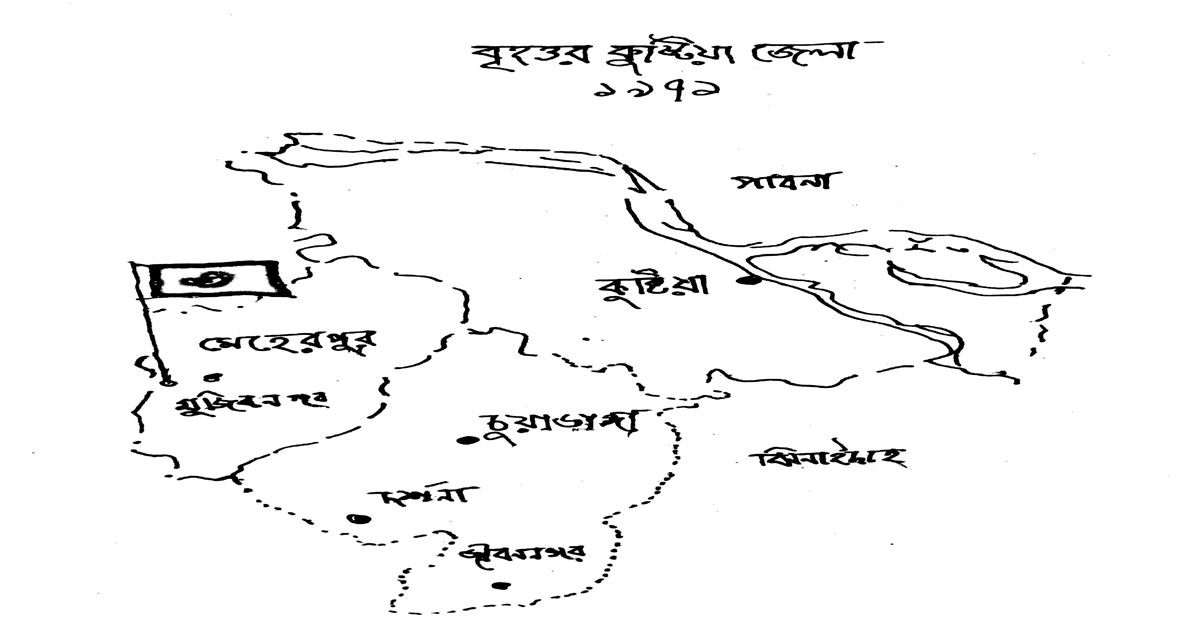
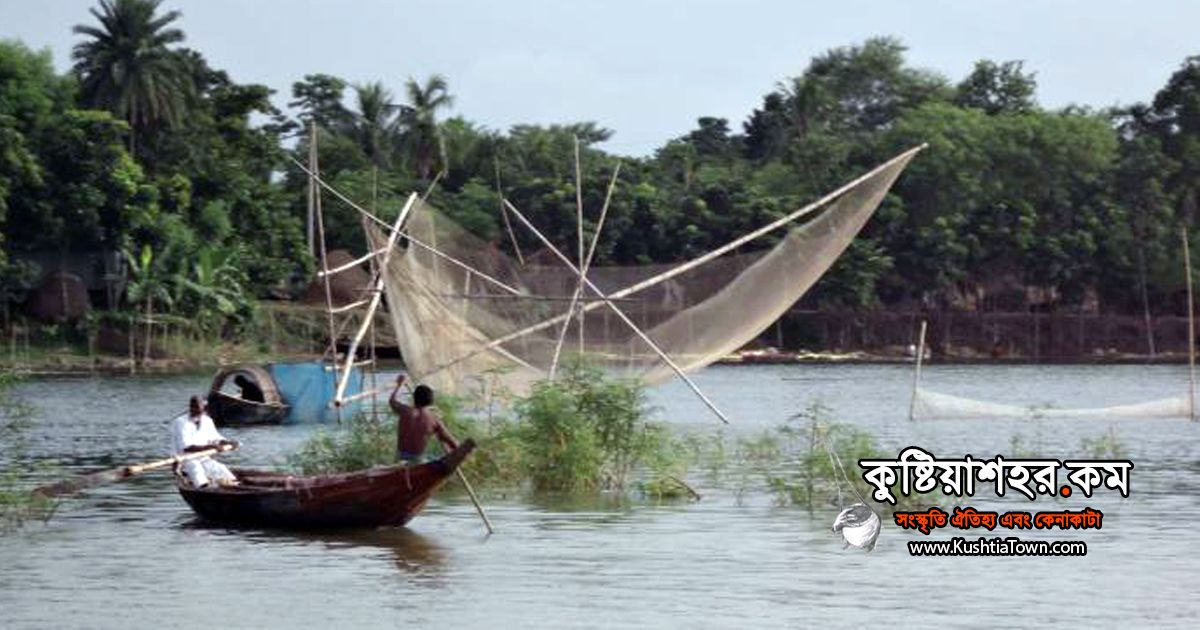
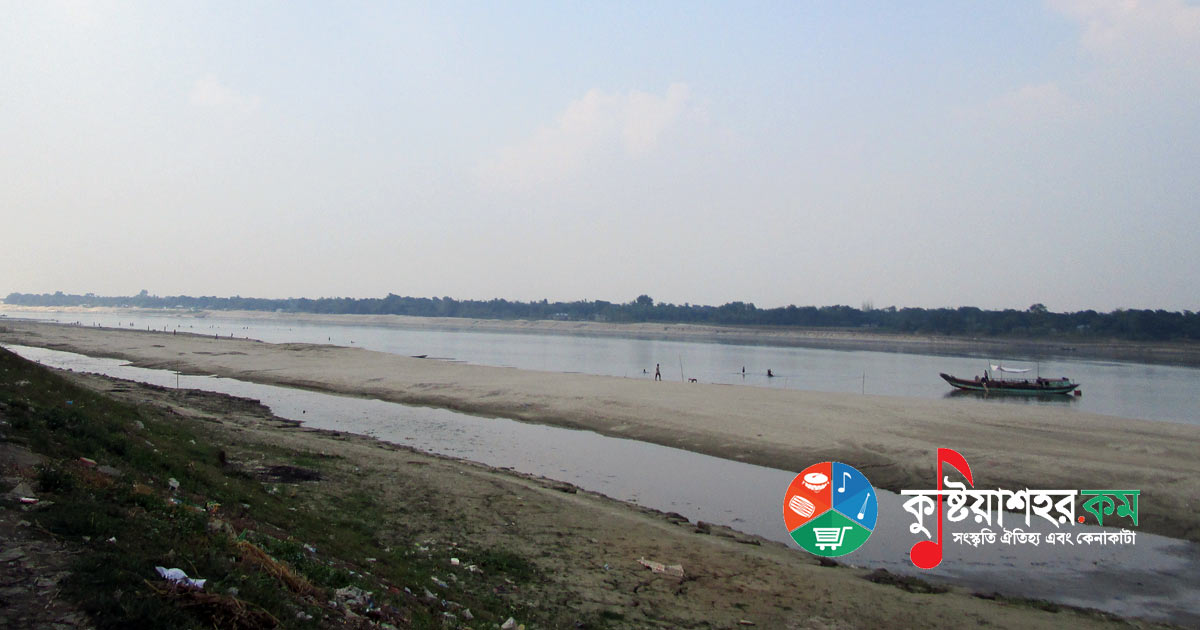
Kushtia was once a cluster of islands, covered with dense vegetation — especially babla (babul) trees. Crows nested in those trees in great numbers, and so in the distant past the region was known as "Kakdweep," the island of crows. Many hold that the name Kushtia comes from kushta (jute). Before the Partition of the country, greater Kushtia was known as Nadia; because of administrative difficulties, the then District Magistrate Syed Murtaza Ali renamed it Kushtia in early 1948.
Different eminent people, at different times, have offered different theories about how Kushtia district got its name. These remain mere suppositions, for no stone-carved evidence connects the district's history with the ancient period. Still, old Kushtia under Kushtia Sadar thana (today's Hatsh Haripur union) and very old maps show that ancient Kushtia stood north of the then course of the Padma, surrounded on all sides by rivers. During the reign of Emperor Shah Jahan this was the town of Kushtia. According to some, Syed Murtaza Ali held that a superior variety of jute was cultivated here on a large scale.
The people of Kushtia called jute koshta in the local dialect; from kushta to kuste, and from there came the name Kushtia. The poet Golam Mostofa held that the name derives from a Dravidian word, while some others trace it to the French kushtah or costa. The district was named Kushtia in early 1948: because of administrative difficulties, the then District Magistrate (DM) Syed Murtaza Ali changed the name Nadia to Kushtia, after the name of the district headquarters. Mughal rule was firmly established in Kushtia in the first half of the sixteenth century, and in the Mughal period Kushtia fell under the sarkars of Fatehabad and Bhushana.
From 1717 to 1757 Kushtia was under the rule of Nawab Murshid Quli Khan and Nawab Siraj-ud-Daulah. In the Battle of Plassey the Nadia raj family took up a side, and it was at the Amjupi kuthi (later the Neel kuthi) that Mir Jafar and the other conspirators held their secret meetings with Robert Clive. Nadia district was formed for the first time in 1887; its last collector was Abu Mohammad Nasir Uddin. Under the East India Company (1823–1828), except for part of Meherpur, Kushtia belonged to Jessore district, and shortly before 1828 Kushtia belonged, for a few days only, to Rajshahi district.
In 1857 the Kumarkhali subdivision was formed with the thanas of Pangsha, Baliakandi, Kumarkhali and Khoksa. The Kumarkhali area was then under Pabna district, and Kumarkhali had a munsifi court. In 1863 Kushtia thana, and in 1871 Kumarkhali thana, were included in Nadia district as the Kushtia subdivision.