বাংলা
 English
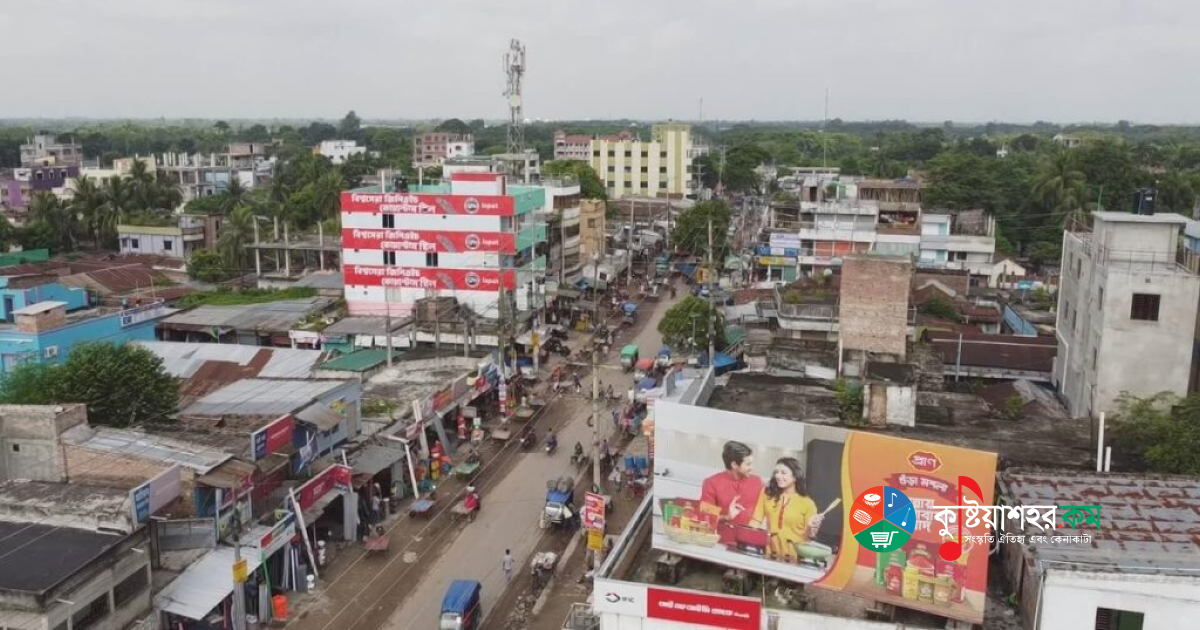
Allar Darga is a well-known locality of Daulatpur Upazila in Kushtia. At the very mention of the name, many naturally wonder—is there any shrine or darga here? In reality, there is at present no large shrine or darga matching the name. Yet behind the name Allar Darga lies a local history, the many tales told about the ascetic Alam Fakir, and a long-standing folk memory.
According to the account commonly told locally, some two and a half hundred years ago, during British rule, a family came from the Murshidabad region of India and began living on a few taluk of land in the Mirpur area of Pierpur Union in the then Daulatpur Upazila of the Kushtia region. The head of that family was Chhuti Mandal. His five sons were Milan, Alam, Chand, Subad and Fatab Mandal.
Of these five brothers, Alam Mandal was devout, fond of solitude and devoted to spiritual practice. In later years he came to be known among the local people as Alam Fakir. It was around his life and spiritual practice that a place in time came to be called 'Alam's Darga', which later changed and became known as Allar Darga, so the local account goes.
Alam Fakir's Place of Worship
According to the accounts of local elders, Alam Fakir built a place of worship or meditation on the bank of the Ghola Daha river—in the present-day riverside area of the Hisna river—in a quiet and secluded setting. A mosque now stands at that spot.
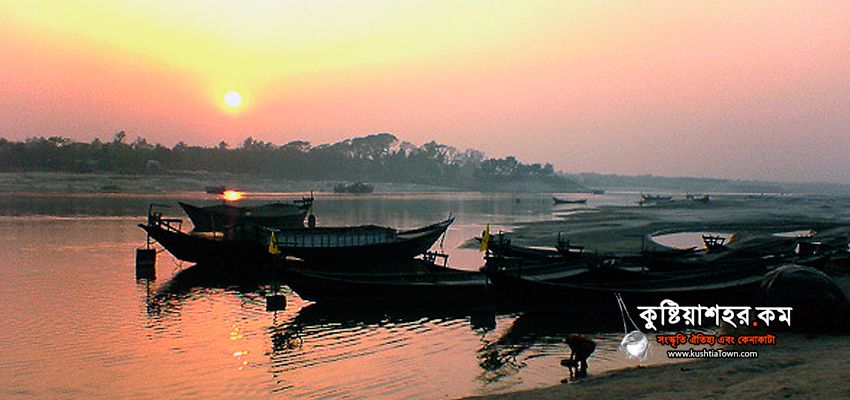
In those days this was a river-centred settlement. Travel and the transport of goods by river route was an important means of communication. Various memories of the Ghola Daha river are also preserved in local history.
One common notion is that, because of its connection with the Padma, the river's water was often muddy, and from this the river may have taken the name 'Ghola Daha'. Later the river became known as the Hisna River.
The Hisna River and Sonaikundi
At one time the Hisna River was a flowing and important waterway. Because of its connection with the Padma, the river was navigable for boats. The river route played an important role in the travel of local people and in the transport of various goods.
On the bank of this river grew up a settlement named Sonaikundi. According to local accounts, because of the river's beauty and its transport convenience, the English of that time built a trading kuthi on the bank of the Hisna River in the Sonaikundi area.
However, much of this information rests on local history and folk memory. If more reliable official or historical documents on the matter come to light, this history can be reconstructed more clearly.
From 'Alam's Darga' to 'Allar Darga'
Gradually, dwellings, shops and various structures began to grow up around Alam Fakir's place of worship. Among the local people the place came to be known as 'Alam's Darga'.
In time the name 'Alam's Darga' became the identity of the whole area. But according to the popular tale, Alam Fakir himself did not like this.
He felt that no place should become known by his personal name. His belief was—the owner of everything in this world is Almighty Allah. So he requested the local people to name the area after Almighty Allah instead of his own name.
According to the common account, after that request of his the name 'Alam's Darga' was changed and became known as 'Allar Darga'.
This, according to local folk memory, is the origin of today's name Allar Darga.
Alam Fakir's Last Hours at the Krishnanagar Court
One of the most talked-about tales told locally about Alam Fakir centres on his death.
According to the common account, Alam Fakir once went as a witness in a case to the Krishnanagar court in India of that time. As to the time of giving testimony, he told the judge that his testimony had to be taken before noon.
When the judge asked why, Alam Fakir is said to have replied that after noon he would no longer remain in this world.
According to the tale, the judge, giving little weight to his statement, arranged for the testimony to be taken after noon in order to verify the matter. It is locally said that afterwards Alam Fakir died on the veranda of the court.
The accounts of local elders say that his body was later buried in the family graveyard at the Harabhanga Mollapara area of the Kushtia region.
The Folk Tale of the Burial at Harabhanga
A striking folk tale is also told about Alam Fakir's burial.
It is heard from local elders that after Alam Fakir's body was brought to Harabhanga village by bullock cart, the cart would move no further towards a particular spot. Locals also say that when an attempt was made to force it another way a foul smell was noticed, while towards that particular direction a fragrance spread.
On the basis of this folk tale it is believed that his body was buried north of the then Ichamati river. Although the river no longer exists in its earlier form, local people are said to be preserving the memory of his burial place to this day.
Such accounts are essentially tales current by word of mouth; authentic documents are needed to verify their historical truth.
The Tale of the Ghosh's Three Taka Debt
Another story is told locally about Alam Fakir. It is said that Alam Fakir was owed three taka by a Ghosh.
The tale mentions that one day Alam Fakir met the Ghosh in the Hawakhali area of Bheramara Upazila. When the Ghosh mentioned the money he was owed, Alam Fakir asked him to go to his own house and collect the money from his wife. He is also said to have told him that the money was kept on a particular page of the Holy Quran.
When the Ghosh went home and reported the matter, the family members were astonished. The popular tale says that money was indeed found on that particular page of the Holy Quran.
Another part of the tale says that Alam Fakir had forbidden the Ghosh to tell anyone about their meeting. But later, under pressure from his family, the Ghosh disclosed the matter, and thereafter he fell ill and died, so it is said among the people.
This event too should be regarded as part of local folk belief.
Popular Tales of the Cattle and the Milk
Several other stories are told locally about Alam Fakir's lifetime.
It is said he had many cattle. When a farmer asked for bullocks for ploughing, he would first learn how much land was to be tilled. According to the popular tale, once the set amount of land had been ploughed, the cattle would go no further.
Similarly, when someone asked for milk from a milch cow, he would be told how much milk was needed. According to folk accounts, once the set quantity of milk had been drawn, the cow would give no more.
These tales have further strengthened among the local people the notion of Alam Fakir's spiritual power and miracles.
The Allar Darga Jame Mosque
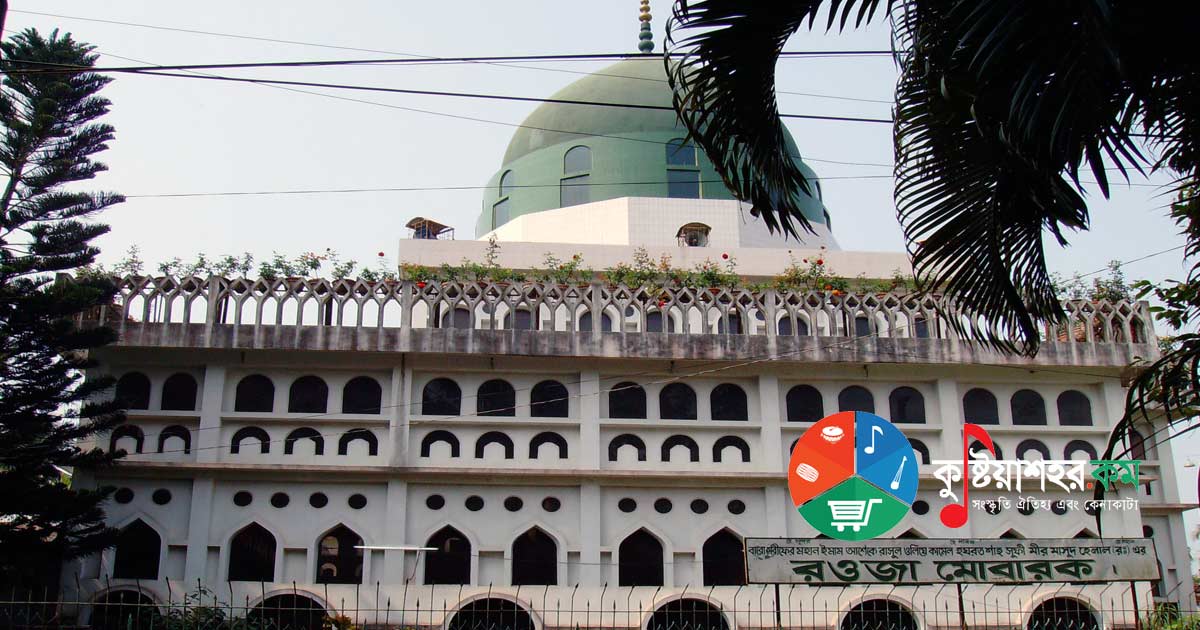
Local history records that after the Partition, during the Pakistan period, a mosque with a tin roof was built on the site of Alam Fakir's place of worship. The mosque was later named the Allar Darga Jame Mosque.
Locals believe the present mosque carries on the continuity of that old memory. Thus the name Allar Darga is not merely a geographical identity; bound up with it is the long-standing local memory and faith that grew around an ascetic.
Votive Offerings and Folk Belief
After Alam Fakir's death, various beliefs arose among people about his spiritual power. It is locally known that people from far and wide also came to the place associated with his memory to make votive offerings.
Some made offerings there hoping for recovery from illness, some in the expectation that a family wish would be fulfilled. Locals also speak of people arriving with goats, roosters and other offerings.
Around these beliefs, the place has long remained a part of local culture and folk tradition.
The Historical Significance of the Name Allar Darga
The name of a place often carries more than a geographical identity; bound up with it are people's lives, culture, beliefs and the memories of many generations. Allar Darga is one such example.
According to the locally told history, the name 'Alam's Darga' first became current around the place of worship of the ascetic Alam Fakir. Later, out of his wish that the area be identified not by his own name but by the name of Allah, the name 'Allar Darga' came into use.
To this day this locality of Daulatpur is known by that name. Although the historical authenticity of all the tales told about Alam Fakir cannot be verified, they are an important part of the local people's oral history, folk belief and cultural memory.
So in tracing the history of Allar Darga one must consider not only the origin of a name, but also the whole stream of rivers, settlements, ascetics, religious structures and the long memories of the people attached to it.
Sources: The Kushtia Report Twentyfour Dot Com; the accounts of local elders and information current in folk memory.