বাংলা
 English
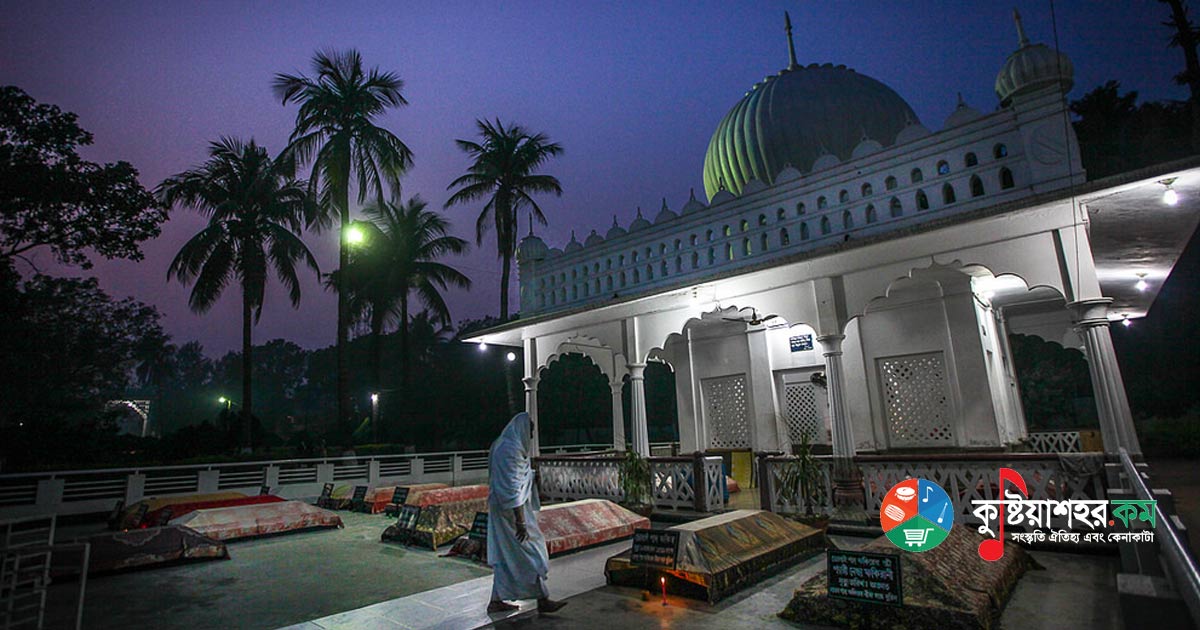
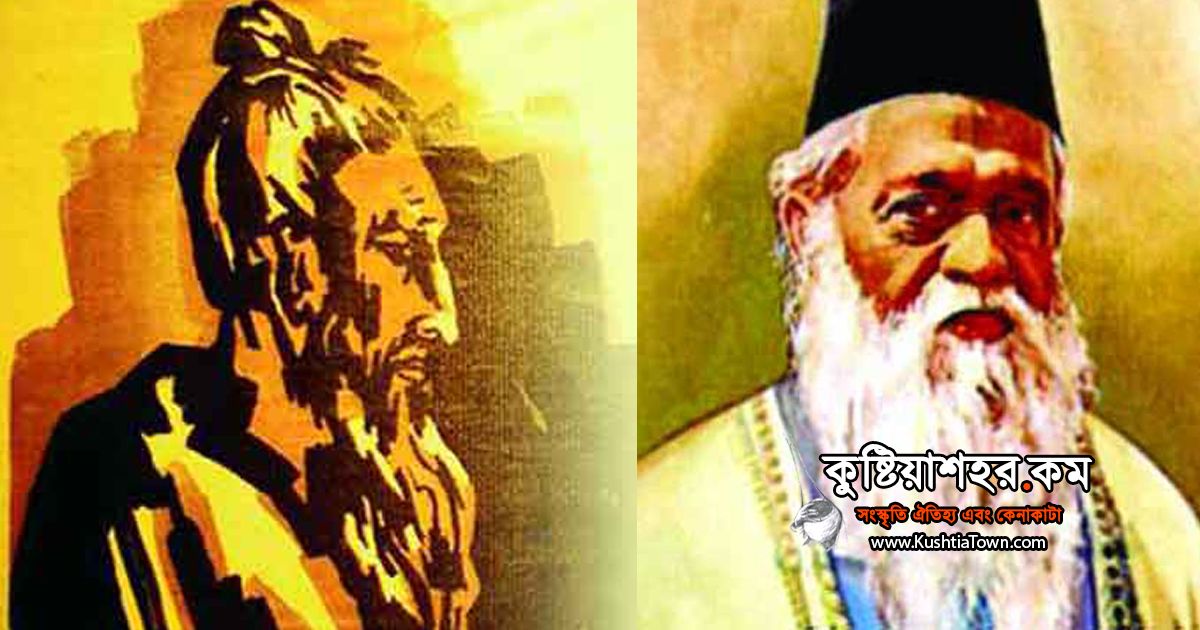
Who is Lalon? This question is very old, yet it is alive even today. To the people of the world, Fakir Lalon Sai is a mystery-filled treasury of knowledge. To all he is the undisputed legendary soul. His sayings have brought increase and wealth to our humanity and our culture. In the matter of his mysterious birth, his lineage or his caste, Saiji has always kept himself shrouded within an aura of mystery.
He never disclosed his communal identity, even to his dearest disciples or to his foster parents. From the Hitakari periodical we learn that he gave up his body at the age of 116 years. By that reckoning, Saiji's birth was in 1774 AD; even now this is the accepted, fact-based account. Saiji forever avoided a religious identity. That is why Saiji said: 'All people ask what caste Lalon has in this world; Lalon says, I have not seen the form of caste with these eyes,' or 'All say, Lalon Fakir is the child of which caste - to whom shall I tell it, no direction is found,' or 'All say, is Lalon Fakir a Hindu or a yavana; Lalon says, I do not know my own search myself.' Casting his gaze on the hollow emptiness of caste-distinction, Saiji said of caste, with satire: 'Lalon says, if it were in my hand, I would burn caste down with fire.'
Saiji was at once a philosopher, a lyricist, a composer and a mystic sage. That is why Saiji's sayings are at once sadhana-music, philosophy-talk and art-embellished poetic utterance. The construction of the sentences and the modernity of the words, the heart-stealing bhava and the blend of melody - all together, by the judgement of time, Lalon's songs are a unique contribution to Bengali literature. Saiji never had any opportunity of formal education. Yet the beauty of the sayings of his music, the expanse of its melody, the depth of its bhava and the skill of its art fascinate people of every age. The modernity of Saiji's sayings, their melodic sweetness and simplicity attract us even today like a magnet. In truth, Saiji was self-taught. That is why Saiji said: 'To whom comes the ladunni knowledge, all distinctions are known to him.'
In Saiji's sayings there is the identification of communalism, caste-hatred and untouchability - all these contemporary problems - together with hints at their solutions. Through this endeavour, Saiji gave an identity of social awareness, humanism and progressive outlook; determining its true character is especially important and valuable. In the age of the rise of communalism and fundamentalism, in the age of the disgrace of humanity's dignity, in the hostile age of terror and anarchy, Saiji's sayings can be an art of protest, an inspiration of peace and good sense; the supreme sustenance for bringing back to man his lost faith. Saiji was the way-shower of humanity's liberation. That is why Saiji said: 'When will such a human society be created, that day Hindu, Muslim, Buddhist, Christian - no caste or creed shall remain.'
Saiji's life history proves just this: despite being very ordinary, with courage, faith and devotion a person can reject the worn-out, immoral, exploitative customs of society. In his sayings, such matters as the synthesis of religions, harmony among communities, the sense of human glory, non-communal consciousness, ritual-bound religious ceremonies, hatred of caste-oppression and caste-distinction, and the wish to end social injustice and inequality are clearly reflected. Essentially, his revolt was against conventional obedience, heartless scriptural formalism and the religion of society. Through his sayings one finds Saiji's generous outlook and his humanist mind. Saiji expressed his sincere feeling and faith openly in his sayings. That is why, even after so long, Lalon is beloved and popular. That is why Saiji said: 'Sai created forms without number; I hear there is nothing higher than man; the gods and deities worship, praying to take birth as a human being.'
It was not only of religion and philosophy that Saiji had knowledge. The compass of his knowledge embraced the society of his time, mathematics, geography, astronomy and other subjects. Making mathematics his subject, he explained his theoretical conceptions. For a village common man of the eighteenth century to compose sayings drawing upon the matters of mathematics in this way is altogether impossible; and his grasp of the importance of the mother tongue in education is truly beyond imagination. He had ample knowledge that the earth is round and that the earth revolves around the sun. In truth, Saiji was divinely wise. That is why Saiji said: 'Take even a fraction of learning from an awakened guru; in the mathematics of the seed fullness will come, and in it you will find protection,' or 'Learn Bengali first, O mind; keep English in a separate part of your mind,' or 'I hear the earth is round, turning day and night of itself; that is why day and night come to be, and that is why the wise are so called.'
The religion and philosophy that Saiji preached to his devotee followers is a guru-centred and body-centred sadhana. The root of this religion is believing in the guru. The guru's word is the mightiest, above all outer knowledge. The guru's word itself is the sadhana and worship of the disciple and devotee. In the market of bhava, man, worshipping as man and seeking the golden man within himself, brings all sadhana to attainment. That is why Saiji said: 'He who keeps faith in the guru in this world, all his sadhana comes to attainment,' or 'Worship man and you will become the golden man.'
This body-vessel is the preservation of the atoms of the universe. The body is made of the very substances by which the universe is made. That is to say, both this human body and the universe are made of earth, water, fire, air and ether - kshiti, ap, teja, marut and byom. The dwelling of the body to which Saiji pointed is man's heart, the kalb: in this kalb dwells Allah or the Creator. 'Kalbil muminin arshullah' - that is, the heart of the believer is the throne of Allah. That is why Saiji said: 'How many days until I meet the man of my mind,' or 'He does not take news of his own house; you will see with ease where Sai's baramkhana is.'
Saiji has sayings on Allah, the Prophet, Hari, Jesus and peace, and again he wished that justice be established in society. That man be freed from the whirl of falsehood. That hypocrisy and devilry depart from the world's society, and the earth remain filled with peace. That a beautiful society be created and man find comfort. Man is quite unknown to himself. Let the outer man and the inner man become one. Creating strings of words, ceaselessly, on man's this-side and that-side, on birth and death - truths - he joined melody to them. The five pillars of Saiji's religion are: speaking the truth, doing good deeds, having a good purpose, loving man, and being kind to living beings. Saiji was the arranger of the human soul's liberation. On 17 October 1890 AD, on a Friday before dawn, Saiji gave up his body while saying the saying 'Forgive, forgive, forgive my offences.' For this brief span of life, let us all enshrine in our hearts the wish that everyone be happy, and reflect it in our lives ...
'Speak the truth, walk the good path, O my mind; without knowing the truth and the good path you will not behold the human being.'
Information and gratitude: Fakir M Rezaul Karim, Founder President, Lalon Academy, Rangpur.