বাংলা
 English
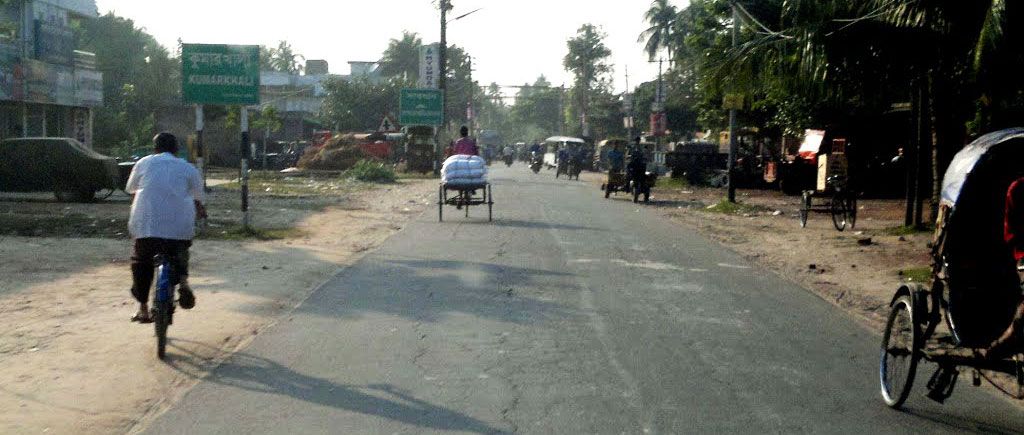
Kumarkhali History
The ancient settlement of Kumarkhali. Its history and heritage are richer and older than Kushtia's. That is why in the early days of British rule Kushtia was introduced as “Kumarkhali-Kushtia”. Baul samrat Lalon Shah, the saint Kangal Harinath, mujahid leader Kazi Miazan, the revolutionary hero Bagha Jatin, the man of letters Mir Mosharraf Hossain and the pioneer of the tenants' movement Shamsuddin Ahmad are among the illustrious sons of Kumarkhali thana.
In the time of Chaitanya Dev, Kumarkhali was known as Tulsi Gram. Nawab Murshid Quli Khan appointed Komor Kuli Khan as collector to collect the revenue of this region, and from his name the regional headquarters came to be called “Kumarkhali”. The present ‘Kumarkhali’ is the evolved form of the former ‘Komorkhali’.
The extensive area of Kumarkhali once lay within riverbeds. The names of the villages containing ‘Charaikol’ bear witness to that. When a river shifts away, what remain are char or chara and kol. On lands enclosed by these chara and kol grew the villages of Putia-Charaikol, Hayatapara Charaikol, Shibrampur-Charaikol, Puratan Charaikol and the rest.
The small, water-filled beels look like tiny lakes and show that these were once river-abandoned bends. Some of Kumarkhali's beels are named — the beel of Karatkandi, the beel of Jiala, the beel of Chandpur, the beel of Bahalbaria, the beel of Sonapatila, the beel of Dalua and the beel of Banshara.
Earlier, Kumarkhali's thana office was at Bhaluka village on the southern bank of the Gorai river. Later the thana moved from Bhaluka up to Kumarkhali. Even today people call Bhaluka village Thana Bhaluka. In 1828, within the bounds of Pabna district, there were two thanas, at Kushtia and Khoksa. One outpost was at Charaikol. At present, under Kumarkhali thana there are outposts at Panti and Shilaidaha. In 1857 a subdivision was created at Kumarkhali comprising the thanas of Kumarkhali, Khoksa, Pangsha and Baliakandi. It was a subdivision of Pabna district. Until not long ago the ruins of the subdivision jail could be seen here. In 1871 Kumarkhali passed from Pabna into the bounds of Nadia and lost its status as a subdivision.
Kumarkhali is the finest handloom-cloth haat in Bangladesh. Thousands of weavers and moneylenders come to trade at the haat. Goods worth lakhs of taka are sold at every haat. The local artisans weave various kinds of sarees and chhit cloth on their khatha-khati looms. Nakshi-patterned coloured shawls are produced in many factories of the town.
Sarees, lungis and the like are also made in the BSCIC mill. The home of Deputy Magistrate Mohinimohan Chakraborty, founder of Bengal's first cloth mill, Mohini Mills (established in 1907), is at Elangi Mohalla in the municipal area. During British rule the fame of the silk and tassar cloth made here spread far and wide.
In 1856 Mathuranath Kundu bought an indigo kuthi and established a high school. It was founded a year before the University of Calcutta. This thana has many high schools together with a college. The three junior madrasas of Tebaria, Panti and Dansar have long since disappeared. At present there are two Alia madrasas, at Kumarkhali and Banshgram. The pro-poor library of the municipal area, the Unnayan Majlish and the Maharshi Pathagar of Shilaidaha have at various times satisfied the thirst for knowledge of the students.
Grambarta Prakashika, Shaiba, Kohinoor and Bangiya Tilismasamaj are some of Kumarkhali's periodicals. In the field of journalism, the names of Kangal Harinath, Prafullakumar Sarkar, Mir Mosharraf, Narayankrishna Majumdar, the kabiraj Atiyar Rasul Siddiqi and Amzad Hossain are particularly noteworthy.
‘Anjuman-e-Ittefaq Islam’ (1904), founded by Syed Abdul Kuddus Rumi of Khoksa, was one of the principal social-reform organisations of Nadia district. Though its head office was at Durgapur, it had branches in many places. The Anjuman's meetings and conferences were held in the Mias' vast mango orchard, so the place is still known as “Shobar Bagan” (the garden of gatherings). On the occasion of a conference, the pir of Furfura, Abubakar Siddiqi, the poet Mozzammel Haque of Santipur and the district magistrate of Nadia came to Durgapur. Talowa's ‘Anjuman-e-Tarraqiye Islam’ is another organisation devoted to public welfare.
The people of Kumarkhali were involved in almost every movement. Kazi Miazan of Durgapur was a leading leader of the mujahid movement. In the trial by court martial he was sentenced to imprisonment for life and his property was confiscated. There were a few mujahids in the villages of Gosaijengi and Dhokrakol.
There were indigo kuthis in villages such as Kumarkhali, Shilaidaha and Dhokrakol. The people of the Kumarkhali area made a notable contribution to the rent-refusal and anti-indigo-cultivation movements. The leader of the movement was Parysundari Dasi, the zamindar of Amlar. Her associates were Shah Golam Azam of Saontar and Sheikh Amir Ali of Shalghar Madhua. In the revolutionary movement the name of Jatindranath Mukhopadhyay (Bagha Jatin) of Koya, leader of the Jugantar party, is remembered with reverence. He was martyred in battle with the British force at Balasore in Odisha.
The revolutionary Birendranath Bandyopadhyay was deported in the Dakshineswar bomb case. Ghora Maitreya, Annada Roy and Nibaran Roy were also members of the revolutionary party. Shamsuddin Ahmad, an influential member of the Haque ministry, was the life and soul of the Bengal krishapraja movement. As secretary of the Praja Samiti and as a peasant leader he struggled all his life for the welfare of the oppressed cultivators. Shamsuddin's elder brother, the struggling alim Moulvi Afsar Uddin, was the leader of the anti-Baul movement. Among his colleagues the chief ones were Munshee Emdad Ali, Munshi Ahmad Ali, Khandkar Khorsed Ali and Kho. Abdus Sattar.
The Kuwatul Islam madrasa and mosque of Kushtia, the Allar Darga mosque and the Baniapara High School are evidence of Moulvi sahib's social service.
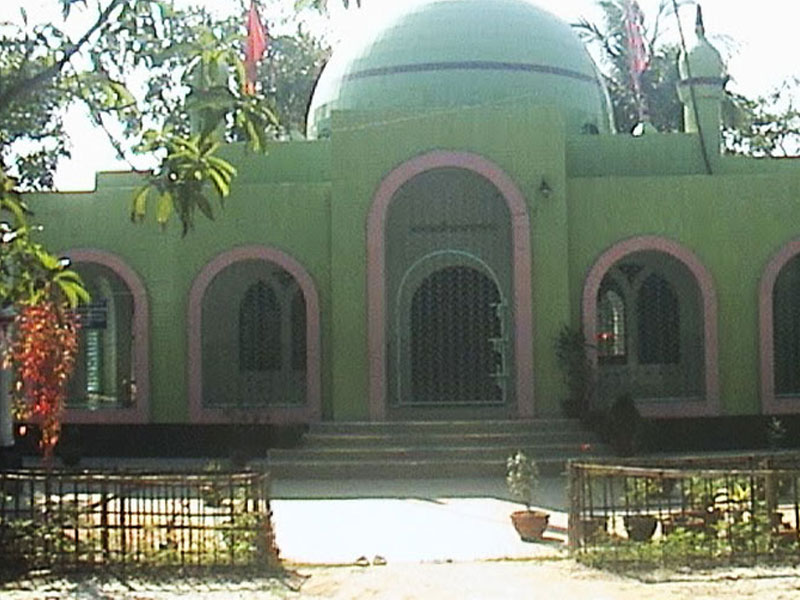
Among the Sufi saints, holy men and dervishes who spread the light of Islam in the Kumarkhali region were a few such as Mah Sonabandhu, Muluk Khorsed, Buro Dewan Chand Ali Mah, Shah Darbesh, Mir Ruhullah, Mah Aulia, Panchu Khondkar and Karim Shah. Their mazars and shrines exist in various places.
Mir Mosharraf Hossain, Jaladhar Sen, Akshaykumar Maitreya, Shibchandra Bidyarnab, Gagan Harkara, Basantakumar Pal, Haripad Gangopadhyay, Prafullakumar Sarkar, Bholanath Majumdar, Sachindranath Adhikari, Khondkar Azharul Islam, Akbar Hossain and other poets and writers were residents of Kumarkhali thana.
National Professor Dr. Kazi Motahar Hossain was born at Laxmipur, his maternal home. He received his primary education there too. The renowned thinker Kazi Abdul Wadud was also born at his maternal home, Hogla village. He studied at Jagannathpur School.
Bamacharan Karmakar and Masud Karim are two distinguished songwriters. Bamacharan was associated with Calcutta Radio. Among the other artists, Nirmalkumar Majumdar was a radio artist. Amin Shah of Mazgram, Abbas Mia of Kalyanpur and Ata Khan of Bagulat were popular kabiyals. Golam Rabbani of Batikamara, a village poet, is known as the composer of ‘Pother Sahitya’ (the literature of the road).
Kumarkhali's eminent persons include: Kazi Golam Rasul alias Rati Mia, Rai Bahadur Biswambhar Roy, Syed Abul Fazal, Munshi Bilayet Hossain, Surendranath Sarkar, Munshi Nuruddin Ahmad, Jogendranath Sarkar, Purnachandra Lahiri, Khan Bahadur Khabir Uddin, Khan Saheb Dad Ali, the zamindar Abdul Gani, Rabindranath Saha, Dr. Rebati Mohan Saha, Tofazzel Hossain, the kabiraj Golam Sarwar and Golam Kibria, among others.
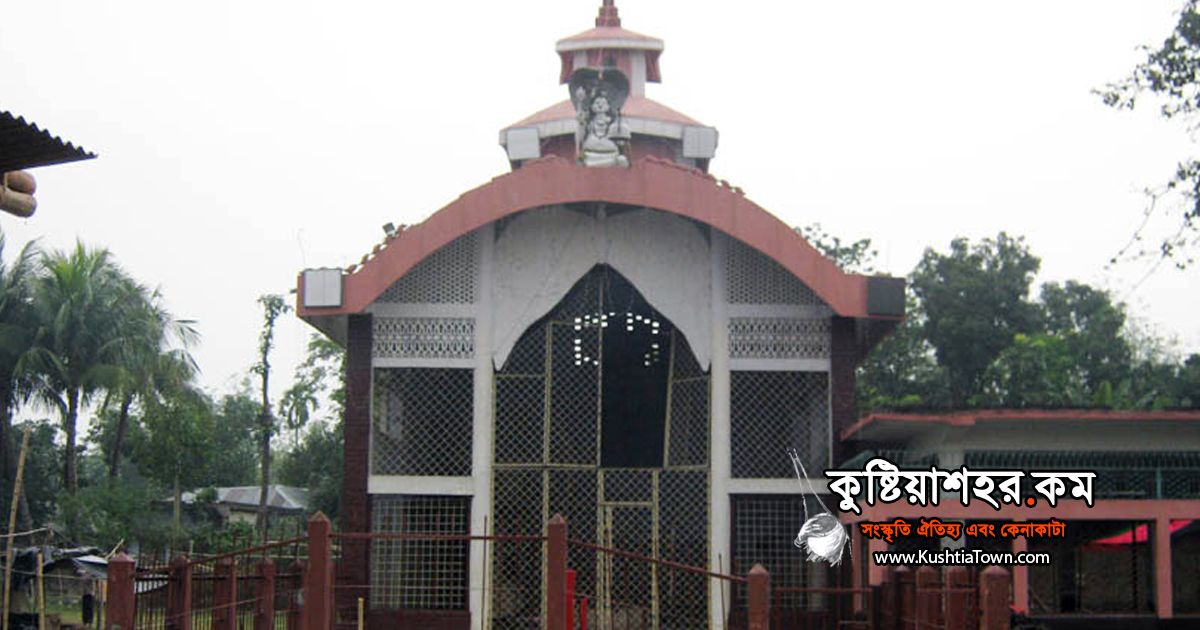
In Baniakandi there is a mosque of the Shahi era. At Khorsedpur there are the mazar of Muluk Khorsed and the temple of Gopinath Dev. Rani Bhabani, the zamindar of Natore, had the temple, the monastery and the tank built. The poet Rabindranath had the dervish's mazar paved and arranged for its upkeep. He also had Lalon's tomb built in the village of Cheuria.
A good number of people of the Sardar community live in and around Kumarkhali. Their elder men are said to have been followers of Buddhism. The graveyard near the railway station suggests the Christians who once lived there.
Source:
Kushtia: History and Heritage
Abul Ahsan Chowdhury
Kushtia Sahitya Parishad