বাংলা
 English
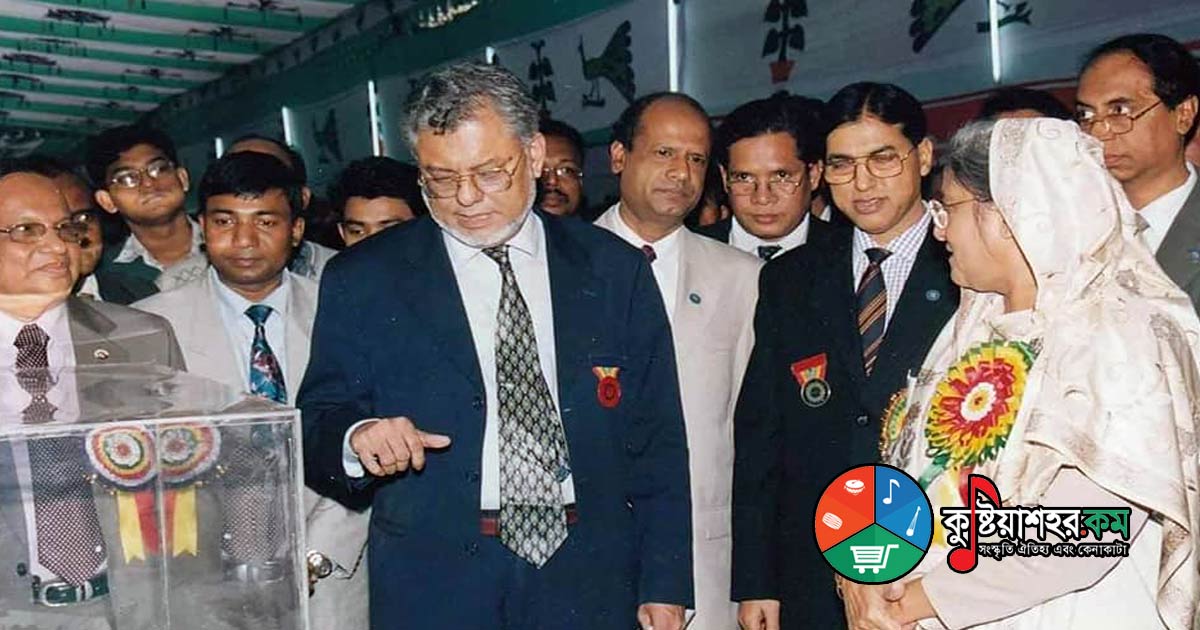
It was engineer Kamrul Islam Siddiqui - noted social worker, Liberation War organizer, internationally renowned engineer and founder of the Local Government Engineering Department (LGED) - who showed the people of Kushtia the dream of building a tourist city.
This great man of talent, the dream-man of Kushtia's people, once said: to make Kushtia town a tourist city, we need two bridges, embankments to protect the town, parks, ornamental works for the town's beauty, footpaths, and a resort. And two unions must be connected with Kushtia town. It was this man of talent who first showed the dream of building two bridges over the Gorai river - one of them a connecting bridge between Kushtia and Haripur union, and the other between Kushtia and Koya union. He wanted to make Kushtia town a role model as the most beautiful district of Bangladesh.
The one who showed Kushtia's people the dream of a tourist city - bridges over the Gorai, embankments to protect the town, parks, ornamental works for the town's beauty, footpaths, a resort and so on. He asked the late JSD leader and popular chairman of Haripur union, the martyred M Mahmud Hossain Sachchu, to demand the construction of a Haripur-Kushtia connecting bridge for the people through a movement. Then, at Chairman Mahmud Hossain Sachchu's direction, the people of Haripur threw themselves into the movement demanding the bridge. Sad but true, on 11 July 2000 an armed gang shot the popular chairman of Hatsh Haripur union of Kushtia Sadar upazila, Mahmud Hossain Sachchu. Critically wounded, he was admitted to Bangabandhu Medical Hospital. He died on 14 July. Later, regarding the installation of the long-demanded Haripur-Kushtia connecting bridge, during Kamrul Islam Siddiqui's tenure as chief engineer of LGED a team of experts carried out site visits and feasibility studies under his supervision. These things were related by Abdus Sattar, Abdus Sabur, Ferdous and several other elderly well-wishers of Haripur union, very close relatives of engineer Kamrul Islam Siddiqui.
According to local people, and true in the present context as well, Member of Parliament Mahabub-ul Alam Hanif also has a share of the credit behind the Kushtia-Haripur bridge. The people of Hatsh Haripur struggled for years for the bridge's construction; during the BNP era, in the face of people's demands, Alhaj Principal Sohrab Uddin, a popular leader of Kushtia district BNP, laid the foundation stone for a bridge over the Gorai river, but he could not turn it into reality. Later, Mahabub-ul Alam Hanif, joint general secretary of the Bangladesh Awami League and Member of Parliament for the Kushtia-3 constituency, took up the heartfelt demand of the people of Hatsh Haripur and, promising the bridge's construction, said that it would be built during the Awami League government's tenure and that the people of Haripur would walk across it into Kushtia town. That promise has today been fulfilled. On 24 March 2017, under the supervision of the Local Government Engineering Department Kushtia, Local Government Division Minister Engineer Khandker Mosharraf Hossain inaugurated the 504.55-metre Gorai bridge over the Gorai river. Today's Sheikh Russel Haripur-Kushtia connecting bridge has been built over the Gorai. Meanwhile, river training carried out alongside the bridge cost Tk 99,249,233, and an approach road was built at a cost of Tk 52,832,147. Under the overall supervision of LGED Kushtia's executive engineer Md. Sohrab Ali, M/s Mir Akhtar Hossain Ltd. began work on the Kushtia-Haripur connecting bridge on 12 December 2013 and completed it on 30 December 2016. Naming the bridge caused various complications. Many claimed, and submitted memoranda, that the bridge should be named the "Poet Azizur Rahman" bridge. In the end, overcoming all the complications, it was named the Sheikh Russel bridge. According to LGED sources, counted as an important item of the upazila road development project, this bridge is 504 metres (including the tunnel path) long and 6.1 metres wide. Footpaths of 3 feet on each side - 6 feet in total - have been built on both sides of the bridge. Connecting roads of 200 metres on the Kushtia side and 196 metres on the Haripur side have been built. There are 12 spans of 42.05 metres each, with 4 girders per span. All told, building the bridge costs about Tk 86 crore.
Regarding the long-demanded installation of this Haripur-Kushtia connecting bridge: during his tenure as chief engineer of LGED, the site visits by a team of experts and the feasibility studies were carried out under whose supervision? He was the noted social worker, Liberation War organizer and internationally renowned engineer Kamrul Islam Siddiqui.
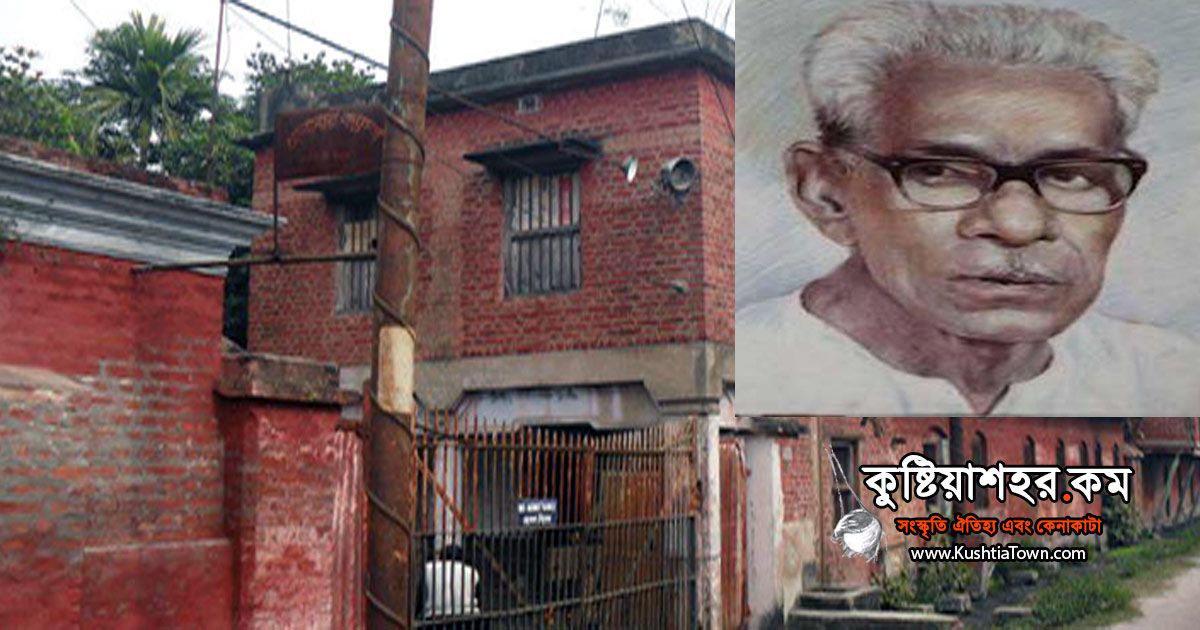
Engineer Kamrul Islam Siddiqui was born in Kushtia on 20 January 1945. He was the executive director of the Dhaka Transport Coordination Board (DTCB). He is a former secretary of the Ministry of Housing and Public Works. He is the founder of the Local Government Engineering Department (LGED). During his tenure as LGED's chief engineer he played a historic role in the country's rural infrastructure and social development. He also made extremely important contributions to socio-economic development and to employment for unemployed young men.
His school life was spent at Kushtia Mission School and Sirajul Haq Muslim High School. He passed his ISC from Kushtia College in 1962. He took an active part in the Liberation War of 1971. In 1973 he was transferred to Khulna Municipality as a municipal engineer. In the latter part of 1975 he joined the Ministry of Local Government as an engineer. In 1976 he went to England to earn a master's degree in Town and Regional Planning from the University of Sheffield. After earning the master's degree in England and returning to Bangladesh, he held important responsibilities in the Local Government Engineering Department (LGED). He also served as chairman of the PDB. He was the principal planner of the much-discussed Gulistan-Jatrabari flyover project. The Kushtia District Association in Dhaka awarded him the Unnayan Sarathi medal in 2002. In 1987 he earned a master's degree in Urban and Regional Planning from the University of Sheffield in the United Kingdom.
Engineer Kamrul Islam Siddiqui introduced GIS (Geographic Information System) for preparing maps of the country's districts, upazilas and even unions. In the agricultural field, to meet food demand through irrigation by storing water in the dry season, he took charge of participatory water management and installed rubber dams to introduce rubber-dam technology in Bangladesh. In his time, the important JICA-aided model rural development project concluded with great success. He joined the PDB as chairman in 1991. When he began catching electricity thieves (industrialists) after joining, he could not remain in that post. At the initiative of Kushtia pourashava (municipality), the "Kamrul Islam Siddiqui Children's Park" has been established in his name at Eidgah Para. Engineer Kamrul Islam Siddiqui passed away in 2008. To this day, the people of Kushtia and of the whole country remember this great man of talent with respect.