বাংলা
 English
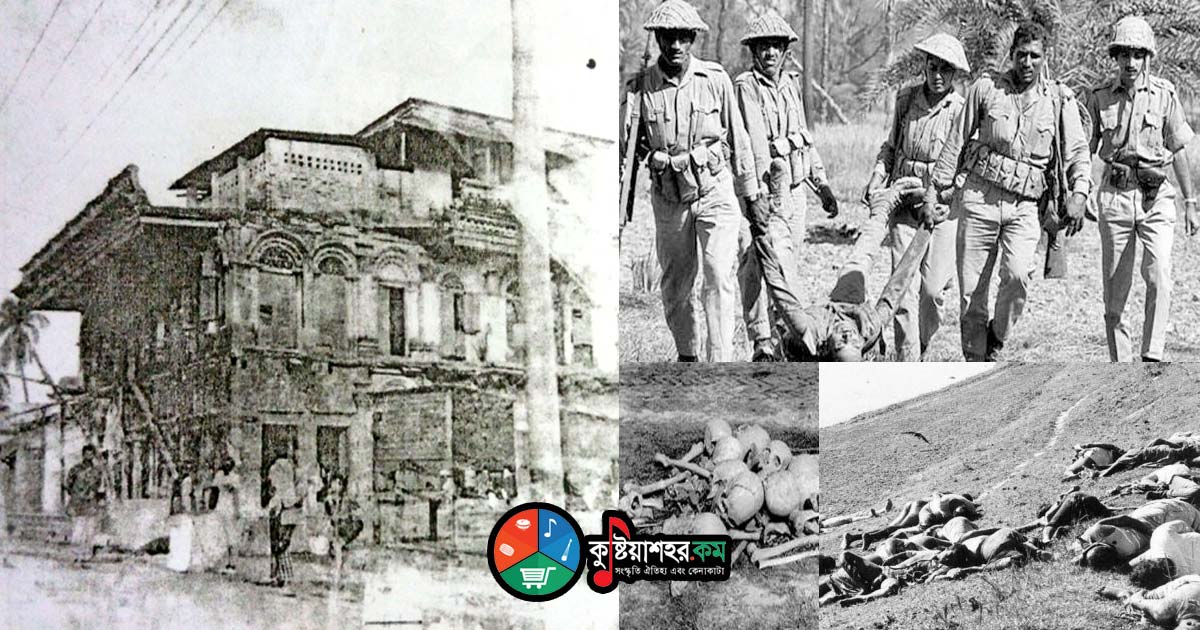
We know that in the Battle of Kushtia the Pakistani forces were completely routed by the Bengalis, and nearly all the Pakistani soldiers fighting from their position at Kushtia Zilla School were killed. At this stage, several non-Bengalis also lost their lives at the hands of the enraged masses. Among them was Nabi Bakhsh, the leader of the non-Bengalis (Biharis) and vice-chairman of the Kushtia pourashava.
For all these reasons, the Pakistani soldiers and the Biharis felt intense anger and vengefulness towards the Bengalis. During the nine months of the Liberation War, countless innocent people of Kushtia, of all ages and professions, had to give up their lives at the hands of the Pakistani soldiers, the Peace Committee, the Biharis and the Razakars.
The Kushtia Police Line housed a camp of the Pakistani soldiers. With the help of the Biharis and Razakars, suspected Bengalis were brought there, where unspeakable torture went on. They were beaten with their legs dangling from above, and pins were pushed into the joints of their hands and feet. Those whose names were written in the 'kharcha khata' (expense ledger) were handed over to the Razakars and Biharis. These wretched people were taken to a deserted spot along the nearby railway line and killed by gunfire or by slaughtering. It was from captivity in the Police Line that Professor Durgadas Saha was taken away and killed.
The Roxy cinema hall was the main den of the Peace Committee and the Bihari Razakars. It is known that the town's kill lists were drawn up here, and the decisions to carry them out were taken here as well. The Biharis would take the wretched captives to the shoal (char) of the Gorai river nearby, kill them and bury the bodies in the shoal; at times they would set the bloodstained corpses afloat in the river. It was in this way that Abul Kasem, vice-chairman of the Kushtia pourashava, was killed.
The Housing Estate on the outskirts of Kushtia, inhabited by Biharis, was another killing ground. This housing area stands as a silent witness to a cruel, gruesome genocide. People were seized in the town, brought here and killed; the bodies were dumped sometimes in the septic tank, sometimes in the canal nearby. A dilapidated room used as a killing house (known as the Yellow Room) still stands at the south-eastern side of the Housing estate. The Kushtia cremation ground, the No. 1 warehouse on Station Road and the area beside Rajarpukur were also used as killing grounds. Beside the Gorai river, inside the Jewel Aluminium Factory, a tamarind tree still stands today as a witness of those times: with a victim's head forced and pressed between its two spreading branches shaped like the letter V, the person was killed with sharp weapons.
The owner of the Kohinoor Bakery at Milpara was brutally killed together with his whole family. It is known that among the town's prominent figures, Hasan Faiz, Anshar Ali, Nani Gopal Roy, Rafiq Ahmad and the footballer Sohrawardi were killed in this way.
Writing about Kushtia in 1972 itself, the representative of 'Purbodesh' said:
The barbaric Pakistani soldiers and their henchmen killed nearly five to six thousand Bengali men and women within an area of about a mile and a half along the Gorai river, from the Ganga-Kapotaksha Ghat to the cremation ghat, and threw them into the river. Even today, when going to bathe in the river, people sometimes stumble upon the bones of those unfortunate human beings. In Amalapara of Kushtia town, in a house known as Biman Nandi's house, the barbarians had set up a killing ground; it is still known to the public as the 'Fanshighor' (hanging house).
The rope that testified to the killings hung there until only a few days ago. Another killing ground of the town was the Kushtia Housing Colony. Girls of all ages, from adolescents to young women, were seized from villages, kept confined there and subjected to inhuman, beastly atrocities. Widows, the crippled and girls were not spared these atrocities; even a mother only four days past childbirth was not saved from their bestiality.
Another site of atrocities against women was a one-storey yellow building of the C&B Department, situated north of the Police Line and west of the Renwick Company, where the anguished cries of helpless women would break out. Another killing ground in the town was the house of Azizur Rahman Akkas MCA at Courtpara. There is a well inside this house, and beside it a long room; in that room wretched people were laid on the ground and slaughtered like cattle and goats, and the bodies were thrown into that well. The well is now filled with countless skeletons. At the paved ghat beside the Ganga-Kapotaksha office, people were taken and their throats slit wholesale, and they were thrown into the river. As they pleased, they would drag people off trains and bayonet them openly before everyone, ripping open their bellies.
Chuadanga was the headquarters of the freedom fighters' 'Southwest Command' and the first temporary capital of independent Bengal. The glorious role of Chuadanga's No. 4 Wing of the EPR, along with the students, the common people, public representatives and government employees, in the various battle zones including Kushtia had made the Pakistanis furious. Moreover, at that time a considerable number of Biharis also lost their lives at the hands of the enraged masses. That is why, when entering Chuadanga, the Pakistani forces set fire to almost all the houses along the Chuadanga-Jhenaidah road and dishonoured young women. Only on 15 and 16 April did they set fire to nearly 50 per cent of the houses along the Chuadanga and Jhenaidah roads at Dash Mile, Sharatganj, Dingedah and in Chuadanga town, and looted the shops. A handful of leaders and activists of the Jamaat and the Muslim League, including Biharis, aided this destruction. They formed the Razakar force and, right up to the day of Chuadanga's liberation (7 December), went from village to village setting houses on fire, looting, and perpetrating bestial atrocities on mothers and sisters. The Pakistani soldiers would seize students and young men and bring them away, sometimes shooting them and sometimes stabbing them to death again and again with bayonets. All these bodies were buried beside the Chuadanga Modern Hospital. After independence, the corpses and skeletons of thousands of people were found there. After shooting dead a young man named Togor, the Pakistani forces hung him by the head from bamboo at a four-storeyed building in Alamdanga thana town for four days, warning everyone of this fate. The Pakistani soldiers broke open the shops of Alamdanga town and had them looted, and the loot was carried home by the Biharis and the men of the Muslim League and the Jamaat. Yet it has also been learnt that these very Pakistani soldiers killed the imam of the Chuadanga mosque and raped the daughter of a Muslim League leader. Indeed, along the banks of the Mathabhanga river that flows through Chuadanga and all around the town there were countless mass graves. And in these mass graves were found the dead bodies of thousands of people and the torn remains of mothers' sarees and sisters' blouses.
The Chuadanga Modern Sadar Hospital building was a torture centre of the Pakistanis. The Pakistan army and their accomplices seized countless Bengali brothers and sisters, tortured them and killed them. Right after independence, thousands of people thronged this hospital area, searching for their near and dear ones. It was then that writing in blood was seen on the wall of a room: 'O Allah, protect us from the hands of the oppressors.' Around this hospital were found the corpses and bones of countless people. In the first week of December, several bodies were found in a pit beside the signal on the southern side of Chuadanga railway station. It was possible to identify the bodies of two of them. One was Azizul Haque, who worked in the office of the subdivisional administrator, and the other was a police officer. It is learnt that the Razakars tied ropes around the necks of these two and, pulling from both sides, strangled them to death.
Behind Buddhu Mia's mango orchard at Palashpara of Chuadanga town (present-day Shantipara) was the babla orchard - the largest killing ground of the town. Those on whom the decision of killing fell were seized and brought to the babla orchard, where they themselves were forced to dig pits five to seven feet deep. Then they were made to stand beside the pit, shot dead, thrown in, and covered with earth. It is said that over the whole nine months more than a hundred people were brought here in the dead of night and killed. During this time countless bodies could be seen floating down the Mathabhanga river almost every day.
The Natudah Secondary School under Damurhuda thana was another torture centre. Countless people were brought here, tortured and then killed. Behind this school a huge mass grave has been discovered. It is said that more than two hundred freedom-loving people were killed and buried in this mass grave, discovered soon after independence. It is one of the oldest schools of Chuadanga. The Pakistani soldiers had their camp in this vast building; every room in it bore marks of torture.
On 12 May the Pakistan army entered Alamdanga thana town and began killing and looting on a massive scale. They seized countless people and, taking them to a spot near Hatboalia, shot them dead and threw them into the Mathabhanga river. Among those killed here were the teachers Abul Hossain and Doyraka Das, police officer Basanta Kumar, Madhu Babu, Monir Uddin, Unmad Ali, Abul Hossain Biswas and Akbar Ali.
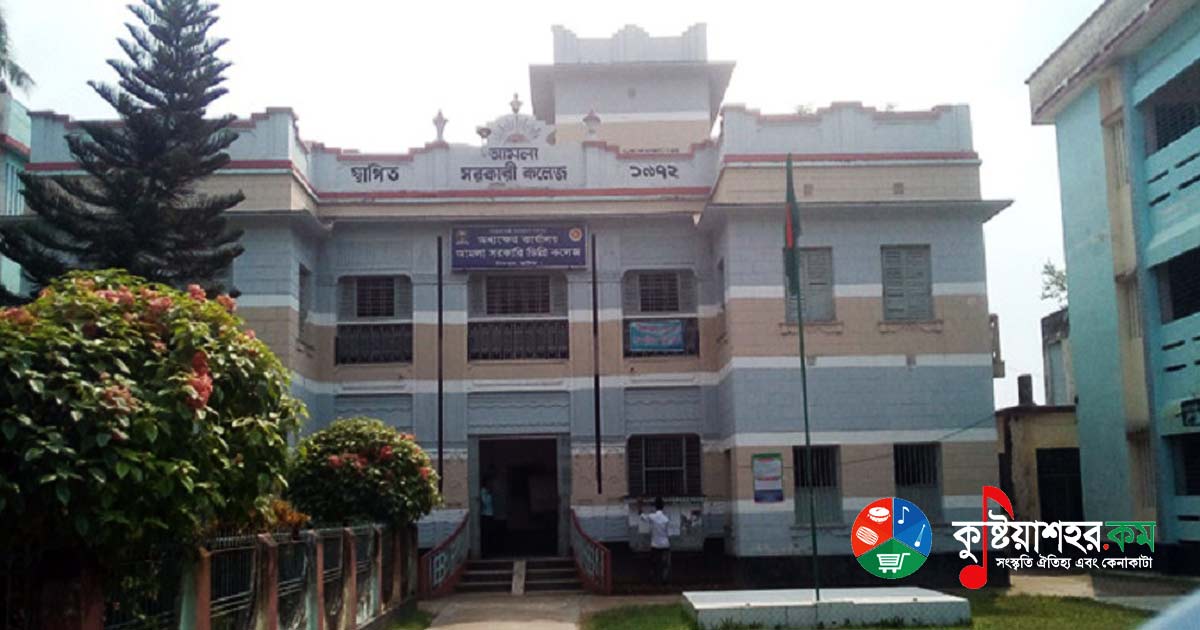
In Jagannathpur village of Damurhuda thana in present-day Chuadanga district lies the mass grave of eight freedom fighters. In two pits, four freedom fighters lie in each. At the request of the mosque's imam and the villagers, the Pakistanis permitted the bodies only to be placed in pits and covered with earth; in burying the bodies, no religious rites were allowed to be observed. Through the conspiracy of the notorious Pakistani collaborator Kubat Khan of Bagoyaon village, eight young freedom fighters of Chuadanga had to give their lives in direct combat with the Pakistani soldiers on 5 August. These eight martyred freedom fighters were Hasan Zaman, Khaled Saifuddin Ahmad Tarik, Alaul Islam Khokon, Rabiul Islam, Rowshan Alam, Abul Kasem, Kiamuddin and Afazuddin. It was at Baidyanath Tala of Meherpur subdivision (later Mujibnagar) that the Government of the People's Republic of Bangladesh publicly took its oath for the first time on 17 April. For that reason the whole of Meherpur town was a torture centre of the Pakistani forces during the war of independence. The field behind the local government college was the largest killing ground; most of the freedom-loving people were seized, brought here and killed. Besides, the district administration office compound, the Vocational Training Institute, the WAPDA morh, the bus-stand area, the Gorastanpara and other areas were also killing grounds and torture centres. Nazrul Shiksha Manjil was a centre for atrocities against women. When Meherpur town was liberated, five mass graves were found in the town itself. Skulls, bones, pieces of cloth and human hair were found in the killing ground behind the government college. In the mass grave of the district administration compound, the freedom fighters of Gauripur village had been killed and buried. There was also another torture camp of the Pakistani forces at Kalachandpur, adjoining the town.
After independence, the skulls and bones of hundreds of people recovered from the town's mass graves and killing grounds were placed in a central mass grave.
On the Kushtia-Meherpur road under Gangni thana of Meherpur subdivision, at the junction area of the Jorpukuria-Sholotaka road, the Pakistani soldiers mercilessly killed hundreds of men, women and children who were heading for India. The Pakistani soldiers had laid an ambush in that area well in advance, waiting for the freedom fighters. But the freedom fighters changed their plan and did not go to that area that night. The innocent refugees stepped into the Pakistanis' trap without knowing it.
Reference: Ekattorer Bodhyabhumi O Gonokobor (The Killing Grounds and Mass Graves of '71), Sukumar Biswas; published by Milan Nath, Anupam Prokashani, 38/4 Banglabazar, Dhaka 1100, February 2000, pages 108-112