বাংলা
 English
Among the families of Kushtia and indeed all of Bangladesh, one bright family is that of Dr. M. A. Kashem, who earned a solid reputation as a physician. Just when Dr. Biren Datta and Dr. Kazi Abdul Latif had gained a strong reputation as physicians, Dr. M. A. Kashem and Dr. Sirajul Islam created a sensation as doctors in Kushtia. He founded Kashem Clinic.
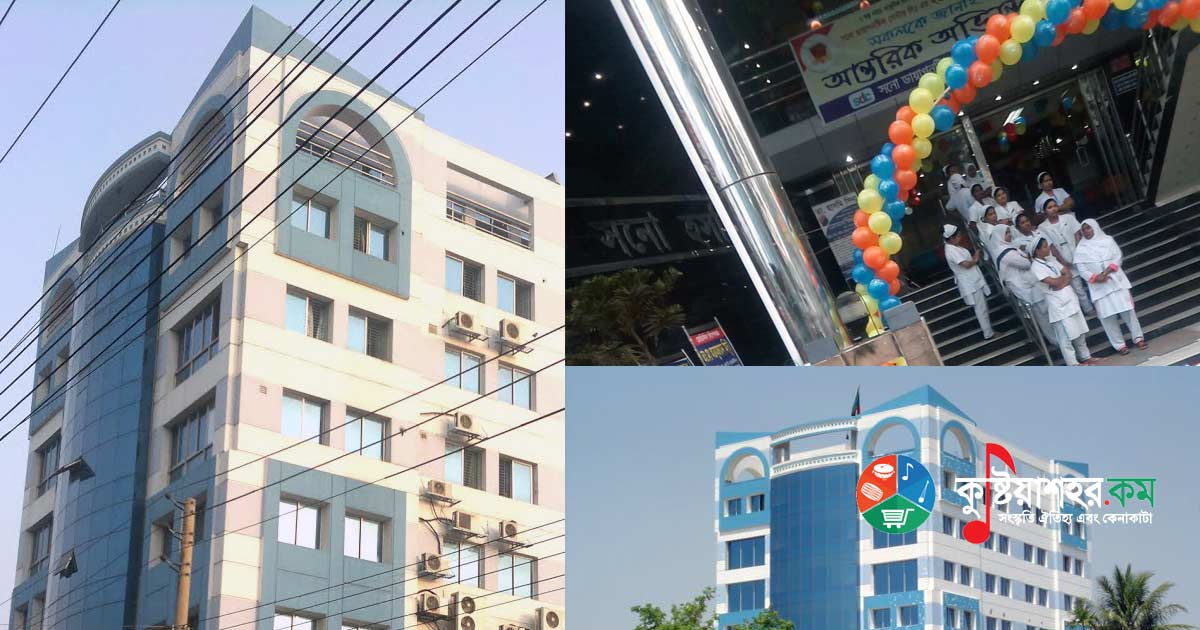
His four sons: Professor Abul Hussam, Dr. Abul Barakat, Dr. A. K. M. A. Munir, and Nurul Azam. Dr. Professor Abul Barakat earned a solid reputation as an economist and serves as general secretary of the Bangladesh Economic Association. Dr. A. K. M. A. Munir built Sono Hospital with the aim of giving the people of Kushtia access to modern treatment. The eight-storey, ultra-modern Sono Hospital draws everyone's attention. Dr. M. A. Kashem's able sons, Dr. A. K. M. A. Munir and Professor Abul Hussam, after Dr. Yunus, have brightened the name of Kushtia and of Bangladesh before the world.
Thinking about the arsenic disease and working on it have been the accomplished sons of Kushtia. To save people from the grip of arsenic, the inventors of the Sono filter are Dr. M. A. Kashem's sons Professor Abul Hussam and Dr. A. K. M. A. Munir. The whole world has recognized the Sono filter as a "revolutionary invention" against arsenic.
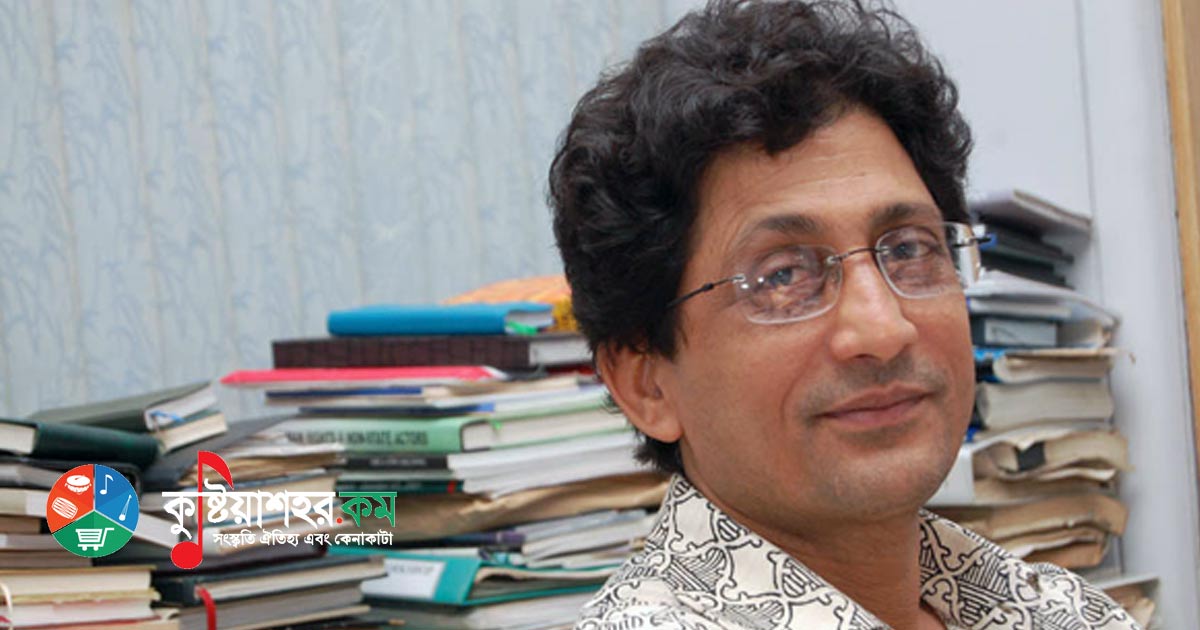
Professor Abul Hussam is currently teaching in the Department of Chemistry and Biochemistry at George Mason University in Virginia, USA. He has more than a hundred research papers.
His recent research papers on determining the degree of arsenic contamination, on the chemistry of arsenic in groundwater and on the development of arsenic filters have been published in several international journals. His innovative, computer-controlled, state-of-the-art method is now being used at various universities and research institutions in the United States, Bangladesh and Egypt. With the cooperation of a few interested people, Professor Abul Hussam has set up an environmental research centre in Kushtia, and through it he has tried to make people aware of the various problems of the environment.
Although he lives abroad, Bangladesh and its people pull at him intensely. That is why he keeps returning to Bangladesh again and again. Amid a hundred preoccupations he returns to Kushtia and seeks out his carefree boyhood. It was out of the urge to do something for Bangladesh and its people that he began work on the Sono filter.
He says, "Bangladesh's arsenic problem kept stirring me again and again. That is why I am working here, to do something from my own place. And it was my sacred responsibility and duty, as a scientist and as a Bengali."
From 1997, Dr. Hussam began his research with his brother Dr. Munir. The co-inventor of the Sono filter, Dr. Munir, lives in Kushtia.
After passing from Rajshahi Medical College, he began his medical career in Kushtia in 1986.
To determine the severity of arsenic contamination in Bangladesh, he runs an organization in Kushtia called Sono Diagnostic Centre Environment Initiative. Dr. Munir has also established a ten-bed hospital for people stricken by arsenic contamination.
Dr. Hussam conducts the basic research and development of the Sono filter at George Mason University. But the testing of the research data is carried out in Kushtia.
In 1999 he founded an NGO in Kushtia called the Human Resource Development Centre (MASUK). Since then, with the support of various donor groups, this organization has distributed 24,000 Sono filters free of charge. In addition, about 32,000 Sono filters have so far reached arsenic-affected families in 16 districts of the country.
Widespread arsenic contamination of drinking water has appeared in Bangladesh and in many other developing countries. At present, 500 million people across the world are affected by arsenic. Half of Bangladesh's total population is stricken by this disease. In rural areas, various superstitions about the disease have long been in circulation. This silent killer called arsenic has left a large part of the country's total population facing dire health risks. And the arsenic-removal technologies available until now were of questionable effectiveness and carried sky-high prices. With these matters in mind, the NAE of the United States - the leading body of the world of technology - for the first time threw out a challenge to all the technologists of the world to remove arsenic. The conditions were: the developed technology must be highly effective, it must be socially acceptable, it must use local technology, the quality of the water treated by it must remain intact, and the price must be within the purchasing power of poor people.
After this announcement in January 2005, technologists from various countries of the world began sending in their invented projects. After much screening, 15 technologies were initially accepted. Among them was Bangladesh's Sono filter. In July 2006, in the state of Ohio in the United States, the 15 technologies were evaluated through testing and scrutiny by the "United States Environmental Protection Agency". On the basis of the opinion of a ten-member expert committee, Bangladesh's Sono filter was declared the winner. The Sono filter won the Grainger Challenge Prize of one million dollars, or Tk 7 crore.
On 20 February, at a glittering ceremony at the NAE complex in Washington, the award was placed in the hands of the inventors of the Sono filter. Dr. Hussam and Dr. Munir have donated the entire Tk 7 crore of this prize. Seventy percent of the money will go to distributing Sono filters free of charge, to save the arsenic-affected poor of Bangladesh from arsenic's grip. Twenty-five percent will be spent on arsenic research and development work. And with the remaining 5 percent, a fund called the "Abul Foundation" will be set up at George Mason University, from which Bangladeshi students will receive financial support for research work. The whole nation is proud that these two scientist brothers have received the Grainger Challenge Prize - the Nobel of the world's technology field.