বাংলা
 English
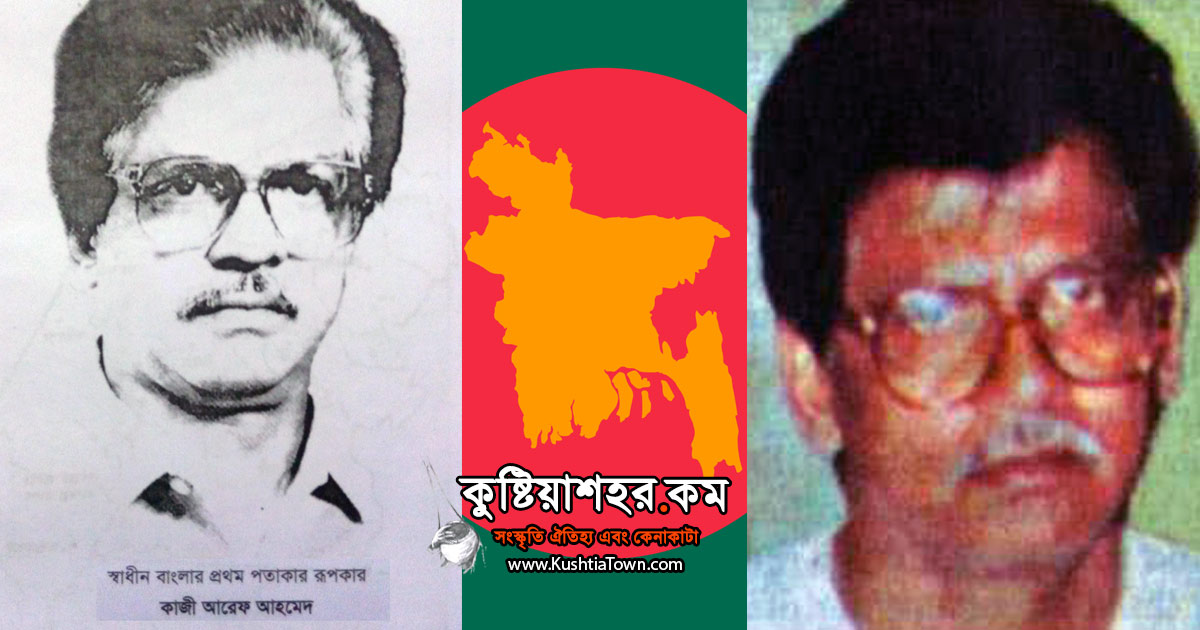
Designer of the first flag of independent Bangladesh - Kazi Aref Ahmed
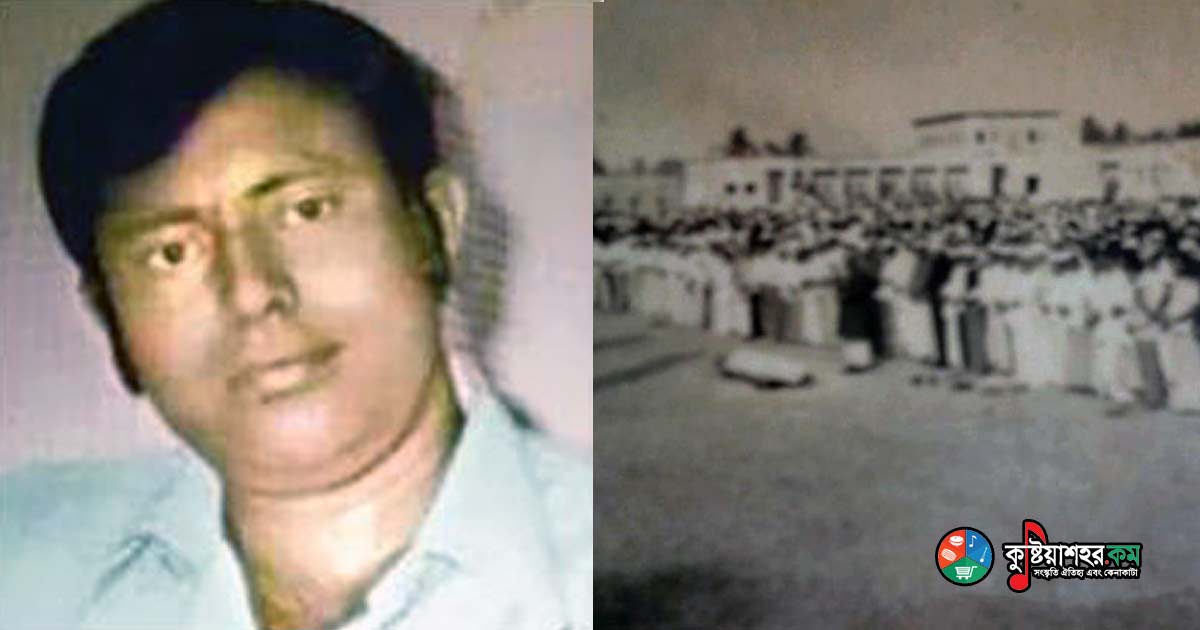
On 16 February 1999 he was brutally killed at a public meeting on the Kalidaspur school ground (Daulatpur upazila, Kushtia). Kazi Aref Ahmed was one of the organisers of our glorious Liberation War. He was a principal proponent and leader of Jatiya Samajtantrik Dal (JASAD), the political party formed and founded after the Liberation War. He possessed a humane mind shaped by secular consciousness; he was a leading proponent and leader of an exploitation-free social order. Kazi Aref Ahmed was essentially a man devoted to the people, self-respecting and without greed. On the question of achieving political aims he was single-minded and stubborn.
Take up arms, valiant Bengali - make Bangladesh free.
Your address and mine - the Padma, the Meghna, the Jamuna.
Not power but the people - the people, the people.
Who are you, who am I - Bengali, Bengali.
It was the movement against Ayub's military rule that moulded Kazi Aref Ahmed into a political activist. In November 1962, Sirajul Alam Khan, Abdur Razzak and Kazi Aref Ahmed reached a consensus on the decision to make Bangladesh independent. This is known as the Nucleus of '62. Under its leadership a secret organisation was formed with war as its goal, named the Swadhin Bangla Biplobi Parishad (Revolutionary Council of Independent Bengal). The organisation was active across the whole country. The truest expression of these slogans could be seen in him until the day of his death. Today these slogans are heard in various movements at Shahbagh.
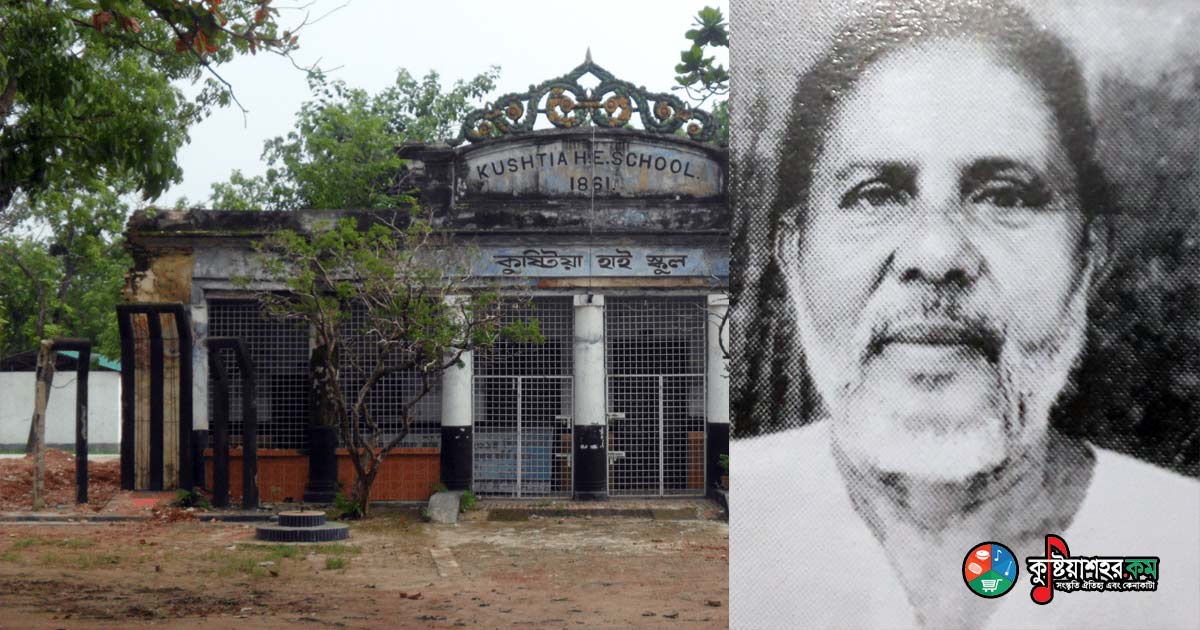
Birth: He was born on 8 April 1942 into a respectable Kazi family of Kushtia. His father, Kazi Abdul Kuddus, was a government employee. He was a devout man. Like his father, he too was a man of honest character. His mother, Khandakar Khodeza Khatun, was a devout and learned woman. Aref Ahmed was one of ten brothers and sisters.
Education: Kazi Aref Ahmed completed his secondary education at Dhaka Collegiate School and passed the matriculation examination; he then enrolled in the Department of Geography at Dhaka University. Because of the movements and struggles and Ayub's repression, his master's degree remained unfinished.
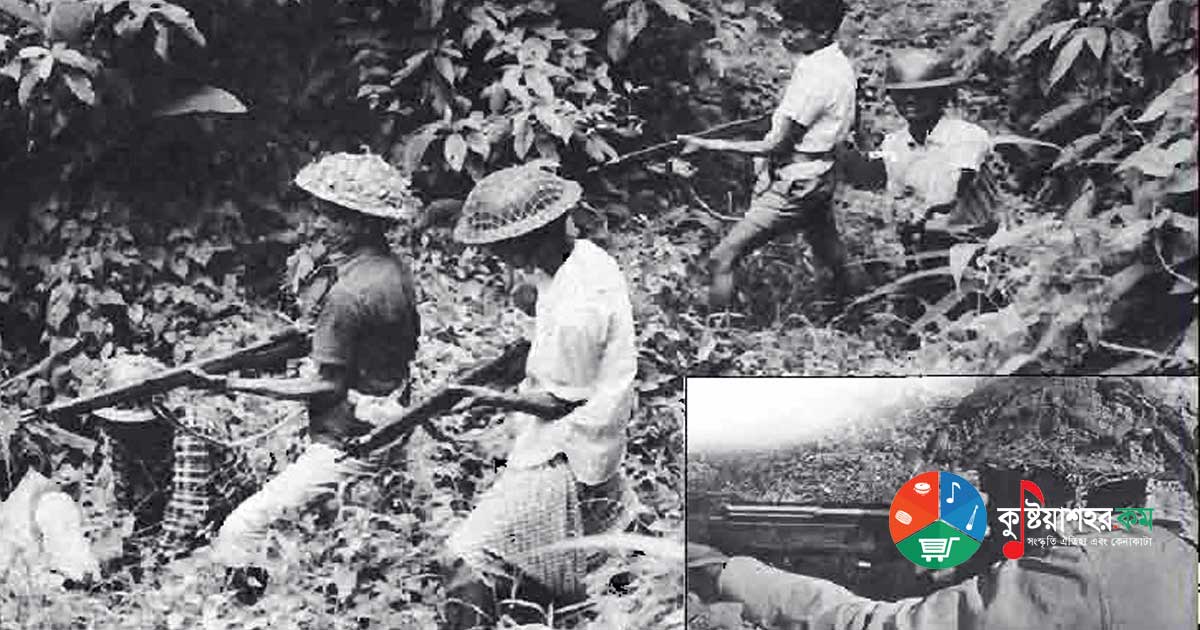
Student politics: From 1963 to 1970 he served on the central committee of the then East Pakistan Chhatra League. During this time he was for long the president of the Dhaka metropolitan Chhatra League. In this period, taking on the responsibility of advancing the movement against communal forces and against Ayub, he played a sharp role in the work of digging the grave of military rule. When Bangabandhu Sheikh Mujibur Rahman announced the Six-Point programme in 1966, in the spirit of the Liberation War, Kazi Aref Ahmed, as president of the Dhaka metropolitan Chhatra League, was the first to declare support with a statement. He carried out a special responsibility in spreading this programme among the political intellectuals and the masses across the country. The mass uprising of 1969 was a turning point in the lives of the people of this country. At that time all struggling people were flowing into that current; there was no room to look back. Arriving at that point, in that unforgettable time he played a unique role - as a student leader, as a young man, as a fighter, as a persecuted student, and above all as a warrior. In the eyes of his contemporaries those deeds still shine bright. Together with all the student leaders who led that movement, with prudence, tireless labour and unflagging effort, he made the Liberation War inevitable in the surge of Bengali nationalism. Preparation for our death-defying war against the Pakistanis went on. As preparation for the armed Liberation War of Bangladesh, he was one of the organisers of the 'Joy Bangla Bahini' formed in 1970. Kazi Aref Ahmed was one of the designers of the national flag, the symbol of independence and sovereignty. When the long-cherished dream of an independent Bangladesh began to be realised through the armed liberation struggle of 1971, at its outset Kazi Aref Ahmed played the role of one of the leaders of the Bangladesh Liberation Front. As a leader of this force he led the western battle zone of the Liberation War (greater Pabna, Kushtia, Faridpur, Khulna and Barishal).
He was one of the founding leaders of the 'Jatiya Samajtantrik Dal' (JASAD), the country's first opposition party formed after independence, against the economic subjugation of the people and autocratic exploitation. He was president of JASAD from the eighties until the mid-nineties. In the post-independence period he served as the managing editor of the daily Gonokontho, a strong voice of the democratic struggle. With the aim of freeing the peasant society, he led the Jatiya Krishak League and built up the peasants' movement. He worked tirelessly in the task of organising the landless farmers.
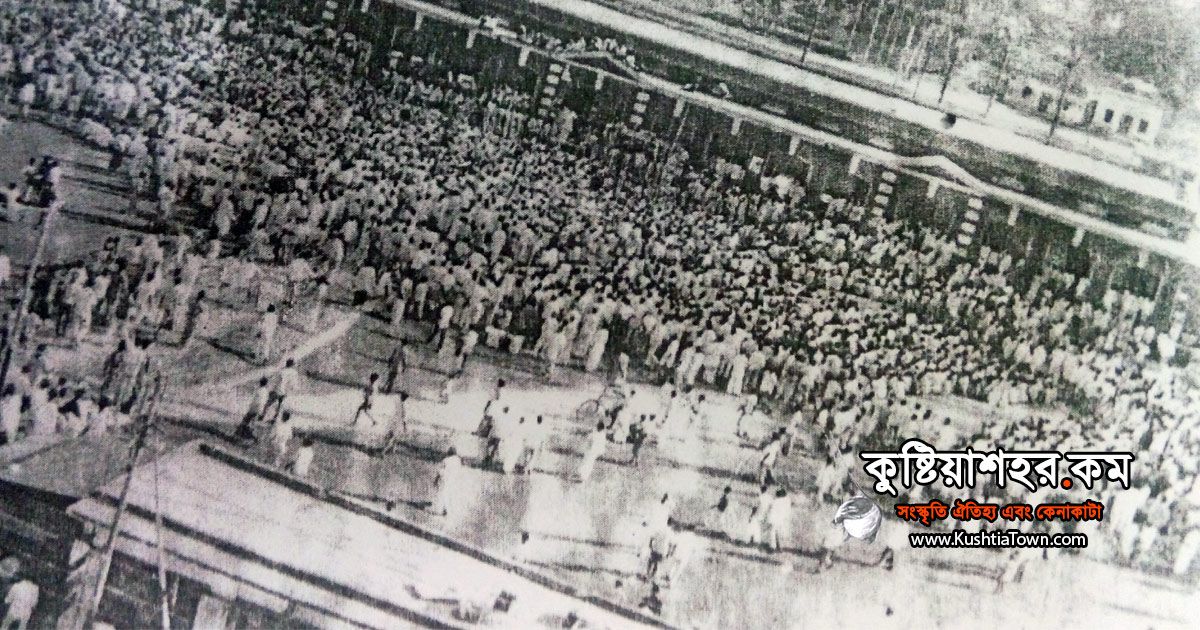
Kazi Aref Ahmed was a successful and daring organiser of the movement against autocracy. In his continuous struggle against the illegal usurpers of power he faced arrest, warrants and torture. He endured imprisonment and repression until 1987-88. The uncompromising struggling leader provided militant leadership to the mass uprising of 1990, aiming at the final end of martial law and rule. On 26 March 1992 the people of the country witnessed a rare celebration of independence. A people's court (Gono Adalat) was held at Suhrawardy Udyan. There the verdict was passed on Golam Azam, the Amir of Jamaat-e-Islami and a war criminal, and a ruling was announced ensuring the punishment of the other war criminals. It was declared at the same time that any elected democratic government would enforce this verdict.
Under the leadership of the martyred mother Jahanara Imam, Kazi Aref Ahmed was one of the designers and organisers of that movement.