বাংলা
 English
Khoksa is one of the smallest thanas of Kushtia district in Bangladesh. Before 1947 the present Khoksa thana formed part of the Kushtia subdivision of Nadia district, one of the districts of the Presidency Division of undivided Bengal. As far as Khoksa's ancient history is known, towards the end of the reign of Nawab Murshid Quli Khan, Khoksa was under the zamindar of Naldanga in Kaliganj thana of the present Jhenaidah district.
In 1827 Khoksa thana came under Pabna district from Jessore district, and in 1857 Khoksa thana was brought under Kumarkhali (Pabna district). Again, in 1871 Khoksa thana was included in the Kushtia subdivision of Nadia district.
Khoksa thana stretches north to the Padma river. To its west lies Kumarkhali (Kushtia) thana. Shailkupa thana of the present Jhenaidah district is to the south-west of this thana, and Pangsha thana of Faridpur district to the north-east. The broad-gauge railway line running east from Poradaha divides this thana. The Gorai, a branch of the Padma, also flows through Khoksa thana.
No exact history of how Khoksa thana got its name has been found. Legend has it that Khoksa's present Kali was established by a certain tantric sadhu. That reclusive sadhu, averse to self-advertisement, first began the Kali Puja at a secluded spot on the bank of the Gorai river, surrounded by khoksa trees. At that time hardly anyone would go to this secluded, jungle-covered spot. When the son of a certain zamindar fell unconscious after a snakebite, he was brought to this Kali sadhak, and the sadhu laid the unconscious young man at Kali's feet and shut the door. Then, through the sadhak's austerities and by Kali's grace, the young man came back to life. Receiving all the news, the zamindar came, and, getting his son back, was overwhelmed with devotion to Kali. Then, as the tantric sadhu directed, the zamindar solemnly worshipped Kali one night on Maghi Amavasya. From then on this Kali, surrounded by khoksa trees, was named "Khoksa's Kali", and the place too came to be known as Khoksa.
The area of Khoksa thana is 24,320 acres. The land is congenial in nature, and the soil is of mixed character: clay 55 per cent, loam 25 per cent, sand 15 per cent and water 5 per cent. In area Khoksa thana is very small. According to the 1981 census its population was 81,578, of whom 42,282 were men and 39,296 women.
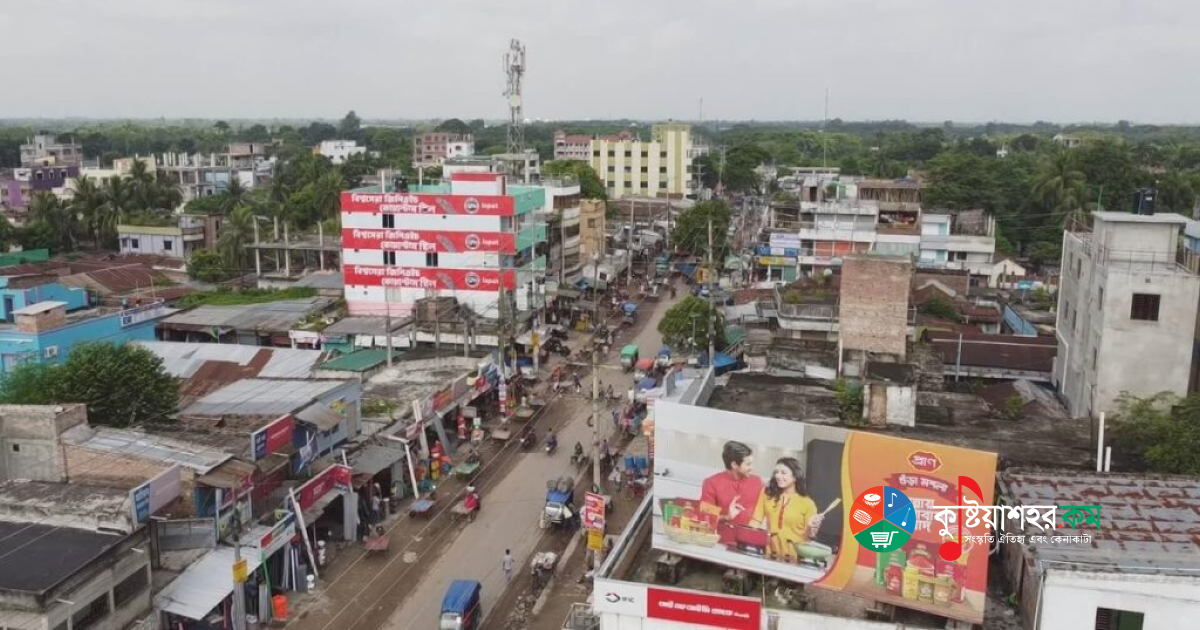
Khoksa thana at present has ten unions. The number of mouzas is 84, villages 96 and houses 13,129 (1981). Most of the houses are thatched with chhon; there are some tin-roofed houses too. One occasionally comes across a pucca building in the villages. Most of the pucca buildings are located at the centre of the thana.
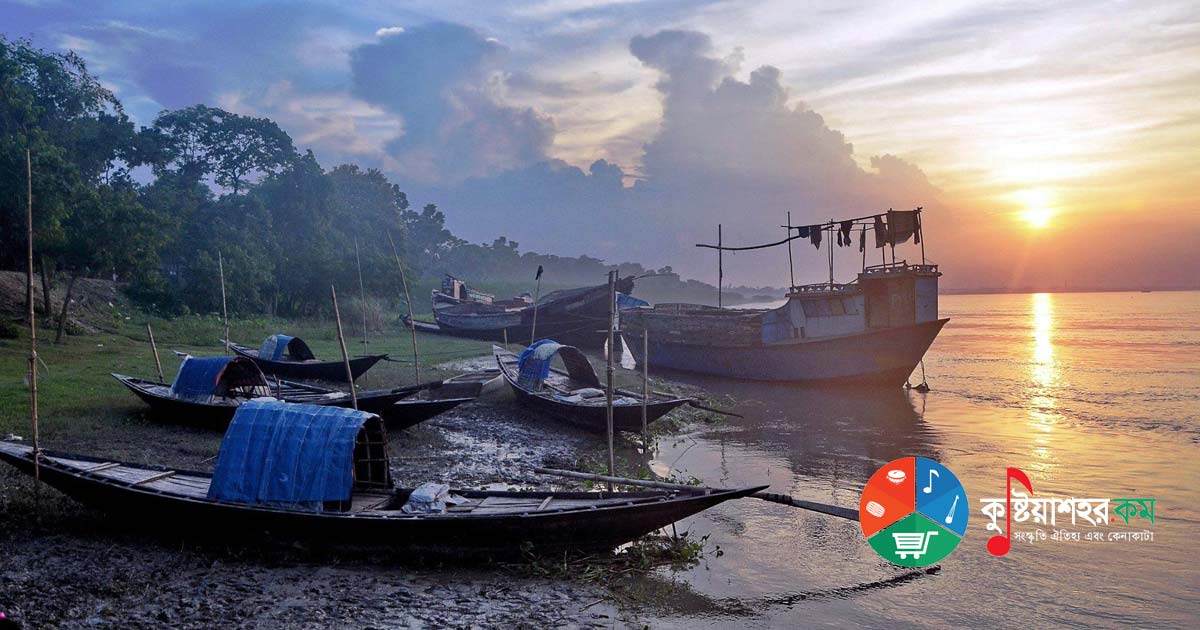
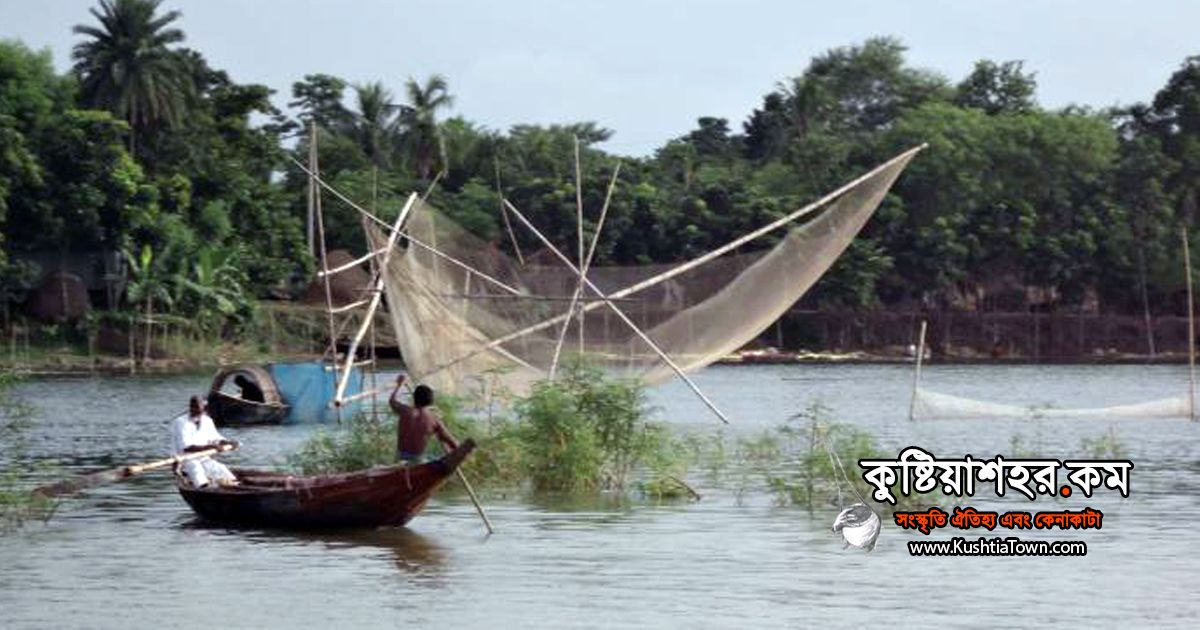
Khoksa thana has two rivers, the Gorai and the Haor. The Haor river originated from the Gorai and merged back into the Gorai. The Gorai is an ancient river. Mukundaram's Chandi Mangal kavya bears witness to the Gorai's antiquity. At the time of leaving his homeland the poet says in the preface of this kavya:
"Sailing along the Gorai river - ever mindful of the Creator
I arrived at Tewta.
The Darukeshwar tree - gained the Battanagiri
Gangadas's great Kailash .."
To save Kushtia town, Kumarkhali and Janipur, the Gorai is now in its final days. An embankment upstream of the town has saved the town, but the river is not being saved. Now in summer people walk across the Gorai. On the eastern bank of this Gorai stand the central town of Khoksa thana, Khoksa Janipur, and the Khoksa Kali Bari.
Among Khoksa's antiquities, the ancient piece of black stone preserved at Khoksa's Kali Bari is one of the foremost. It is known that Indubhushan De Ray, Raja of Naldanga, obtained this piece of stone from the Gorai river. The stone is a relic of the Buddhist era. It lay for a long time in the temple courtyard. The math of Fulbari is also a monument of Khoksa's antiquities. In the last part of Pathan rule or the early days of Mughal rule, a wealthy Vaishnavite businessman named Brajaballabh Krori built this temple and installed the Radharaman deity. Fulbari is situated three miles north of Khoksa station.
Concerning the math and temple of Fulbari, in 1343 a writer named Tarapad Dash wrote in the periodical Bharatbarsha: "The main temple house of the Fulbari math is of the style of the temple at Jorbangla in Pabna. On the walls and the top of this temple strange images of many gods and goddesses can be seen. Lotus pads and creepers and leaves are carved on it. On the huge mound west of the math stands the house where Brajaballabh Krori's home once was. Later Brajaballabh Krori became a resident of Meghna village in Faridpur district."
Of the fairs held at Khoksa, the fair of Khoksa's Kali Puja is mentioned in the book The History of Kushtia. In those days many large fairs were held in Kushtia district. Among them, the fair of Khoksa's Kali Puja was the finest. The fair of Khoksa's Kali Puja at Kushtia is held for seven days in the month of Magh. Goats and buffaloes are sacrificed before the huge Kali idol. Innumerable devotees gather at this fair from far and wide.
Among Khoksa's hermitages, one of the foremost is Sri Sri Radharaman Sadhanashram. This ashram was established in 1930 at Srirajpur village through the initiative of the famous leader Jatindra Mohan Kar, M.A. Jatindra Mohan Kar was a disciple in spirit of Mahatma Gandhi and president of the Congress of Nadia district. He established a free school and a students' hostel here. In the first year fourteen students enrolled here. This ashram too ran until the partition of the country.
The ashram of Kali Kanta Brahmachari (Shyam Sadhu) of Kamalapur is also noteworthy. The natural setting of this ashram is very beautiful.
In the northern part of Khoksa thana many legends are current about the miraculous story of the dervish Khaki Dewan. The mazars of Dervish Khaki Dewan and Dervish Chiknai Dewan are located at Uthli village, five miles north of Khoksa station.
Among Khoksa's famous personalities, Principal Heramba Maitra is one. After passing his M.A. in English he became a professor of City College, Calcutta, and later its principal. He was born in 1858 at Hijalbat village in Khoksa thana, his paternal home. He published a periodical called Sanjiban. After his death his son, barrister Ashok Maitra, published his essays under the title "Thought on the great quest". Ashok Maitra married the famous film actress Kanan Bala Devi. Heramba Maitra's daughter Nirmal Kumari Mahalanabis was extremely close to Rabindranath, and on the occasion of Rabindranath's reminiscences she published a book called "Baishe Shraban".
Among Khoksa's other servants of literature, the name of Professor Jyotiprakash Datta is noteworthy. He was born in Amlabari village of Khoksa thana. At present he is engaged in teaching at a university in America. His novels are Kuyasha (1958), Dubinito Kal (1967), Bahena Subatash (1967) and Sitangshu Tor Somosto Kotha (1969).
Shibnath Saha is a noteworthy singer of Khoksa thana. He was born at Janipur in Khoksa thana. Rabindranath came to Janipur many times and heard Shibnath Saha's kirtan. Rabindranath took him to Calcutta and arranged for him to sing on Calcutta radio. Besides, Kumud Bandhu Biswas of Ichlat village in Khoksa thana is also known in different parts of Bengal as a singer of the Ramayana.
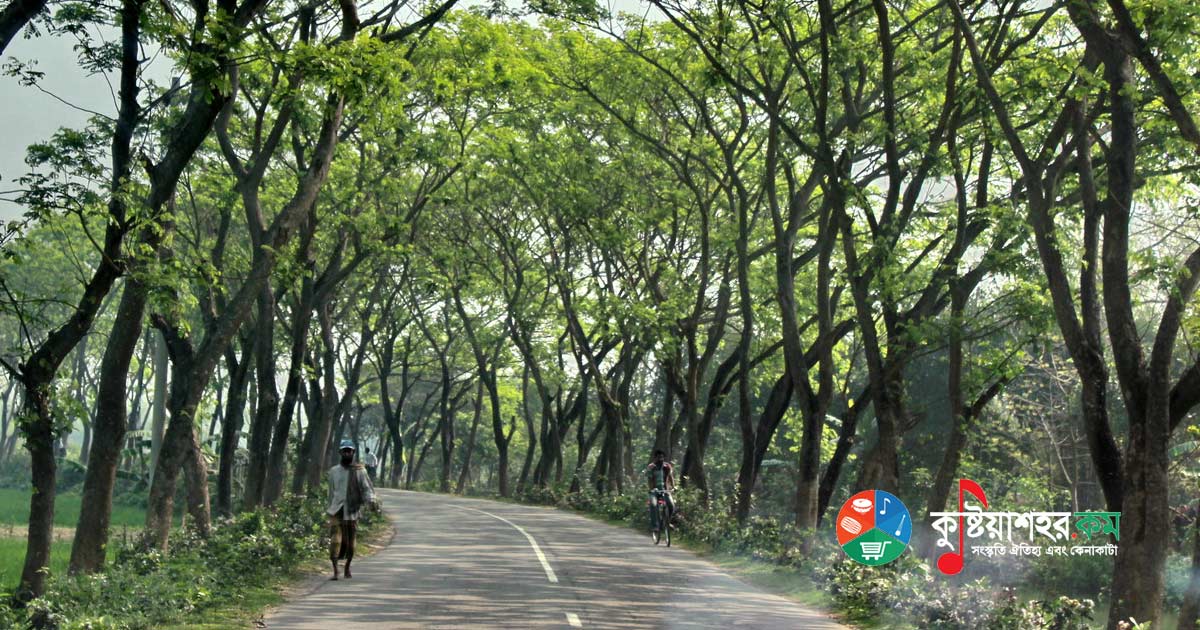
Khoksa's natural beauty is as pleasing to the eye as it is captivating to the heart. Villages stand along the Haor-Gorai bill and the edges of the fields. The villages are shade-covered and filled with birdsong, nests of peace. The central town, Khoksa Janipur, is the bridge between village and town. In a word, Khoksa thana is rich and beautiful in the variety and abundance of nature and of human life. Khoksa's worth lies not in size – but in nature.