বাংলা
 English

In human history, the most revolutionary invention of information and communication technology is the Internet. Today the Internet lies at the centre of the modern world's economy, education, science, communication and way of life. Yet this technology's journey began in the simplest way — as a military research project. In time it has become the foundational infrastructure of almost every field of human civilisation.
The internet's beginning: the ARPANET era (1960s–70s)
In the 1960s, during the Cold War, the US Department of Defense's DARPA (later ARPA) began trying to build a communication system that could survive even a nuclear attack. The result was ARPANET, which in 1969 linked four university computers — UCLA, Stanford, UC Santa Barbara and the University of Utah.
- The first message was sent from UCLA to Stanford
- The command was "LOGIN"
- But the server crashed, and only "LO" appeared on the screen — this was the internet's first message!
TCP/IP and the modern network (1970s–80s)
The internet's foundational technology arrived through the hands of two renowned scientists — Vint Cerf and Robert Kahn. They created the TCP/IP protocol, which became mandatory on ARPANET in 1983 and was established as the core language of the modern internet.
This is also when the following arrived:
- Email (Ray Tomlinson, 1971)
- DNS (Domain Name System, 1984)
Email changed the way people communicate, and DNS made web addresses simple (.com, .org, .gov and so on).
The innovation of the World Wide Web (1990s)
What turned the internet into a global platform was the World Wide Web (WWW) — invented in 1989 by the British scientist Tim Berners-Lee while working at CERN.
His inventions:
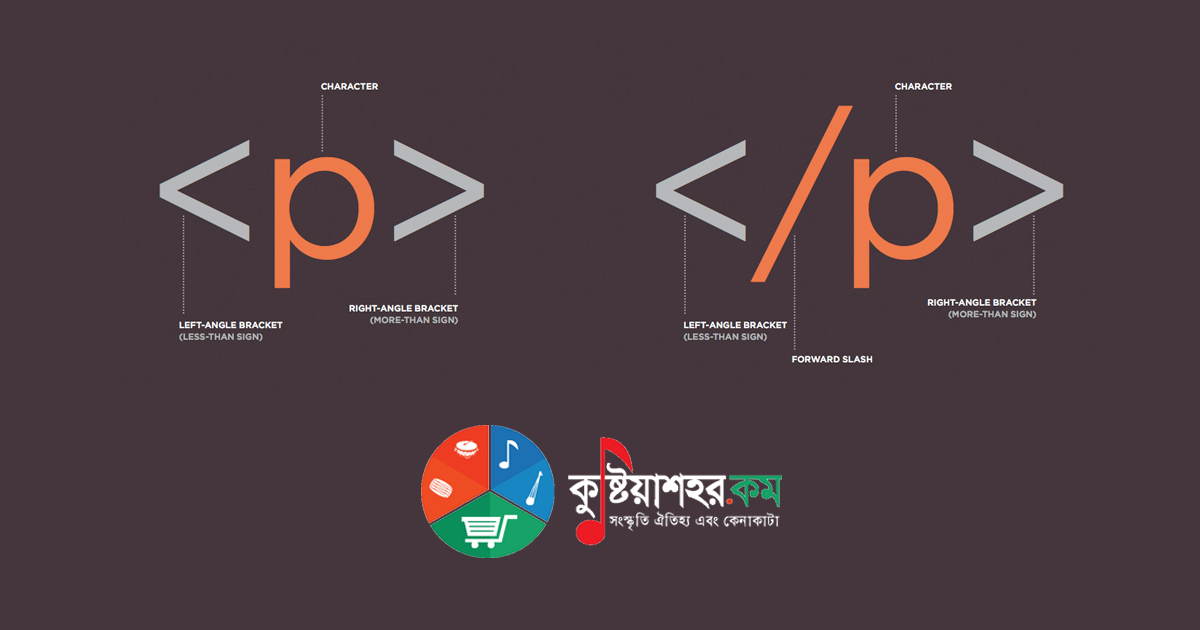
- HTML
- HTTP
- First Web Browser
- First Web Server
In 1991 the WWW was opened to all. Then began the era of building websites, internet service providers, web browsers (Netscape, later Internet Explorer) and the growth of e-commerce.
The dot-com boom and the social web (2000–2010)
In the early 2000s came the 'dot-com boom' — countless internet companies were born, and many were destroyed too. In the midst of this, organisations like Google, Amazon and eBay rose to the top worldwide.
Notable events of this period:
- Yahoo - 1994
- Google Search - 1998
- Skype - 2003
- Wikipedia - 2001
- Facebook - 2004
- YouTube - 2005
- Twitter - 2006
- Smartphone Revolution (iPhone - 2007, Android - 2008)
The internet became a platform for social connection, video sharing and mobile-based digital services.
The era of the cloud, AI and IoT (2010–present)
From the 2010s the internet gained a new dimension:
- Cloud Computing (AWS, Azure, Google Cloud)
- Streaming Platforms (Netflix, Spotify)
- Mobile Apps & Fintech
- Internet of Things (IoT)
- Blockchain & Cryptocurrency
- Artificial Intelligence and Machine Learning
- 5G Internet Technology
Today the internet connects not only people but machines as well — what is called Machine-to-Machine Communication.
The internet of the present and the future
At present the internet is a part of people's everyday lives — education, health, business, banking, entertainment, all depend on it.
In the future the internet will be even smarter:
- 6G networks
- Quantum Internet
- Metaverse
- AI-Driven Web
- Decentralized Web (Web 3.0)
These will make our digital lives more advanced, faster and safer.
The internet's journey began in a military laboratory, and today it has become the most powerful infrastructure of human civilisation. This continuous advance of technology has radically changed people's knowledge, the economy and social structures. The internet of the future will be more automated, more intelligent and more ubiquitous — making every minute of human life more dynamic and connected.