বাংলা
 English
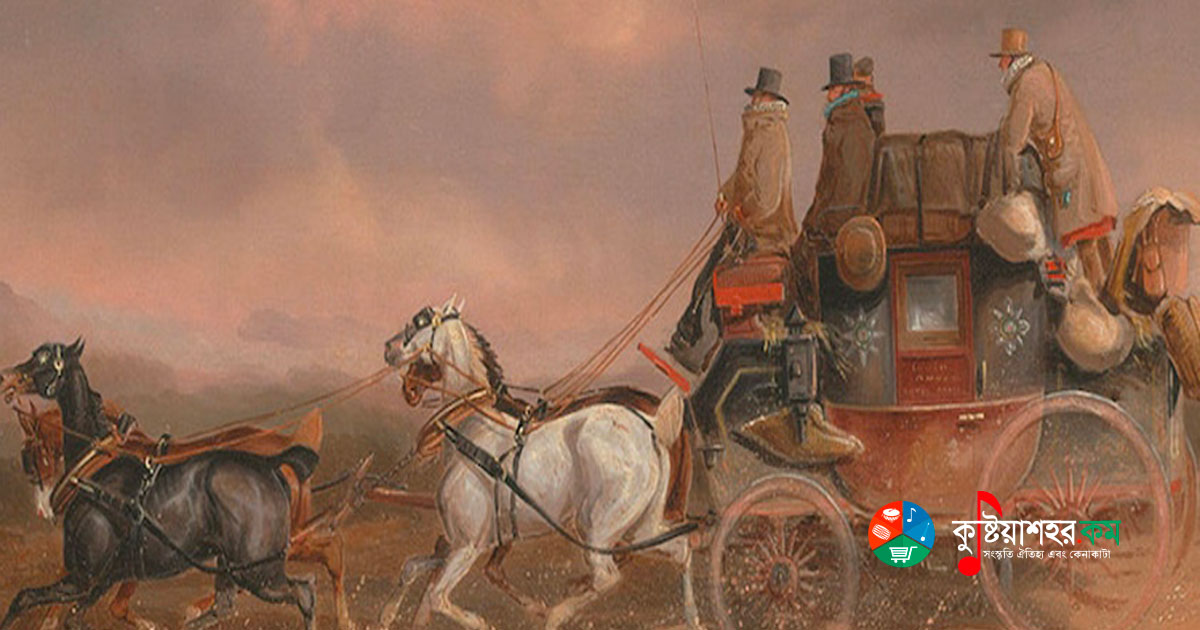
The Post Office dates back to around 1660, when it was founded by Charles II. Disguised as the General Post Office (GPO), it soon grew into an integral and important agency within England's seventeenth-century infrastructure.
Just one year after it was created, the post date stamp was first used, and the inaugural Postmaster, Henry Bishop — who was also the innovator of the first postmark used on mail — was given the responsibility of overseeing the GPO. Acting as both a state-provided service and a telecommunications carrier, the GPO expanded from holding primary jurisdiction only across England and Wales to spanning the British Empire, and then the whole of Great Britain.
It was after more than 100 years that the GPO saw the next important milestone in its life: uniformed postmen took to the streets for the first time (1793).
An important moment in the developing infrastructure of the post office network came in 1829, when the first purpose-built mail facility opened in full. Located at St Martin's Le Grand, EC2, the building designed by Sir Robert Smirke was 400 feet long and 80 feet deep.
The invention of the adhesive postage stamp by Sir Rowland Hill in 1837 was an important milestone for the Post Office, and just three years later the Penny Black was established. The Penny Black stamp remains iconic today as the first stamp issued anywhere in the world for sending letters, and it led to the introduction of the Post Office pillar box in 1852.
The introduction of the Penny Black was responsible for the introduction of the Uniform Penny Post, an identical postal rate that reduced administrative costs and encouraged the use of the postal system and the adhesive stamp. Initially it was normal to charge the fee to the recipient of the post, and if they did not wish to pay, they had the right to refuse to accept the item. The charge was based on the distance the item was carried and the number of sheets, so the GPO had to keep a separate account for each item. As a result, British postal rates were high and complicated. To simplify matters, Hill proposed an adhesive stamp to indicate pre-payment of postage. The Penny Black allowed the delivery of letters up to ½ ounce (14 grams) at a flat rate of one penny between any two places in Great Britain and Ireland, regardless of distance.
Less than 20 years later, in 1868, the Post Office's first military connection was formed as the 49th Middlesex Rifle Volunteers Corps, known as the Post Office Rifles — composed of GPO employees. These early military connections with the GPO would then be enlarged, as the organisation played a vital role during the First World War.
At the outbreak of the conflict in 1914, the Post Office employed more than 250,000 people, and about a quarter of them enlisted in the army. Besides the 12,000 men who fought with the Post Office Rifles Regiment, about 35,000 women were employed on a temporary basis during the Great War, as the GPO played a crucial role in maintaining communications throughout the conflict.
1969 was another momentous year for the organisation, because the GPO was abolished and became known for the first time as the Post Office. In the same year, the Post Office Savings Bank offering was transferred to the Treasury and rebranded as National Savings.
Efficiency in mail delivery increased significantly with the creation of postcodes, introduced five years later, in 1974. From there, in 1980, when British Telecommunications was formed, the Post Office's previous telecommunications arm disappeared.
Known as Post Office Limited, it came into existence in its present form in 2001. Ten years later, the Postal Services Act 2011 was notable in that it freed Post Office Limited from the Royal Mail Group from 1 April 2012.
As a newly formed mutual organisation, independence from Royal Mail enables the Post Office to take independent strategic decisions. Network modernisation — including extended opening hours and the reduction of the Crown network by moving Crown post offices into shops — is laying the foundations for Post Office Limited to move further forward.