বাংলা
 English
On a winter dawn in Bengal, earthen pots hung beneath date palms fill overnight with cold, clear sap—the first sweet note of the season. Tapping runs from the last week of Ashwin to the first week of Boishakh, peaking through Poush and Magh, and rides with jaggery season: patali, nolen gur and the rest. Jessore’s date palm gur is now Bangladesh’s 26th Geographical Indication (GI) product—this winter food is no longer a household treat alone, it carries national recognition.
The sap season and its measure
Tapping begins in the third week of Ashwin and runs to the first week of Boishakh, with Poush and Magh carrying the fullest flow. Cold, cloudy and fog-washed dawns are the sap’s favourite weather; when the temperature rises, both the yield and the taste drop off. A tree takes up tapping at four years, with twelve to fifteen leaves, and male palms give more sap—and sweeter—than female ones. A healthy tree yields about six litres a day on a good night.
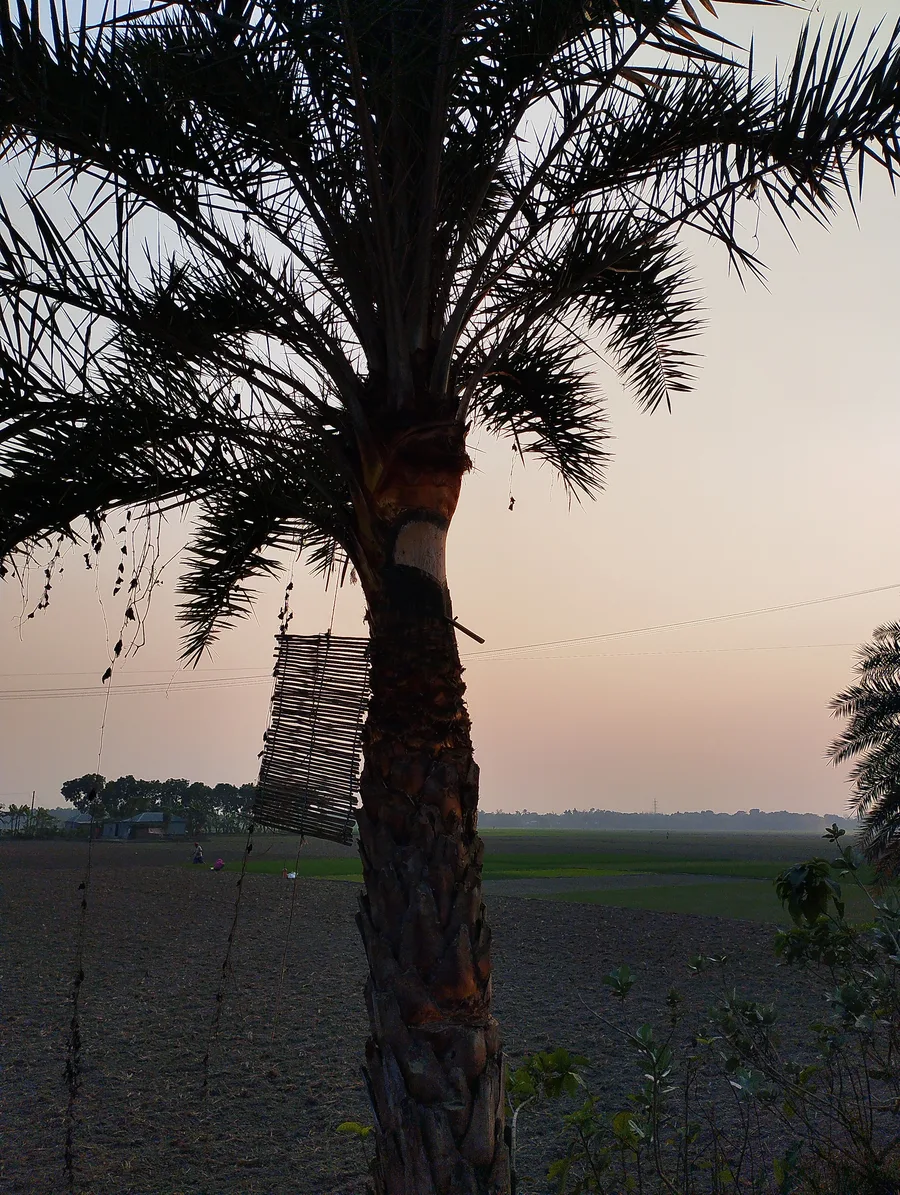
A date palm readied for sap tapping at dusk (Photo: Md. Sakibul Hasan, Wikimedia Commons, CC BY 4.0)
The gachhi’s craft: hung at dusk, brought down at dawn
Tapping is the gachhi’s trade—the community is also known as pashi or shiuli. With a da (chopper) the soft white part at the crown is pared, a short bamboo pipe is fitted in, and an earthen pitcher hangs below; the pot goes up every evening and comes down every morning. Sap belongs to the dawn—left two hours or more, it ferments into tari, so the pan must be on the fire within the morning. Even the harvest follows a rule: the first night’s sap, jiran, is the sweetest, the second night’s doket, the third jhara—then the tree rests for three days, and the six-day cycle carries the whole season.
From sap to gur: patali, nolen, jhola
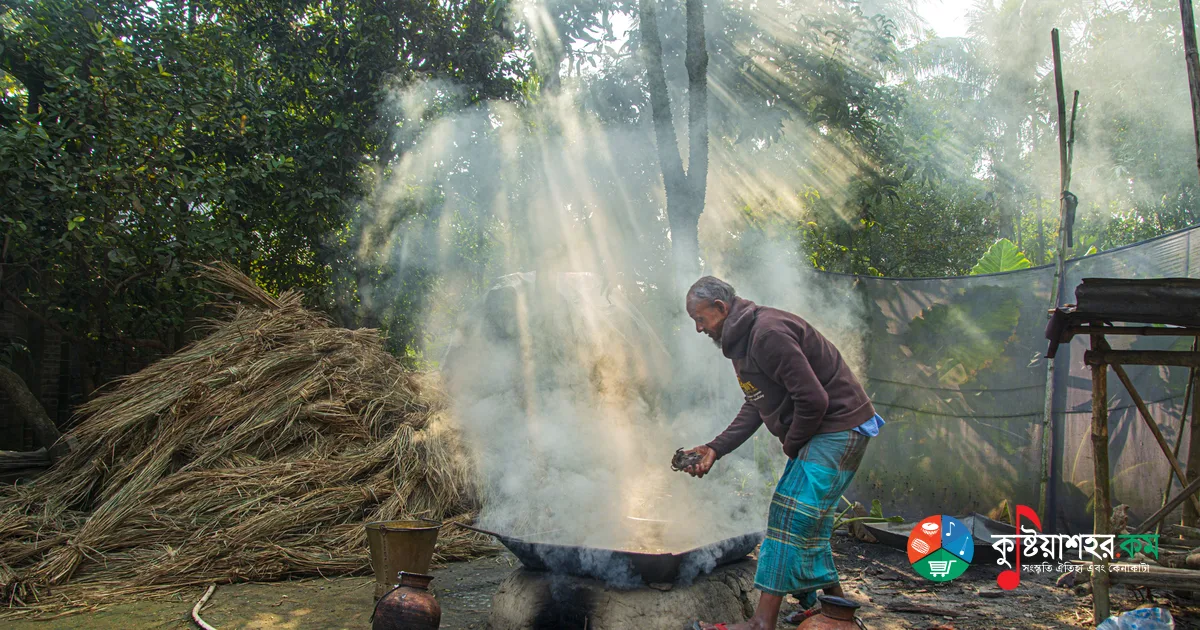
Untouched, sap sours quickly—over straw, dung and dried date-leaf fires the syrup boils for hours through the smoke. By taste and thickness the names change: semi-liquid jhola gur, granular dana gur, patali set in moulds as hard cakes—a favourite with rice and milk; fresh sap’s syrup is nolen gur, and Madaripur’s hazari gur is known across the country. People wait all year for the taste of new nolen—it comes, as the saying goes, only once a year.
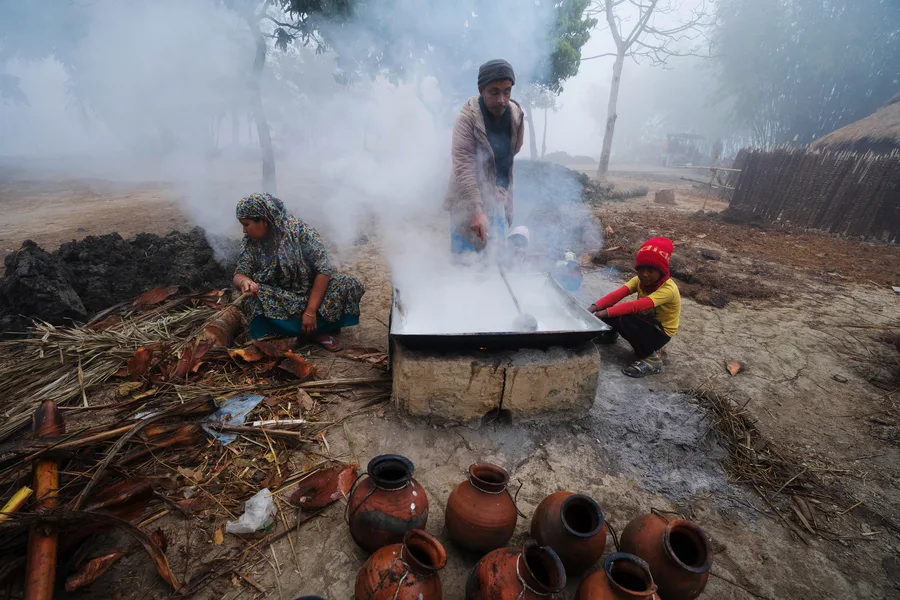
Date palm sap boiling in a wide pan through the smoke (Photo: Azaman666, Wikimedia Commons, CC BY-SA 4.0)
Sap and gur on the winter table
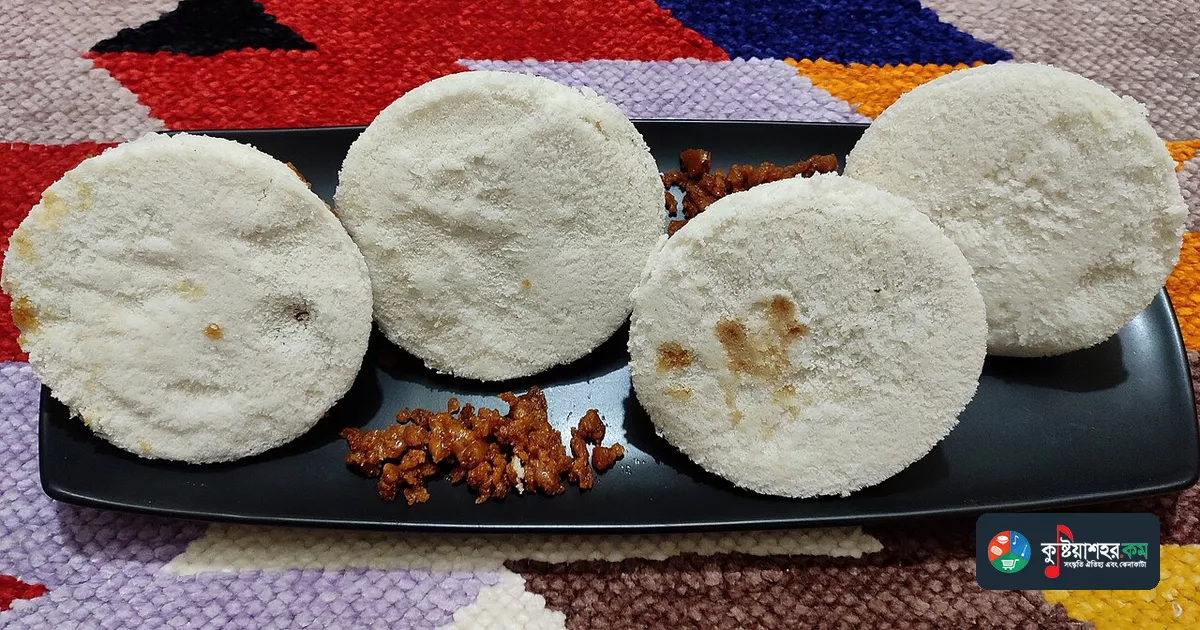
Puffed rice, chira and khoi soaked in dark sap are the classics; date gur seasons the true taste of winter pitha—bhapa, chitoi and patishapta all take its pour. Winter also cooks payesh of date sap, jalepi of khejur gur, even rosgolla of gur. The full story of the winter pitha season lives in Winter Pitha, and the ledger of pitha names in Pitha Varieties of Bengal.
Jessore’s date palm gur: a GI-certified heritage
The great address of date gur is Jessore. Jessore, Faridpur and Satkhira were historically the date-palm country, and Jessore’s dry khajura gur cakes are known across Bengal. The recognition arrived on 15 February 2024—“Jessorer Khejurer Gur” was registered as Bangladesh’s 26th Geographical Indication product, on an application filed by the then Upazila Nirbahi Officer of Chowgachha. In winter, Chowgachha’s fields and haats also host the khejur gur mela—the big season for local growers and gur traders.
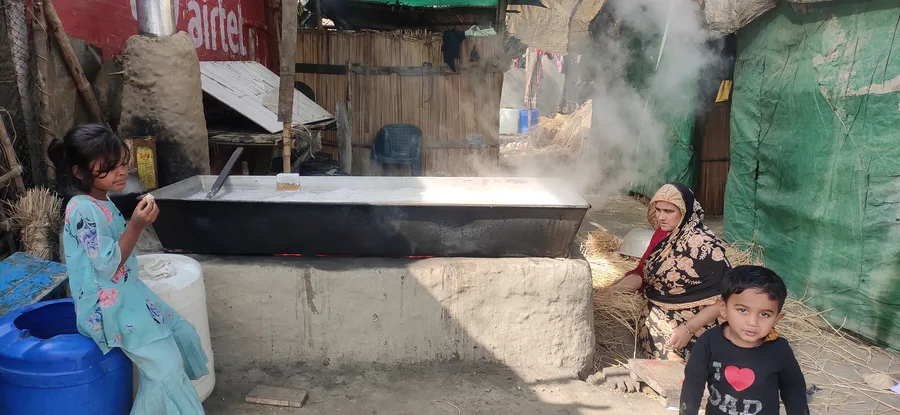
Khejur gur boiling by a roadside on a winter morning (Photo: Goutam1962, Wikimedia Commons, CC BY-SA 4.0)
The profession that is fading
The man behind this sweetness, though, is disappearing. The gachhi is now a nearly extinct community—tapping wages have fallen so low that few will climb a tree, and date palms keep falling to brick-kiln firewood. Plastic has displaced the earthen pot, and open pots carry the risk of insects spoiling the sap. If the gachhi’s craft fails to pass down generations, the sweet stream of winter thins with it.
The first sweetness of dawn
As the gachhi climbs through the fog to bring down the pot, the scent of raw sap mingles with the dew on the grass—this is the dawn that identifies a Bengal winter. A syrup of nolen, a shard of patali and hot pitha—Bengal’s winter completes itself in these three. Keeping the gachhi’s craft alive across generations is the only condition for keeping the tradition alive.