বাংলা
 English
Rice flour, jaggery and coconut—with just a handful of ingredients, Bengalis have shaped pitha into hundreds of forms. The 1991 pitha exhibition of Bangladesh Shishu Academy put 106 varieties on display at once, a measure of how vast this home-grown food tradition is. Steamed, griddle-fried or deep-fried, the pitha of every method carries its own name, its own shape, even a different identity from region to region.
The magic of rice flour
Pitha is a household food tradition of Bengal, practised across Bangladesh as well as West Bengal, Odisha, Bihar and Assam. The base is rice or wheat flour, joined by jaggery or sugar, coconut and oil or ghee. Pitha rarely belongs to the everyday menu—it is food for special occasions: welcoming the groom or the bride, entertaining guests, or a neighbourhood gathering where families bind pitha together. Yet within those familiar ingredients, handiwork and local taste keep multiplying the forms.
Pithas by cooking method
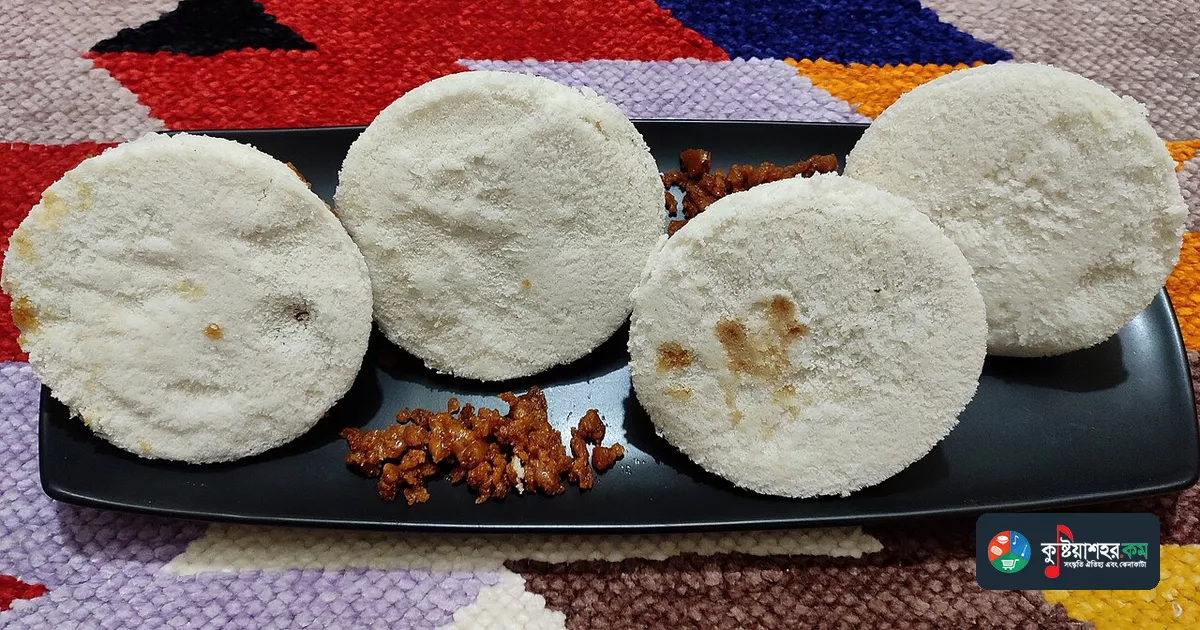
Shape and taste differ, and so do the broad cooking classes. Bhapa pitha steams over a dhuni or in a covered pot, gorgore cooks in the steam of a karai lid; thin batter splashed on a hot griddle makes chitoi, patishapta or mera pitha; puli, kakra and gokul pithe are deep-fried in oil or ghee; and dudh puli is dropped into thickened milk to cook through. The same batter takes one form on the griddle and another in oil—often the method itself names the cake.
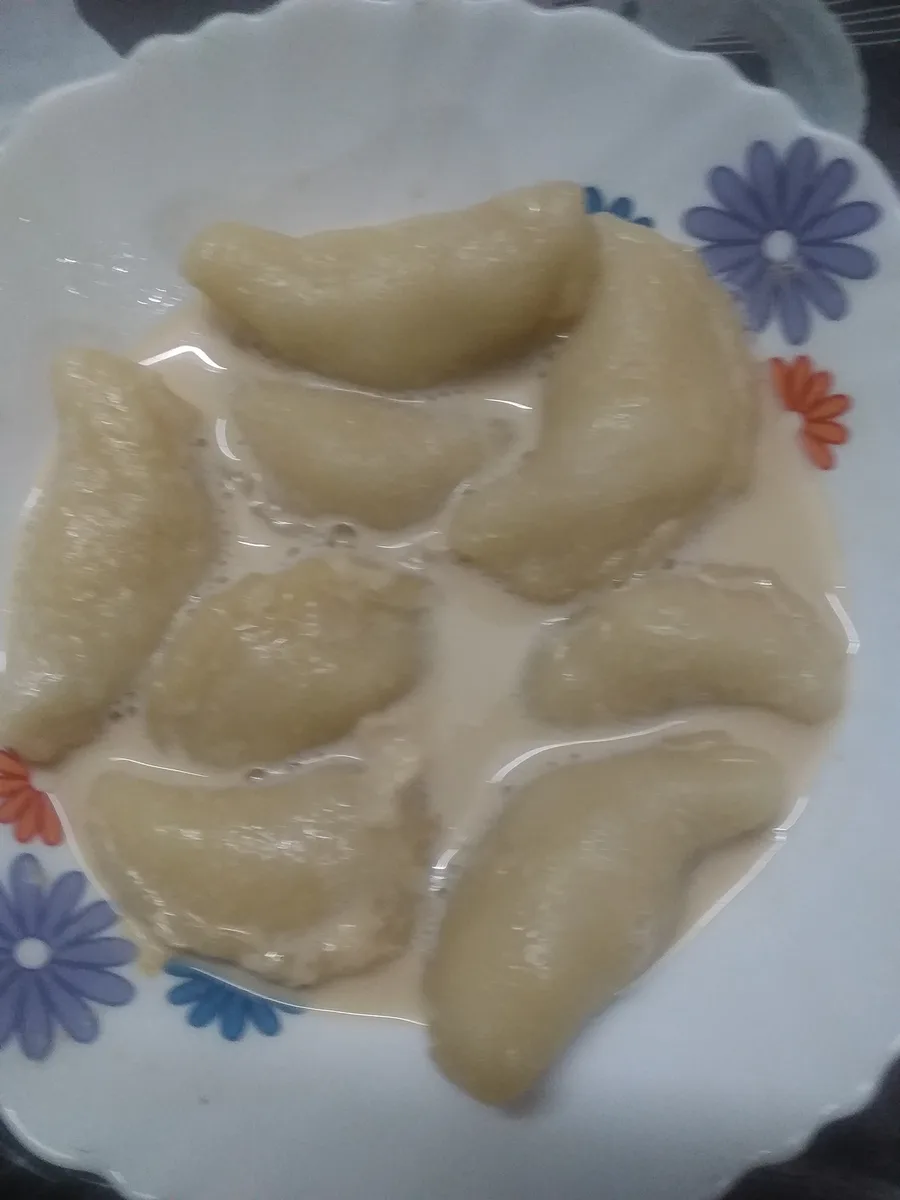
Dudh puli simmered in milk, served on a floral plate (Photo: Pinakpani, Wikimedia Commons, CC BY-SA 4.0)
A ledger of a hundred names
Besides the familiar line of bhapa, chitoi, patishapta and puli, nationally known names include andosha, kulshi, kata pitha, labanga pitha, chutki, muthi pitha, pakan, jamdani, hadi, chapdi, jhuri, phuljhuri and bibikhana. Village after village adds its own names—the same shape may carry one name in one district and a different one next door, and that drift of names is the most charming side of the tradition.
The lovely rules of naming
There is method behind the names too. Fruit pithas take the fruit’s name—cakes of jackfruit, palmyra, coconut and banana all carry it. Others are named by shape: the large one is hadi, the small one khejur pitha, and the kind wrapped and tied in tree leaves is pata pitha. The name alone tells you what lies inside and how it looks.
Savoury pithas exist too
Pitha is not all sweetness. Bengali homes have long cooked spicy and savoury kinds—vegetable-stuffed pithas, jhal patishapta, even mangsha (meat) patishapta. Chitoi on a bhorta batter remains the classic savoury afternoon bite, and at the tea table these salty kinds stand beside the sweet ones as equals.
Wedding pithas and hand-drawn patterns
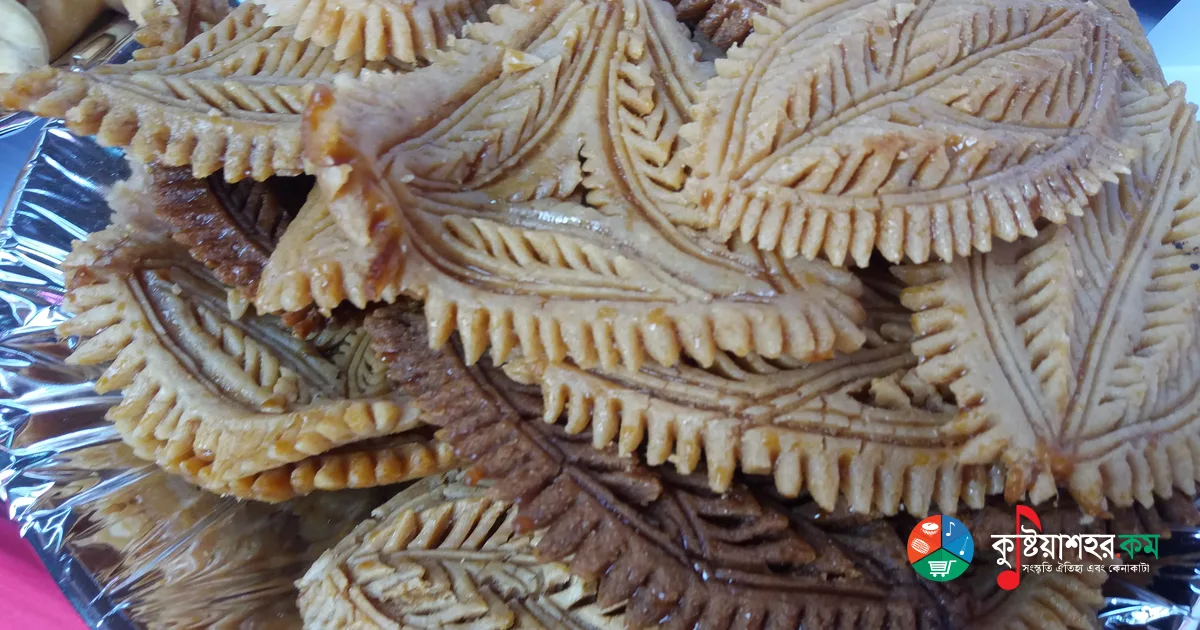
In a wedding house, pitha carries special weight. Bibiana, worked in intricate decorative designs, is counted the mark of the bride’s skill—the same cake travels under the name jamai bhulana, the one that “pleases the groom”. Ornate bibikhana still keeps a special seat at wedding tables, and every tip of a hand-patterned nakshi pitha reads like the signature of its maker.
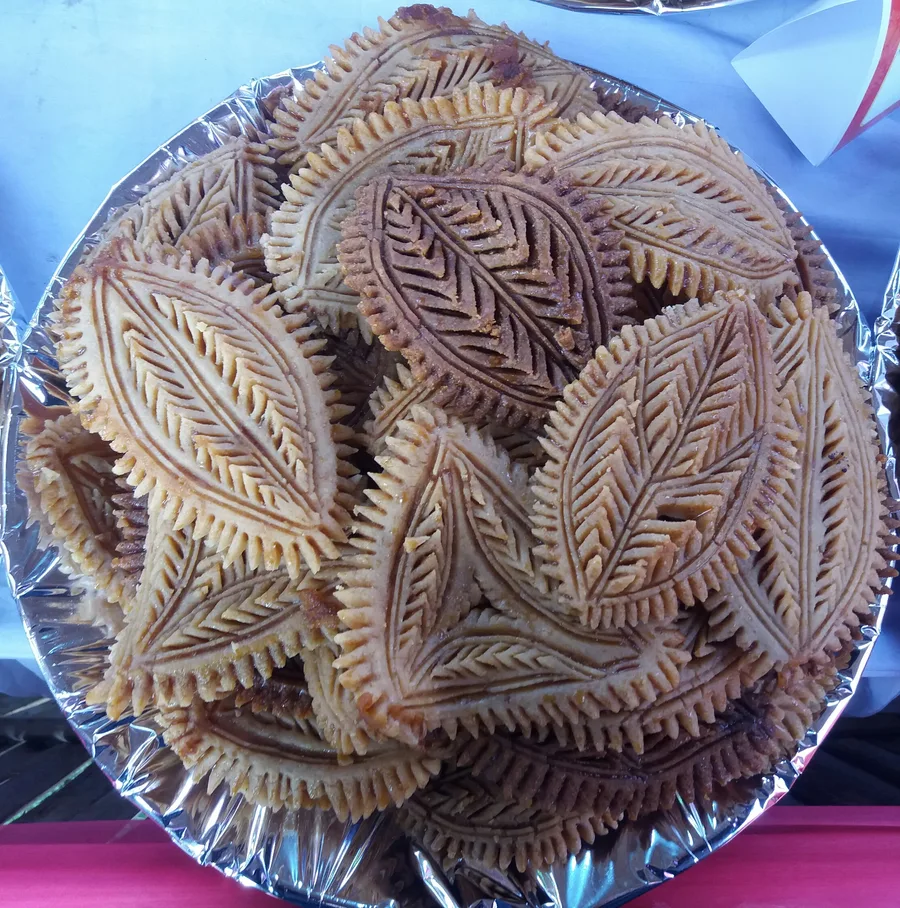
Nakshi pitha shaped with hand-drawn patterns (Photo: Mmrsafy, Wikimedia Commons, CC BY-SA 4.0)
Different shapes, different regions
Every region keeps its own pitha too. Chittagong’s winter belongs to gokul pithe—fried pitha crushed with powdered sugar, roasted nuts and cardamom and shaped; it keeps for days and travels to relatives’ homes. In West Bengal’s Bankura, Purulia and Medinipur, gorgore is cooked from khoil (a paste of boiled atap rice) and pur (fillings of coconut, kheer-shooti, chhana and kheer); tradition ties it to the royal house of Simlapal for some 450 years. And in Sylhet, bhapa pitha returns under its own name, dhuni pitha.
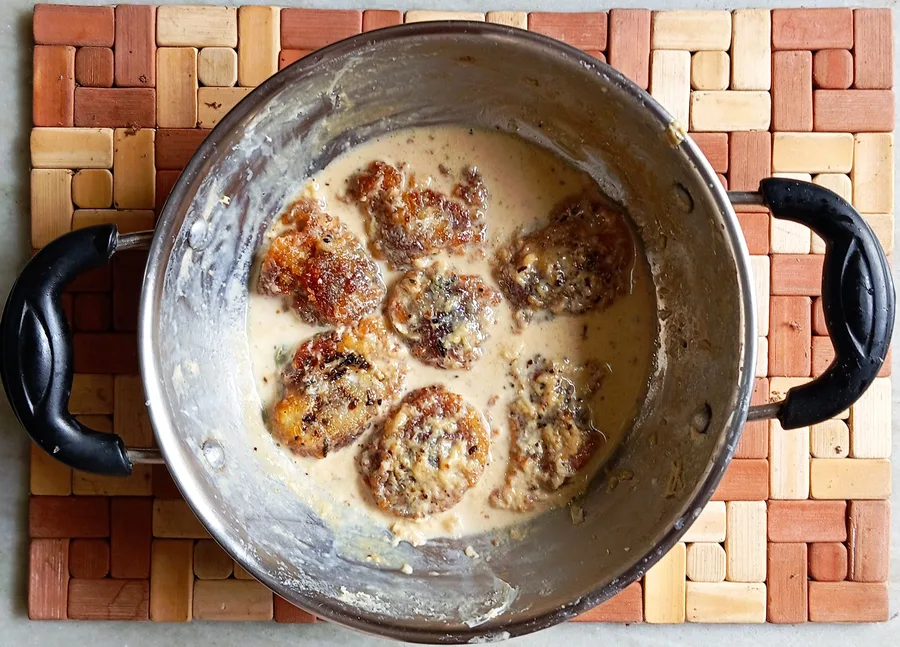
Gokul pithe simmering in milk in a karai (Photo: Salil Kumar Mukherjee, Wikimedia Commons, CC BY-SA 4.0)
Pitha ghors and pitha festivals in the city
Urban busyness has carried the work from the home chulha to the pitha ghor—shops that supply pitha for weddings, holud ceremonies and birthdays. Bangladesh Shishu Academy and the Bangladesh Mahila Samiti hold regular pitha festivals, where varieties from the remotest corners of the country reach city plates.
A mela on one plate
Strained rice batter, the scent of jaggery and a griddle over the fire—this is the scene that makes a Bengali winter feel like winter. Our full feature on the winter pitha season—bhapa, chitoi and patishapta—lives in Winter Pitha. And as the cold sets in, soak the rice, grind it on the pata and begin—only then will this hundred-faced tradition reach the table in its true taste.