বাংলা
 English
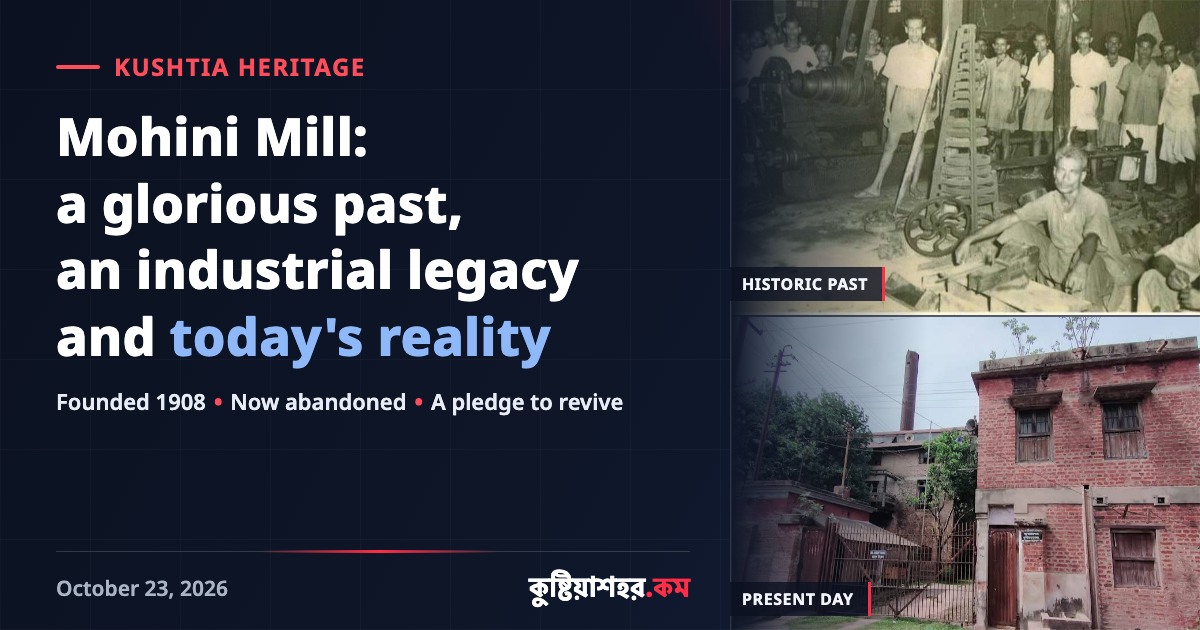
When the industrial heritage of Kushtia town is discussed, one name stands out: Mohini Mill. At its height, this textile mill mattered not only to Kushtia's economy but was deeply woven into the lives of weavers, workers, traders and ordinary people across the wider region. The yarn, sarees and dhotis it produced once earned recognition in different areas, and its impact on employment, trade and the local economy was considerable.
Today that historic industrial institution faces questions over prolonged inactivity, unused infrastructure and the upkeep of its assets. The present state of a mill around which countless livelihoods once revolved brings an important chapter of Kushtia's industrial history to the fore.
The founding history of Mohini Mill
The founding of Kushtia's heritage Mohini Mill is tied to the name of industrial entrepreneur Mohini Mohan Chakraborty. According to published historical accounts and news reports, in 1908 he established a textile mill at Millpara in Kushtia town on roughly 33 acres of land; in its early years the institution was known as 'Chakraborty & Sons'. According to a history-research article on KushtiaTown.com, in 1912 it became 'Kushtia Mohini Mills Limited', and among its shareholders were Jagat Kishore Chowdhury and Rabindranath Tagore; the article also notes that the Tagore family firm 'Tagore & Company' stood north of the mill even earlier.
Towards the end of the nineteenth century and in the early twentieth, Bengal's economy depended heavily on agriculture, handloom weaving and small trade. Local history researchers see Mohini Mill as part of the wave of domestic mills that rose against the backdrop of the Swadeshi movement of 1905–06 and the boycott of British goods. Setting up a modern industrial institution for local yarn and cloth production was a significant initiative of its time, and Mohini Mill was a notable addition to that industrialising history.
Kushtia's geographic position also favoured such an enterprise. Railway links and river routes allowed raw materials to be brought in and finished products supplied to different places. Leveraging these advantages, Mohini Mill gradually became a recognised textile institution.
There are some discrepancies between sources on the founding year, the company's formal name and later changes of ownership. Researching the mill's history therefore requires cross-checking contemporary records, government documents and reliable historical accounts.
Mohini Mill's role in production and trade
The mill's principal business was producing yarn and cloth. Published accounts recall the reputation of its sarees, dhotis and yarn, and note that weavers from different parts of the country once depended on this institution for yarn.
The mill's activities created an environment of economic activity at Millpara in Kushtia town. Alongside the workers and staff directly attached to the mill, people in transport, product supply, trade and other supporting services also found employment.
A textile mill's output never stayed inside the factory walls. Carrying yarn and cloth to market required transport services, wholesale traders, retailers and various related services. The economic activity that grew around Mohini Mill therefore left its mark on local markets and trade as well.
When an industrial institution runs for a long time, it also weaves the surrounding community's memories, occupational experience and social bonds into its own story. For many people Mohini Mill was never merely a factory; it is a monument to Kushtia's industrial prosperity of the past.
Workers and the local economy
One of the most important dimensions of Mohini Mill's history is its worker community. Running production required workers, technical staff, officers and employees, and on their labour the mill's output and business ran. Local history research records that the mill was once a centre of employment for several thousand workers; in the 1930s the Mohini Mill spinning-workers' union took shape here, and the labour leader Comrade Roshan Ali emerged from that milieu.
While the mill operated, many families tied to it earned steady incomes, and workers' earnings created flows of money through local shops, markets, housing, transport and other services — a picture of how a large industrial institution shapes the economy around it.
Yet an industrial institution's history is never only a story of output and success. Working conditions, wages, job security and problems of ownership and management are part of it too. To understand Mohini Mill's long history, workers' experiences and the administrative and economic crises of different periods must be weighed alongside the institution's achievements.
Nationalisation and the changed circumstances
According to local history research, after the founder Mohini Mohan Chakraborty's death in 1922 his grandson Debiprosad Chakraborty — better known as 'Kanu Babu' — took charge of the institution. During the 1965 India–Pakistan war the mill was declared 'enemy property'; Kanu Babu was placed under house arrest under Pakistan's security laws and government administration took control of the mill. He died in 1967, still under house arrest. The mill line, market, hospital and theatre hall that grew around the mill became part of Kushtia town's urbanisation.
After Bangladesh became independent, ownership and management of many industrial institutions across the country changed — Mohini Mill was no exception. According to published historical accounts, in 1972 the institution was nationalised and placed under the management of the Bangladesh Textile Mills Corporation (BTMC).
Efforts were made to keep the institution's production and management going after nationalisation, but various problems emerged over time. Running an industrial institution depends on production costs, machinery capability, market competition, raw-material supply, management and financial capacity — trouble in any of these fields can put even a large factory's operations at risk.
News reports and historical writing have recorded losses and management crises at Mohini Mill, but determining the specific causes and responsibility requires analysing the government records of the period, financial reports and workers' testimony.
The 1982 closure
The 1980s form an important and painful chapter in Mohini Mill's history. According to various news reports, the mill's regular production stopped in 1982, leaving workers and staff facing an uncertain future. According to a bdnews24.com report published on 21 May 2010, the mill reopened in 1985 after the 1982 closure but later shut again over losses — that report puts the final closure on 15 August 1990. The KushtiaTown.com history research, on the other hand, dates the mill's inactivity from 1 November 1987. Sources differ on the exact date, but almost every account agrees the stagnation began sometime between the mid and late 1980s.
When a large industrial institution closes, the impact does not stay within the factory walls: employment is lost, family incomes fall, purchasing power in local markets shrinks and related businesses contract. The closure of Mohini Mill is an important event in Kushtia's industrial and working-class history.
Later, there were discussions and initiatives at different stages about the mill's property, ownership and reopening — but production was never sustained. The long closure also raised concerns about the maintenance of the factory's machinery, buildings and other infrastructure.
The restart effort and Shah Makhdoom Textile Mills
After Mohini Mill shut down, attempts were made at different times to revive it. According to a bdnews24.com report published on 21 May 2010, after a long period of closure the factory was restarted as 'M/s Shah Makhdoom Textile Mills'. That report states that Pills Development Services Corporation Limited leased the mill from the government and ran it, with the then District Commissioner Abdul Mannan formally inaugurating the production operations on the morning of 21 May — a hopeful step after nearly two decades of closure.
But a restart initiative does not automatically mean a long-term return to viability. Sustaining regular production requires effective management, adequate investment, modernised machinery, skilled manpower, market demand and financial stability.
In Mohini Mill's case, the restart did not achieve lasting success; reports from later years record repeated changes of hands and production that never became fully sustainable.
This sequence of events makes clear that renaming an institution or holding a formal inauguration is not enough to revive a historic industrial one. What is needed is long-term planning, transparent management and a realistic industrial development strategy.
Ownership, property and legal tangles
Ownership- and property-related complications are an important part of Mohini Mill's history. A Prothom Alo report of January 2024 states that the Ministry of Textiles and Jute formed a liquidation cell in June 1981, tasked with selling this factory along with three others — yet more than four decades on, Mohini Mill has still not been sold. Published accounts indicate that around 2011 an attempt was made to hand the mill over to a private concern; however, following complaints that it had been sold far below the assessed price (about 20 crore taka), the Prime Minister's Office directed that the government take it back, and the institution now remains under the control of the liquidation cell.
When an institution stays closed for years, ensuring sound management of its land, buildings, machinery and other assets becomes difficult. The same Prothom Alo report records that after the closure the mill's land was progressively encroached upon — nearly half is no longer under the authorities' control, with about sixteen and a half acres said to remain in hand. Ownership disputes, financial liabilities, legal restrictions or administrative tangles can obstruct any attempt at restarting production.
In Mohini Mill's case too, news of property transfers and revival attempts has appeared at different times, yet a long-term industrial future for the institution has never been secured.
Reaching firm conclusions about property and ownership requires verifying the relevant government documents, court orders, contracts and up-to-date administrative information. On the basis of press reports or local hearsay alone, presenting allegations against any person or institution as settled fact would not be proper.
Abandoned infrastructure and the question of preservation
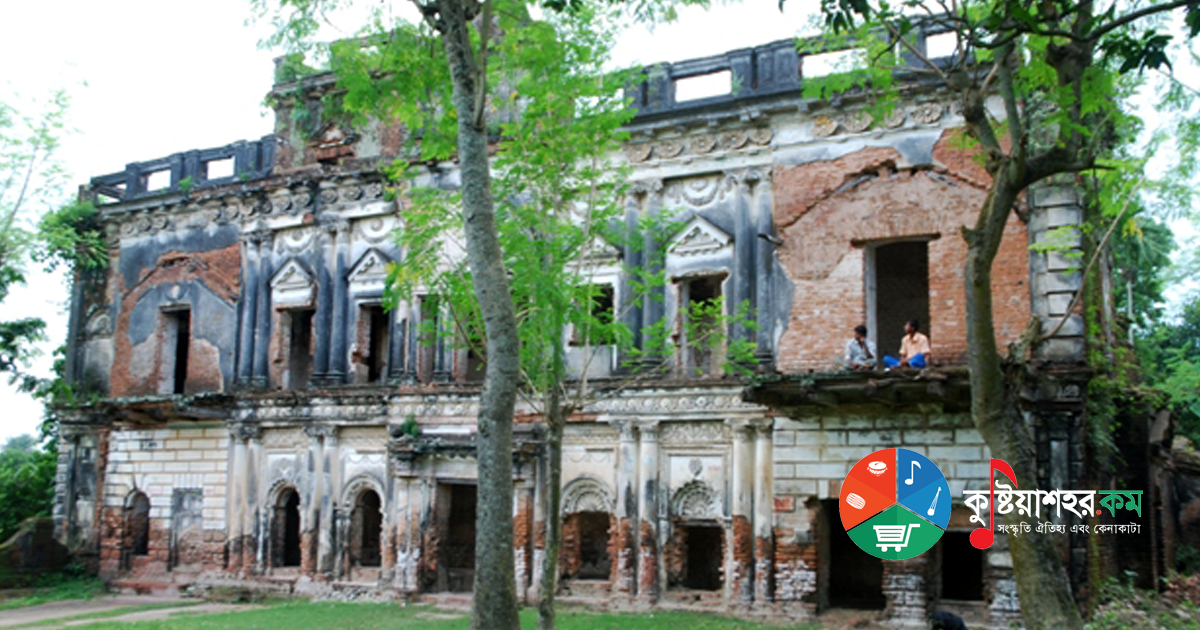
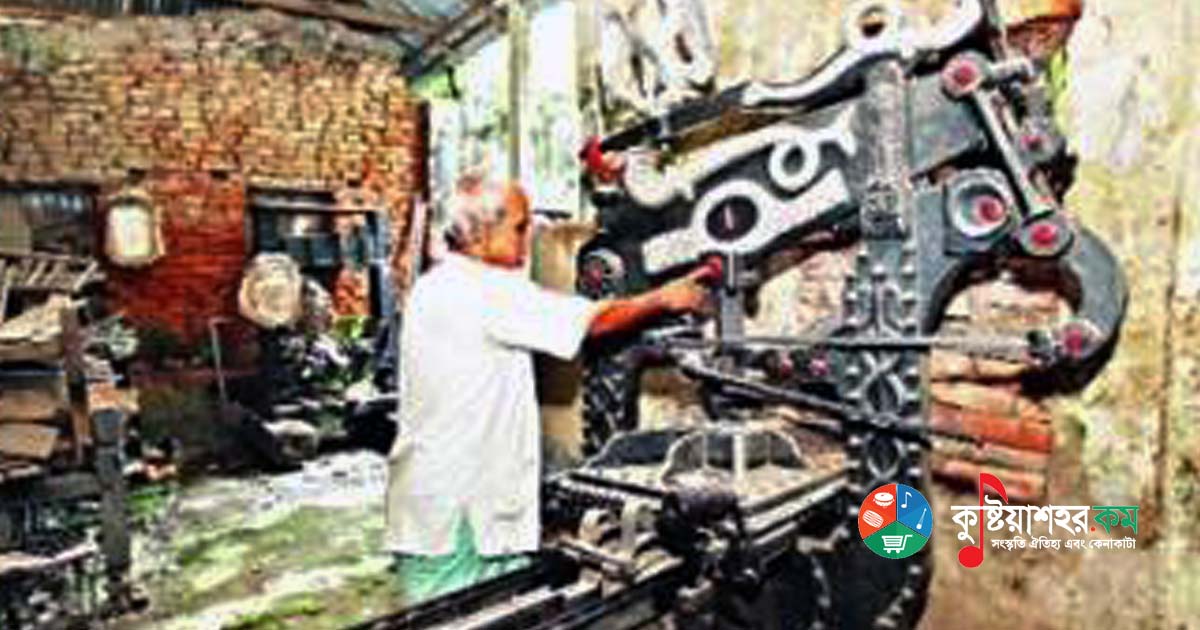
Reports on the long-closed Mohini Mill's buildings, machinery and other structures have appeared at different times. A Bhorer Kagoj report of September 2024 recorded that the abandoned factory's valuable assets and machine parts were being looted — machine parts including brass handloom machines brought from England were being stolen, wiring worth lakhs of taka cut away, and plaster stripped from walls and roofs; the buildings are dilapidated and the mill compound has turned into jungle. That report put the current market value of the mill's 99 bighas of land at around two thousand crore taka.
A historic industrial institution's worth cannot be measured only by the market price of its land or buildings. The history of technology, workers' lives, the evolution of the local economy and a region's social memory are bound up with it. By that measure, Mohini Mill is an important part of Kushtia's industrial heritage.
In preserving old industrial factories, several considerations stand out: first, assessing the historical value of buildings and machinery; second, evaluating the present condition and safety of the structures; third, documenting the preservable parts — collecting photographs, plans, documents and oral history.
Possible initiatives include an industrial-heritage museum, preserved historic structures, a research and exhibition centre, or new industrial activity under suitable planning. But before such initiatives are carried out, ownership, legal status, technical feasibility and financing must all be verified.
An election pledge: Amir Hamza's promise to reopen Mohini Mill
In the 2026 thirteenth national parliamentary election, Mufti Amir Hamza of Bangladesh Jamaat-e-Islami was elected from the Kushtia-3 (Kushtia Sadar) constituency. Part of his election pledge was to reopen the abandoned Mohini Mill once again.
After becoming MP, on 26 April 2026 he proposed in the Jatiya Sangsad that the unused land of the Kushtia Sugar Mills and Mohini Mill be leased to the private sector or used as an economic zone/industrial park, noting the interest of foreign companies and that he had spoken with several of them. Later, in an interview with the Daily Andoloner Bazar, he reiterated his commitment: the more than a thousand bighas of unused government land including Mohini Mill and the Kushtia Sugar Mills would be put to use under a coordinated plan, creating broad employment for local youth — in his words, the Mohini Mill-centred economy would stand on its feet once again.
On the ground, however, progress is not yet visible. Since the election, no published step, timetable or investment announcement for reopening Mohini Mill has come to light. The institution's reality is complicated: nearly half the land is encroached, there are complaints of assets being removed, and the liquidation cell's control means legal and administrative stages lie on any revival path. How far the pledge travels towards realisation will become clear with time.
The possibility of reviving Mohini Mill
The most important question surrounding Mohini Mill is: what future can this historic industrial institution have?
Discussing the mill's future requires weighing real economic and technical conditions alongside sentiment: whether production can restart on the old machinery, how usable the buildings remain, how much new investment is needed and what kind of production could be profitable in today's market — all call for detailed surveys.
If restarting as a full-scale textile mill proves economically viable, planning can proceed on the basis of modern technology, skilled manpower and transparent management. If industrial operations cannot resume, then preserving the appropriate historic structures and discussing alternative uses become the way forward.
In this, coordination among government agencies, the property's lawful owner, the local administration, the Member of Parliament, industrial experts, historians and Kushtia's citizens is essential. Before decisions are taken, disclosure of reliable information, assessment of the property's condition and transparency about possible plans are necessary.
Mohini Mill's place in Kushtia's history
Kushtia is known for its literature, culture, music and historic heritage, but another important strand of the region's history is the growth of industry and the economy — and Mohini Mill is a notable monument of that industrial history.
Bound up with this institution's story are an entrepreneur's initiative, the development of textile production, workers' working lives, nationalisation, the halt of production and repeated attempts at reopening. The mill's history is therefore not merely the account of an old factory; it is also a field for understanding the transformation of Bangladesh's industrial system, the challenges of management and the necessity of preserving heritage.
To tell the mill's history more fully, interviews with veteran workers and staff, old photographs, appointment letters, wage records, production reports, company documents and local people's reminiscences need to be collected. If such materials are preserved, the mill's true history can be presented to future generations more reliably.
Conclusion
Mohini Mill is an important name in Kushtia's industrial heritage. An institution that once mattered to production, employment and trade has long been stagnant. Its past is part of local people's pride; its present condition is a reminder of the need for protecting industrial assets and managing them with planning.
Determining the mill's future requires proper documentation of its history, transparency about its property and legal status, technical assessment and a realistic plan. Whether the institution returns to industrial activity or takes on a new identity through preserving its historic parts, that decision should be made on the basis of information, feasibility and the public interest.
Preserving the history of this heritage industrial institution of Kushtia means not merely keeping an old factory's memory alive, but carrying the history of this region's labour, initiative, economy and social change to future generations.
Sources and further reading
- Kushtia District Administration — Mohini Mill: kushtia.gov.bd/pages/tourist-spot
- bdnews24.com (21 May 2010) — Mohini Mill restarted as Shah Makhdoom: bangla.bdnews24.com/bangladesh/article463186
- Prothom Alo (15 January 2024) — Not sold in four decades: prothomalo.com/bangladesh/o3qhyiaq0u
- KushtiaTown.com (11 June 2017) — Kushtia's Mohini Mill (history-research article): kushtiatown.com/our-history/14-mohini-mohon/426-kushtia-mohini-mill
- Bhorer Kagoj (28 September 2024) — Looting of abandoned Mohini Mill's assets: bhorerkagoj.net/tp-country/740317
- Bangla Wikipedia — Mohini Mill: bn.wikipedia.org/wiki/মোহিনী_মিল