
 বাংলা
 English
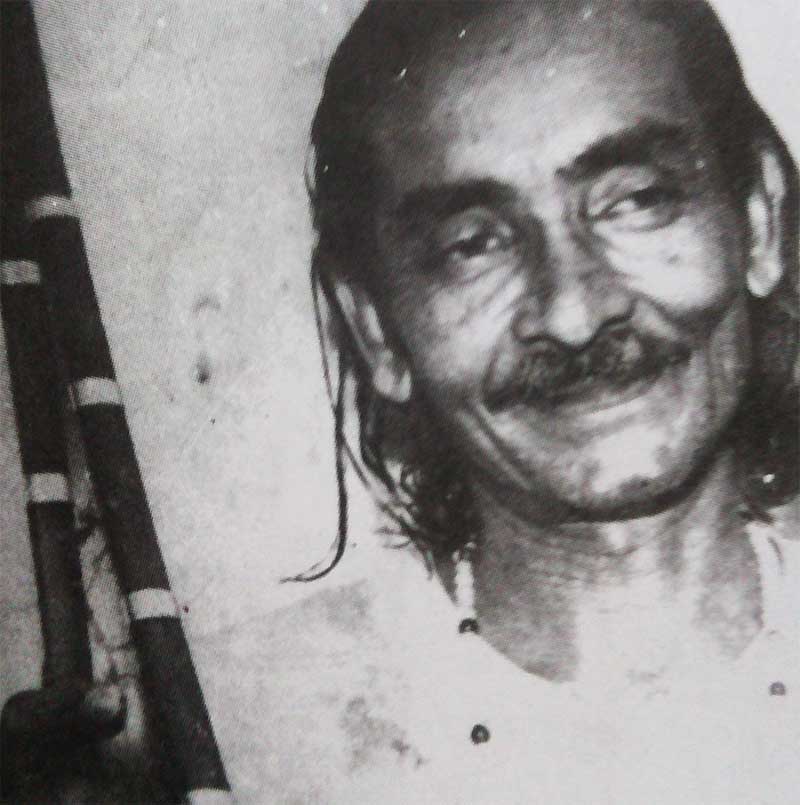
The bank of the Kaliganga, towards the end of the eighteenth century. Lalon is young still. A body scorched by smallpox lies unconscious on the riverbank; the kinsfolk have abandoned him and gone — in that age smallpox meant almost certain death, and the family had simply concluded that this body would not survive. Then a fakir couple of Cheuriya — Malam Shah and his wife Motijan — lifted the body up and nursed it back to health. And from that discarded body was born one of the subcontinent's greatest saint-poets — Fakir Lalon Shai, who, it is said, lived nearly one hundred and sixteen years.
Two hundred years have passed. Today that abandoned body's ownership is claimed by universities, ministries, record companies, television — and religion too. The man who sang all his life against the pomp of caste, wealth and creed now sits with perfect ease in the addas of high society, on the stages of state festivals, in corporate campaigns, in theological treatises — at ease everywhere. Has Lalon, then, won? No — and this is the central anxiety of this essay: under the guise of victory, Lalon is being occupied all over again. And the price of this occupation is being paid by his own people — the poor, the unlettered, the outcast men and women in whose language, akhras and boats Lalon was born. If history offers any warning, it is this: the process now underway of removing Lalon a second time from his own people is unlike the first — this time it is happening not in the name of hatred but in the name of love.
The abandoned body on the banks of the Kaliganga
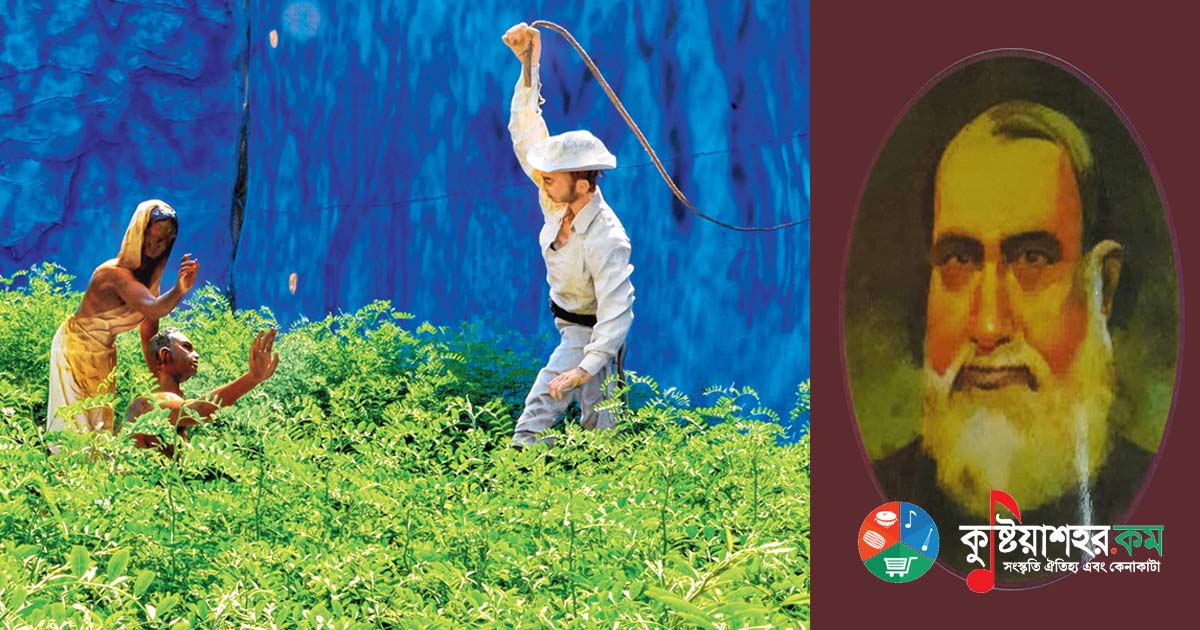
Nothing certain is known of Lalon's birth — perhaps he deliberately kept it carefully obscure. Researchers place his birth around 1774; his birthplace is disputed, and it may as well remain unknown. But more important than his birth is his "second birth" — that episode on the bank of the Kaliganga. Tradition says: the family left Lalon for dead when smallpox struck him down; Malam Shah and his wife Motijan rescued him and brought him to Cheuriya; and when he returned home cured, the kinsfolk refused to let him enter the house — because he had lived long "in a Muslim household"; his caste had "broken". This story is the treasure of oral tradition more than of written record; yet as symbolic truth, no biography could be more exact. A body cast out by the caste order — that is the birth certificate of Lalon's philosophy.
He proclaimed that revolt first in song —
"His caste is gone, his caste is gone," they cry — what a strange factory this is!
That same question he posed even more directly in another song — "What form has caste? I searched this world, and saw it not."
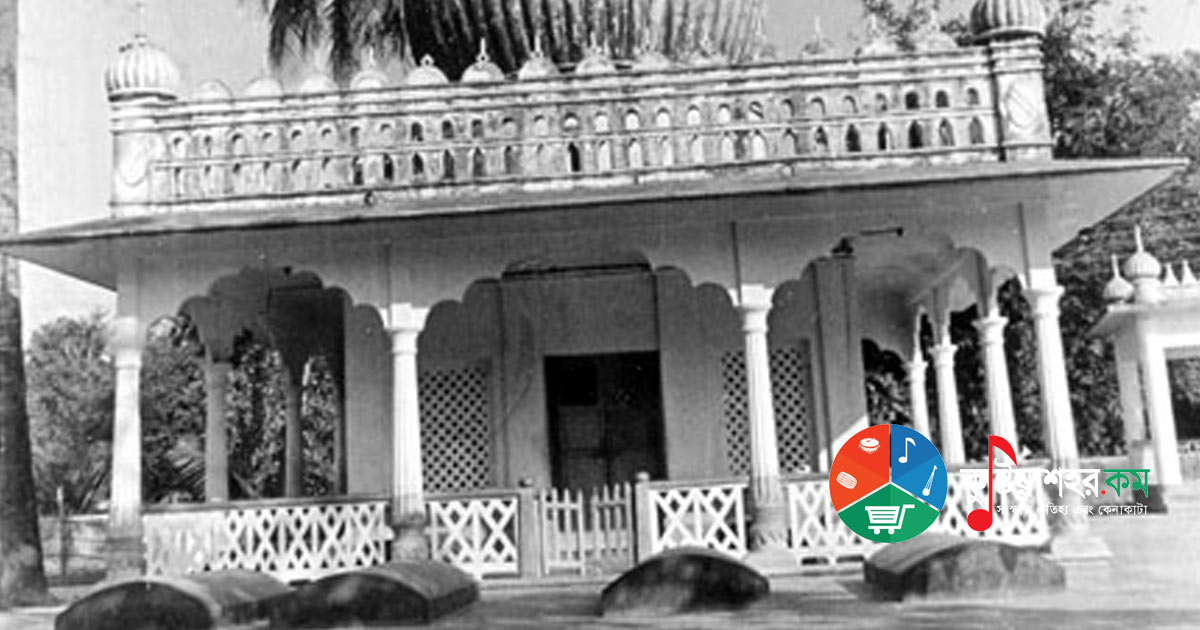
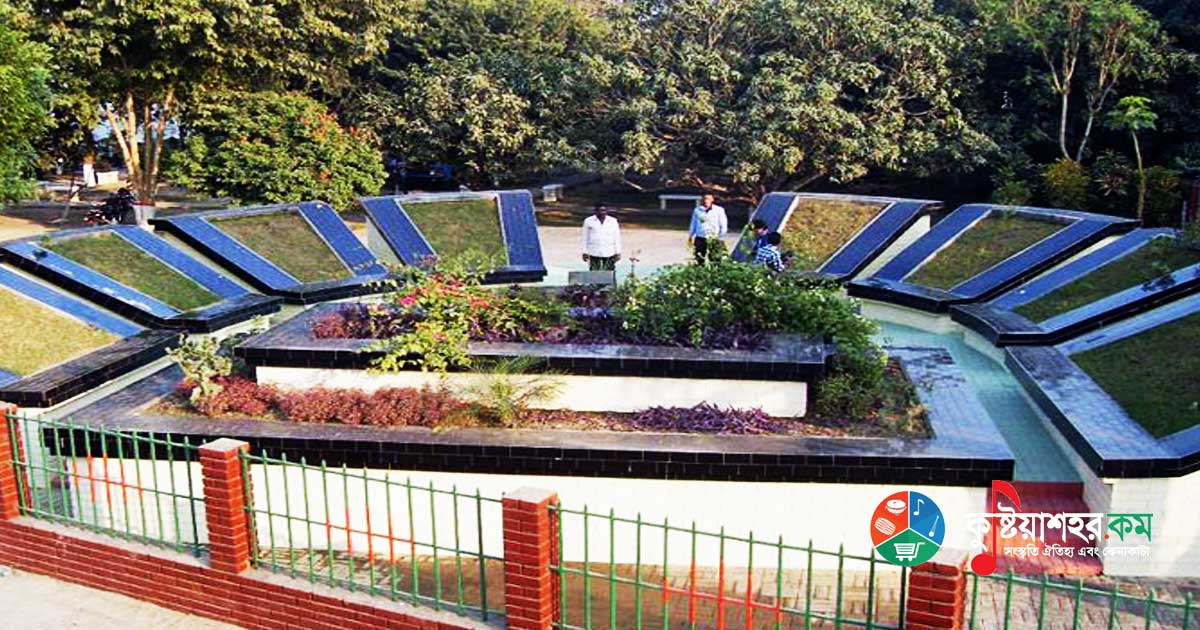
Initiated by his guru Siraj Sai, he built the akhra at Cheuriya — an address whose door stood open to all, regardless of caste, clan or sect. On 17 October 1890, at his own akhra in Cheuriya, Kumarkhali, Kushtia, he passed away — in the last part of the nineteenth century; his grave is there. Yet even in his lifetime he belonged to the ground floor of society. His disciples were sharecropping peasants, boatmen, weavers, cobblers, potters, Doms, fakirs of broken homes. Society called them "ignorant" — because they could not read.
The Cheuriya akhra was, in that age, a rare address. For those whom society had discarded — outcastes, widows, the sick, the lost, the hungry — here were food, shelter, care, and the rarest thing of all: unquestioned respect. Alongside it lived a living education — questions of the body's mystery, the discipline of song, the dialogue of guru and disciple. In modern terms the akhra was at once a shelter, a school, a forum of thought and a social safety net for the poor — whatever society had snatched away from outside, Lalon gave back from within. And even in his lifetime he paid the price of that stance: pundits of the sects demanded his caste, criticized him, some propagated his akhra as "impure". Lalon's answer left its mark on history — he did not answer with caste; he answered with song.
Knowledge beyond letters, for the illiterate
The greatest confusion in reading Lalon's philosophy is to call him a "philosopher" — a word which, in our imagination, means university volumes, English terminology, seminar halls. Yet the most revolutionary thing about Lalon's philosophy was its address: he did not keep knowledge in books; he kept it in people's mouths. His students could not read — and he took that not as a barrier but as an opportunity. Woven into rhythm, metre and melody, knowledge is memorized; it opens in question and answer; it grows in the akhra's dialogue. The carrier of his philosophy was therefore the song — a medium that needs no certificate to teach.
In that song he posed his age's sharpest question — to the caste order —
Everyone asks Lalon — is caste what tells us who you are? Lalon says: what caste looks like, these eyes have never seen.
Note that the question is not merely about Lalon's own caste; it unravels the very weave of the institution: what does caste actually tell us? Blood? Occupation? Ritual? None of it travels with the soul. Lalon did not stop at mocking caste — he broke its epistemic foundation. And this was not for his age alone; the habit of sorting people into strata by birth, class and property is with us still — only its language has changed.
For the same reason his philosophy of the "man of the heart" — the mystery of the body — should be read as the democratization of knowledge. To attain truth one needs no priest, no pundit, no diploma from Kashi or Medina; one needs one's own body, one's own heart, a living guru. The door of knowledge stands open to all — the cobbler's son may enter; the king may not, if he cannot lay his pride down. And do not forget: in Lalon's akhra women practised alongside men; the Lalon tradition has carried countless women practitioners and singers. That alone is proof enough — his call for equality was not paper rhetoric; it was a living practice.
One more thing must be said here, or what follows will not stand: Lalon's hundreds of songs were never bound into an anthology in his lifetime. The songs travelled mouth to mouth — guru to disciple, disciple to new disciple, from the akhra to the road to the market. The meaning is vast: Lalon's wealth had no certificate of title, so its owner was anyone who memorized the song, practised it, and taught it to the next person. This oral contract of ownership was the lifeblood of the Lalon tradition — and it is this contract that is under the greatest pressure today.
So the address of Lalon's knowledge was: the akhra, the fair, the boat, the field, the mouth. The owner of that knowledge was those very people called "ignorant". Hold this picture in mind — and now watch how, over two hundred years, the picture was turned upside down.
Four forms of occupation
After Lalon's passing, four forces gradually turned their gaze upon him and began to occupy him — the scholarly world, the state and its administration, the market and its industries, and religion. What is frightening lies here: none of them took him as an enemy; all occupied him in the language of love, in the name of honour. The occupation is so smooth that it is hard to find any point of resistance.
I choose the word "occupation" not for a rhetorical jolt. Take the definition in its plain sense: when someone else removes the use, the income and the meaning of a resource from the society that created it, we call it occupation. Lalon's case fits directly — the songs were made by him, carried by the poor people of his tradition; but their use, income and meaning now flow into other hands.
The occupation of the knowledge industry
The first touch came from the scholarly world. Through contemporaries such as Kangal Harinath Majumdar, news of Lalon reached the city; Rabindranath learned of his songs and printed some in his own magazine; Baul melodies entered the ashram of Santiniketan. None of this is harmful in itself — the attention of a great writer is a fortune for any artist. The trouble lies in the next step: over a hundred years, Lalon became a "subject of research". Chapters of PhDs, international seminars, the English library of "Baul studies", the notebooks of foreign researchers. Lalon's deho-totto is now expounded in English terminology, his songs are quoted in translation, the people of his tradition sit in the guests' seats. Lalon is now a career — research projects, keynote lectures abroad, festival seminar sessions. None of this is unjust in itself; the harm lies elsewhere: this whole economy runs on the currency of credentials, and credentials are minted in universities — a place most fakir-bauls fall away from before they can ever reach. The language of knowledge changed, the certificate of knowledge was introduced — and the day knowledge requires a certificate, the unlettered need a translator to understand their own philosopher. The fakir of Cheuriya never became Lalon's reader — he became the text.
The occupation of the state and the administration
In the first decade of the two-thousands, UNESCO proclaimed Baul song a Masterpiece of the Oral and Intangible Heritage of Humanity. In the state's eyes Lalon became an asset — of tourism, of diplomacy, of identity. The annual Lalon festival at Cheuriya became an occasion of state management: ministers and state ministers inaugurating, traffic plans, banners and festoons, VIP gates, television cameras. In textbooks he is the "Baul Emperor". One might think all this is honour. Yet on the other side: year after year we have heard of disputes over the grabbing of the akhra's land and its surroundings; the fakir-bauls of the tradition have no protection of livelihood, medical care, or their children's schooling; the baul who sings at the festival is a performing labourer, while the festival's ownership rests with the bureaucracy. Look too at the festival crowd: the hawkers, the banner printers, the hotels and restaurants, the transport owners — all take part in the festival economy; but who gets the microphone, who takes the stage — that list is drawn up on an office desk. The fakirs of the tradition come to the festival the way one comes to a market — if called, if paid. In the festival held in their guru's memory they are not spectators, not even partners — they are the backdrop. The state made Lalon a brand, but never made Lalon's society an asset. In the certificate Lalon is present; in policy he is absent.
The occupation of the market
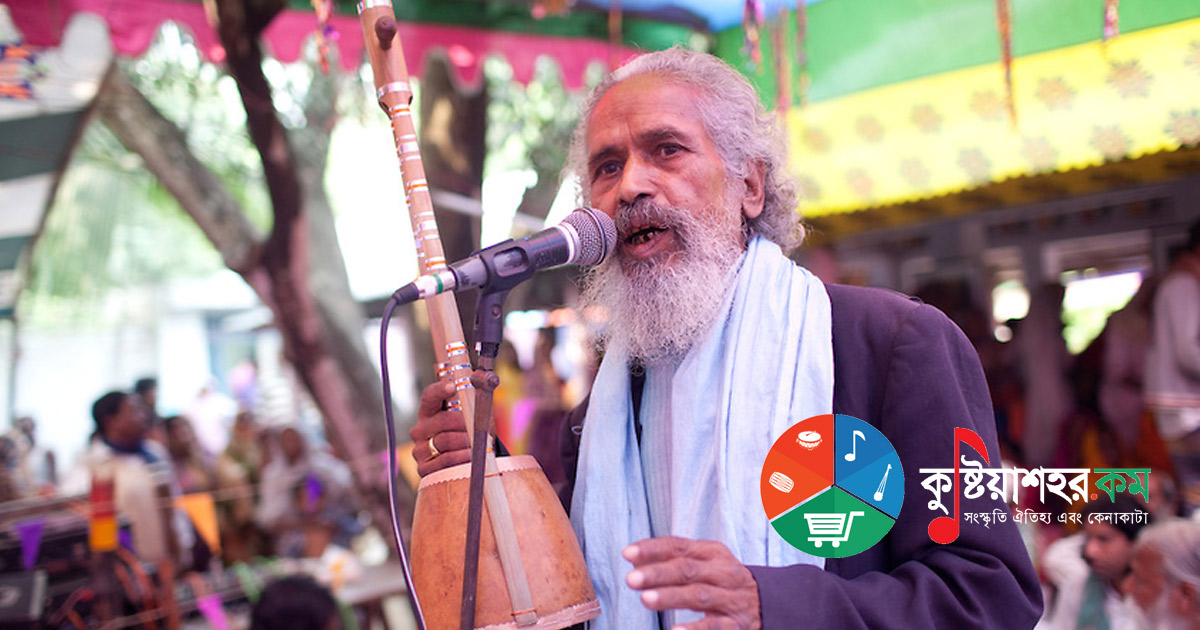
Then came industry. A Dhaka city band borrowed his name; fusion albums, concerts, streaming royalties, cinema, documentaries — Lalon became a popular cultural commodity. There is a good side to this, and there is no hiding it: on this wave of old-new melody, millions heard "the unknown bird in the cage" for the first time. But the question lies elsewhere: where did the money woven into the song go? To record labels, to concert businesses, to the fees of city artists. The fakir of Cheuriya still sings without a microphone, while "versions" of his own song sell behind premium tickets. See too the new shape in the digital age: type "Lalon" on YouTube and there are millions of views; but whom does the algorithm pull up? The city composer's version. The fakir who has carried that song by mouth for a hundred years has no name in the search — in the song's history he is the "source"; in the status update he is the "cover". The market bought Lalon's melody, not his philosophy — there is no shop that sells philosophy, so at the moment of trade it is simply left out. The result is a strange Lalon: the man who knows the melody in his hands is left out; only that Lalon which can be dressed up and sold remains.
The occupation of religion
The most complicated occupation is religion's. In his lifetime Lalon bore the reproach of organized religion — his akhra was an address of the "heretic", his question of caste unbearable to both communities. Even after his death his grave was disputed; in the seventies, extremists broke the memorial structure at Cheuriya, and his remains had to be reburied by devotees. Yet today much of that same society walks the opposite road: one by one, some proclaim Lalon a saint of Sufi metaphysics, a man within Islam; others make him a branch of the Vaishnava devotion-tradition; in the competition of turning him into a mazar or a temple, Lalon has come to stand in the seat of a witness. But the first condition of Lalon's philosophy was to refuse organized religion's exclusive claim. The religion that once demanded his caste now writes his certificate, telling his history of rejection in a tidied-up voice: "he was always ours." For religion this is a natural tendency; for Lalon it is surrender.
Yet a distinction must be drawn here. Lalon's philosophy does bear the influence of Sufi and Vaishnava currents — his own tradition admits it; his songs hold both Medina and Brindaban. That is not occupation; that is confluence. Occupation happens when that diversity is recast as an exclusive certificate — when an attempt is made to manufacture proof that "Lalon was really ours". Confluence is the meeting-place of saints; a certificate is the sect's boundary wall. Lalon did the first in his lifetime, and sang against the second.
Why was Lalon so easy to occupy?
Seeing the list of four occupations, the question comes naturally: why did Lalon fall to occupation so easily? Rabindranath cannot be occupied like this — behind him stand his complete collected works, legal copyright, vigilant institutions of the Tagore-loving public; behind Lalon there is no legal owner, no institution, not even a birth-and-death certificate. Second, his life and philosophy were deliberately ambiguous — the very ambiguity that let him withstand every power's attack in his lifetime now gives everyone licence to claim him: since Lalon left no clear evidence, anyone who wishes may write him into their own ledger. Third, he is gone — a dead artist does not resist the use of his name. If the fakir-bauls wished to protest, they lack the linguistic capital with which to speak to the state, the university and the market. This vacancy of ownership may be called "unclaimed wealth" — and society's rule is old: unclaimed land gets occupied.
The distance that is returning
Now pause, and see what the fruits of the four occupations add up to.
The first distance in Lalon's life was one-sided cruelty: society cast him out in the name of caste. The hatred was open, declared. Yet inside that cruelty lay one advantage: when rejection is clear, the road of revolt is clear too. Lalon made philosophy out of that rejection, and the readers of that philosophy were the very people society had discarded.
Today's distance is of a wholly different kind. No one is casting Lalon out — on the contrary, everyone is taking him in, dressing him, seating him high. But at every layer of that acceptance sits a silent condition, and by it the poor "ignorant" man falls behind again.
The distance of language. Lalon is now discussed in seminars, in English terminology, behind degrees. The space to speak of philosophy in the very language in which the village fakir taught it has all but vanished.
The distance of place. The song has moved from the akhra to the city hall, behind the ticket counter. The man who listened to songs on the riverbank with a gamchha on his shoulder no longer knows how to stand at the hall's door.
The distance of money. The earnings of Lalon's songs never return to the traditional fakir-bauls. With no livelihood in the fakir's life, fewer young people enter the Cheuriya lineage. When the carriers of the tradition are hungry, the heritage lies deposited in a bank.
The distance of dignity. In the name of "preservation" the bauls are being made museum specimens: the pundit holds the right to ask questions; the baul holds the duty to sing. But in the Lalon tradition the baul was a philosopher-teacher; today he is an "artist" — that is, a dressed-up object.
The most intimate edge of these distances is this: in Lalon's song the poor man saw himself as great; at Lalon's festival he sees himself as small. "The fabled Arshinagar lies close to home — a neighbour lives right there" — truth is not far away; it is as near as a neighbour, within, in one's own tongue — Lalon's whole philosophy is the unfolding of this single sentence. But the same man, entering the seminar of that song, will not understand what "deconstruction of caste" means. The very steps of knowledge's ladder that Lalon broke down are being built anew — with Lalon's statue placed in front.
Put the four distances together and the picture that emerges is this: Lalon is present on signboards, in memorial posts, in status updates; yet the poor of his own society are farther from him than ever. When society cast him out, it at least knew one thing — those who cast him out were the rejectors. Today the face of the rejector cannot be found, because the exclusion is now pronounced in the accent of honour.
And the deepest injury is here: Lalon's philosophy is not a written object; it is a living process — guru, disciple, akhra, dialogue, question. If the class that carries this process withers away, the songs will remain but the philosophy will not — as a photograph of light remains when the sun is gone, but the light does not. "Preserved" Lalon is therefore dead Lalon: not the man of the heart, but the man of the museum.
And the most terrifying form of this distance has not yet appeared — it will come with the next generation. The child of a poor family will read Lalon as a chapter in a textbook, not as the tradition of his own lane. He will know Lalon is "famous"; he will not feel that Lalon is "ours". He will know the festival's date; he will not know the akhra's dialogue. When a generation's chain of memory snaps, no recording can splice it back — for memory carries not only the song's melody but the relation of that melody to a life. When the caste order cast Lalon out, the price was clear and immediate; the price of this new exclusion will fall thirty years later — and then there will be no address left to send the bill to.
What caste looks like, these eyes have never seen
Lalon saw this day coming — to say so is no exaggeration. "Everyone asks Lalon — is caste what tells us who you are? Lalon says: what caste looks like, these eyes have never seen" — we read the saying as the saint's declaration that no man can be known by his caste; but in today's setting another reading stands out: the very caste whose form Lalon's eyes never found now wraps its genteel power around him — in Lalon's name we put out Lalon's light. "How does the unknown bird in the cage come and go" — the bird is inside one's own breast, yet we go round and round looking into other people's cages. To move our own people's philosophy out of their reach and then run to the fair with that far-away thing — this is the very pattern Lalon rebuked all his life: truth is not outside; nothing is far away. "If you would judge the mystic's good and ill / Lalon's discipline, the mind's own settling / Needs no thread of secondhand love" — mark the song's condition: the mystic must be weighed; belief cannot rest on certificates. The thread of love means a direct relation — with the guru, with the song, with life. That relation is now slipping behind institutions, and at the institution's door love needs no passport — only protocol.
And one thing must be admitted: in this occupation we — ordinary decent people — are willing partners. Lalon's songs carry the melody of protest, and that melody is a joy to hear. Hence a comfortable equation has arrived: hearing rebellious songs gives the mind the pleasure of being rebellious, without bearing any of the rebellion's risk. Presence at a baul concert becomes proof of empathy; no question of changing one's life ever arises. Call it revolution without revolution — and the safest grave of any movement is this luxury of pleasure.
The way to bring Lalon back
Criticism is easy, the work hard — yet there is a road. In my view several directions deserve priority.
- support centred on the akhra must come as a right, not as alms. The livelihood, health and children's schooling of the tradition's fakir-bauls must be secured through regular systems — not as tips in exchange for festival performances.
- the festival's ownership must pass to the performing community. VIP inaugurations and banners must shrink; song and dialogue — Lalon's original format — must return to the stage.
- language. The deep discussion of Lalon must return to Bengali — in tea stalls, in village reading circles, in school classrooms. Kushtia has its own openings here: archives of baul-voiced recordings in local libraries and schools, reading circles directly with the tradition's fakirs, song-and-question sessions for the young. None of this is costly, yet this is what turns Lalon from a "book to study" into "a person to learn from". English scholarship may continue — but as the doorway to the mother tongue, not as the door.
- the arithmetic of money. From every commercial use of Lalon's songs a fair share must return to the traditional fakir-baul community. This claim is not charity; it is a question of cultural justice.
- the ethics of research. One may put a question to anyone doing a PhD on Lalon: can the people of his tradition use the fruits of your research? Research should be done not "about" the bauls but "with" them.
- Six — and perhaps most important — our responsibility as listeners. Whose songs we hear, whose tickets we buy, into whose hands we place our money — every small decision is a vote for occupation or liberation. Going once a month to Cheuriya or any akhra to hear a song without a microphone — that alone keeps the tradition a little alive.
A closing word
Today the universities, the state, the record companies, the religions — everyone, brimming with words — tells the story of that abandoned body on the Kaliganga's bank. But the grandchildren of those who lifted that body stand in the corner of the crowd — far away, empty-handed. Lalon's true grave is not in Cheuriya's stone — the stone was broken once. The grave lies in the tradition, in that song travelling from mouth to mouth. If the tradition stops, the songs will remain on hard disks, and Lalon will remain only in history.
"Everyone asks: Lalon, is caste what tells us who you are?" — for two hundred years we have held this question up to Lalon. Today it seems the question must be reversed: do we, in Lalon, recognize Lalon — the Lalon who lived in the poor man's house, on the illiterate's lips, in the akhra's dialogue: do our festivals, our seminars, our band-names let us know him? The answer need not be sought far; sit in a fakir's courtyard beside Cheuriya and ask. And if the answer does not come, then we must understand — we did not lose him by demanding his caste; having gained him, we are losing him by losing his people.


Comments