বাংলা
 English
Rural life in Bengal was once built on agriculture, rivers, weekly markets, crafts and mutual cooperation. People of many different professions within the village itself met villagers' everyday needs. The blacksmith made ploughshares, sickles and axes; the potter made clay pots; weavers wove cloth and gamchha towels; and artisans of bamboo and cane made winnowing trays, baskets and many daily-use items. Weekly haats traded these goods, and around those haats grew the village economy and social life.
Greater Kushtia — today's Kushtia, Meherpur and Chuadanga region — is an important part of this rural heritage. The Padma, Gorai, Mathabhanga and other rivers, fertile farmland, handloom weaving, pottery and local weekly markets shaped the way of life here for a long time.
But with time, people's professions, demand for goods, transport and the nature of markets have all changed. Many traditional trades have shrunk, some are nearly gone, and others have adapted and survived within a new reality. The atmosphere of the haat, rural entertainment and the way people relate to one another have changed too.
So the history of Greater Kushtia's vanishing trades, old markets and rural life is not merely an act of remembering; it is an important chapter for understanding the economy, culture and social change of this region.
The blacksmith's forge: a heritage of shaping livelihoods from iron
The blacksmith once played a vital role in village life. Farmers depended on blacksmiths to make and repair the ploughshare, sickle, spade, weeder, axe, billhook and other iron tools used in agriculture.
In village forges, heating iron red-hot in the fire, shaping it on the anvil with hammer blows and sharpening it were familiar sights. Demand for these tools rose in the farming season. Blacksmiths also earned by repairing old implements.
The existence of blacksmith craft has appeared in news reports from various areas of Kushtia's Mirpur, Bheramara, Daulatpur, Khoksa, Kumarkhali and Sadar upazilas. A report published in 2019 cited rising raw-material prices, shortage of capital and falling demand for finished goods as the reasons for the craft's crisis.
Modern farm machinery, factory-made iron goods and a changed market system have altered the work of many blacksmiths. But the craft has not vanished entirely. Even now blacksmiths in different places make or repair farm tools and household goods. The change lies mainly in the loss of the trade's former scale and social weight.
The potter: the craft of making clay vessels
The potter's life was closely bound to clay, water, the wheel, fire and the cycle of seasons. Once, clay pots — handis, kalshis, patils, lids, lamps, bowls and vessels of many kinds — were widely used in village kitchens and courtyards.
Potters sold these goods in the market. Demand for clayware rose during festivals, pujas, weddings and other social occasions. Made from local clay and simple materials, these goods were an important part of the rural economy.
A tradition of pottery is found at Sonta, Kalyanpur and Koya along the Gorai river in Kumarkhali upazila of Kushtia. A news report published in 2025 discussed the plight of the potters of these areas and their competition with plastic and melamine products. According to that report, only 10–12 families in the village of Koya still keep the profession alive today.
Now that vessels of metal, plastic, glass and melamine are easily available, the market for everyday clay pots has contracted. Problems of raw-material collection, production costs and fair pricing also weigh on the trade.
Yet pottery survives. In many places its products have changed: alongside everyday vessels, a market has grown for flower tubs, decorative pieces, home-decor items and festival-centred goods.
Handloom weaving: Kumarkhali's heritage and economic identity
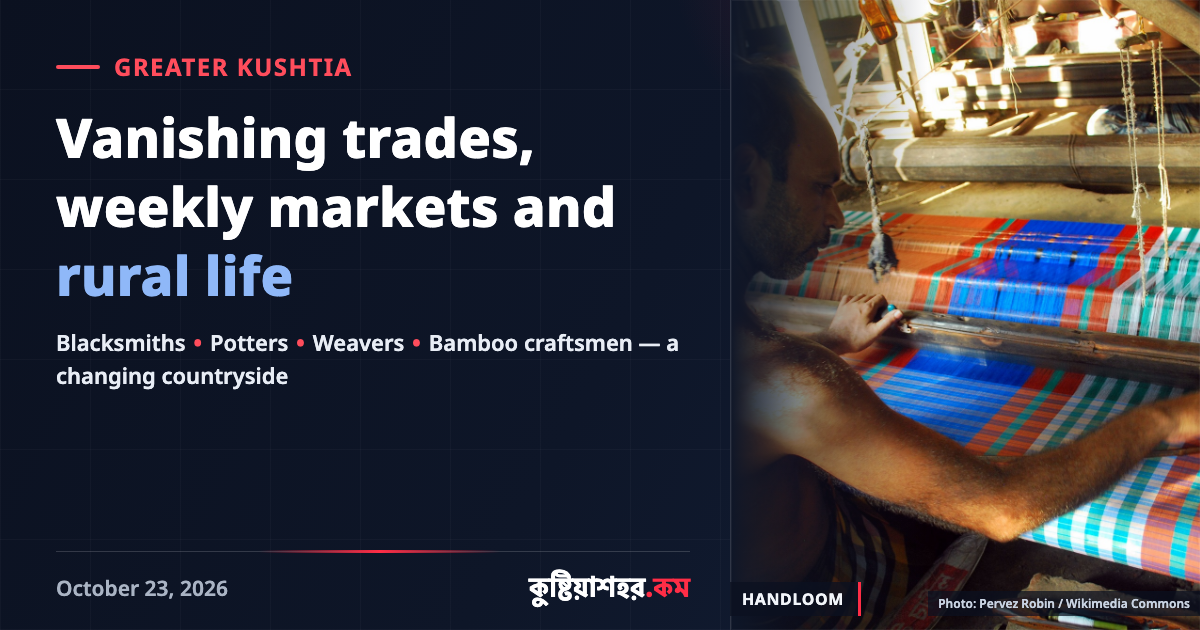
When the traditional trades of Greater Kushtia are discussed, the handloom industry of Kumarkhali must be mentioned specially. Many families earned their living around hand-spinning, weaving cloth, dyeing and producing gamchha towels and lungis.
Once the clatter of looms was a familiar sound in Kumarkhali's weaving quarter. Weavers made cloth, gamchhas, lungis and other textiles; wholesale traders bought these goods and carried them to different parts of the country. Gorai-centred transport and local weekly markets helped this trade grow, as various news reports note.
It was not only weavers who were tied to Kumarkhali's handloom industry. Yarn suppliers, dye makers, cloth merchants, transport workers and wholesale sellers were all part of that economic system. The industry's crisis therefore struck several layers of the local economy.
A 2021 news report recorded rising raw-material prices, electricity problems, lack of patronage and a market crisis in the trade. By that account, of the country's 114,000 handloom workers 50,000 had already left the profession, and the industry's share in meeting the country's demand for coarse cloth had fallen from 63 per cent to 35. Another report in 2024 discussed the craft's heritage and current challenges: Kumarkhali now has about 8,000 power looms and 3,500 pit looms engaging some 85,000 people, while the weekly haat once saw daily transactions of 5–7 crore taka, according to that report.
Handloom weaving still exists in Kumarkhali today. But compared with before, many weavers have changed professions or reduced output. To keep the traditional craft alive, quality products, fair prices, modern marketing, training and the participation of the new generation matter.
The woven gamchha: extraordinary heritage inside an ordinary product
The gamchha is a familiar companion of rural Bengal. Field work, bathing, household use or long journeys — the gamchha served many purposes. Easy to carry and useful in countless ways, its demand was wide.
Kumarkhali's handwoven gamchha once won recognition far beyond the district. Local weavers made many kinds of gamchha based on their own skill and experience. But cheap factory cloth, rising production costs and competition have squeezed the market for the traditional handwoven towel.
A 2023 news report discussed the crisis of Kumarkhali's gamchha industry and the shift out of the profession. By that report, Kumarkhali, Khoksa and Pangsha once had more than 80,000 gamchha weavers and produced cloth worth 260 crore taka a year; today over a hundred families in the upazila still carry on the hereditary trade. Even so, the heritage is not entirely lost. If the weavers' skill, designs and production methods are preserved, the gamchha can win new markets too.
Bamboo-and-cane artisans: the essential makers of village life
Before plastic spread everywhere, bamboo and cane were among the most widely used materials of rural life. Bamboo winnowing trays (kula), dala baskets, jhuri, sieves, mats, tokri, fish containers and duck-and-hen cages were used in almost every village.
Farming — winnowing paddy, drying grain, carrying harvests — and many household tasks needed these goods. Local artisans made products at home or in small workshops. On haat days they sold their own goods, and at times pedlars carried these items from village to village.
Both women and men took part in this trade. Family members joined in splitting bamboo, making strips, weaving and arranging products; it was, in many cases, a family production system.
Today plastic baskets, sieves, containers and other industrial goods have changed the market for bamboo-and-cane items. Raw-material prices, artisans' incomes and the new generation's career choices also affect the craft.
Still, bamboo-and-cane goods are made in various areas. If artisans can produce aesthetic designs, environment-friendly materials and items suited to modern use, the craft may find new promise.
The village haat: a social meeting ground, not just a marketplace
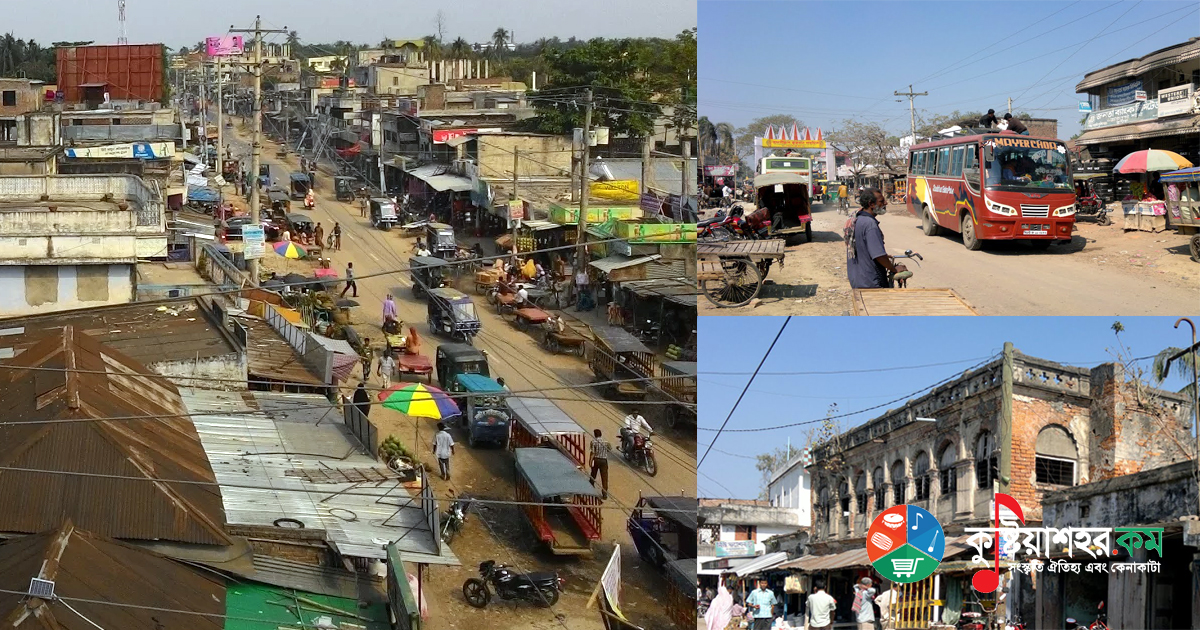
The village haat was never only a place of buying and selling; it was one of the chief centres of communication, exchange of news and the forming of social bonds. Farmers brought their harvests, weavers sold cloth, blacksmiths and potters sat with their wares. Cattle, vegetables, fish, rice, pulses, oil, spices and household goods were also traded.
On haat day people of the surrounding villages gathered in one place. Meeting acquaintances, taking family news, buying new goods and haggling over farm produce — all were part of the haat's social life.
Weekly haats and local markets have long mattered across Greater Kushtia. The 'Rajar Haat' at Borobazar in Kushtia town is a familiar example of this heritage. A bdnews24.com report published on 12 May 2023 states that the haat sits every Sunday and Thursday and is known as an important market for local farmers.
By local accounts, Rajar Haat's tradition is about two hundred years old. The same report notes that the haat is believed to have grown up around Borobazar's Mohini Mill and Rabindranath Tagore's Tagore Lodge; many say trading began on land given by Debendranath Tagore, and the site was later expanded. But the report itself notes that definite information on the haat's founding history is limited. For local histories like this, keeping the difference between oral tradition and documented fact in mind is essential.
Even today many haats trade as before. But better roads, permanent shops, transport, digital transactions and changed supply systems have altered the character of the haat. The market for some goods has shrunk; new products and business opportunities have appeared too.
An agrarian economy and the seasonal trade in crops
In Greater Kushtia's rural life, agriculture was one of the chief foundations of income. The farmer's yearly cycle was built around paddy, jute, wheat, pulses, oilseeds, vegetables and other crops. Labour demand rose with the season, farm labourers found work and the supply of goods in the market shifted.
After harvest, farmers sold their produce at local haats or supplied it to wholesalers. In exchange for farm produce they bought clothing, farm tools, household goods and daily necessities.
Farm work also meant making and repairing ploughs, driving bullock carts, threshing, husking paddy and storing grain — tasks that gave birth to separate professions and skills.
Machine-based farming, modern rice mills, better transport and changed market systems have reduced the need for some old trades. Yet agriculture remains an important foundation of the region's rural economy. What has changed is mainly the method of production, the nature of labour and the system of marketing farm produce.
Rivers, boats and the boatman's life
Rivers and waterways once played a vital role in rural communication and the transport of goods. Before roads reached everywhere, people, farm produce, timber, construction materials and commercial goods moved by river.
The life of many settlements here grew around the Padma, Gorai, Mathabhanga and other rivers. River ghats, boats, boatmen and river-centred markets were tied to the rural economy. Where waterways were effective, going to market or moving goods by boat was a necessity.
The livelihoods of boatmen and those who worked with boats depended on the river's navigability, seasonal flows and the demand for carrying passengers and goods. When a river's course and depth changed, their work changed too.
With the spread of roads, bridges, motor vehicles and modern transport, river transport has lost its former importance in many places. But river-centred life has not vanished entirely. In some areas boats are still used for fishing, local travel and carrying goods.
Husking paddy, the dhenki and household labour
The dhenki — the foot-operated husking lever — was once a familiar fixture of village homes. It was used to turn paddy into rice, grind rice flour and prepare various food ingredients. In many households women were attached to this work. Some tasks were done through family cooperation; before festivals and social occasions the need for rice flour grew.
Later, with husking mills, rice mills and market-sold ready rice becoming easily available, the dhenki's daily use declined. The dhenki has disappeared from many homes, though in some areas it is still seen for traditional or special purposes.
The dhenki was not merely a machine; it was part of the history of rural technology, the division of household labour and food preparation. Collecting elders' reminiscences about such old implements and their use can preserve much unknown information about rural life.
Bullock carts, pedlars and rural mobility
Before motor vehicles spread widely, the bullock cart was a familiar means of moving goods in the countryside. It carried harvests, straw, timber, soil, market goods and household items from one place to another. In farming regions the bullock cart was deeply bound to the farmer's life and the local economy.
Besides, pedlars travelled from village to village selling various goods — cloth, small household items, toys and other necessities. For families far from permanent shops, pedlars were a convenient source of goods.
With the spread of roads, motorcycles, vans, easy-bikes and other vehicles, transport has changed; so has the way goods reach rural markets. The bullock cart's and pedlar's old roles have shrunk, though in some areas they are still seen for traditional or special purposes.
Rural entertainment, fairs and mutual cooperation
Rural life was not built only around professions and markets; entertainment, festivals and social bonds were part of it. Folk songs, Baul songs, palagan narrative performances, jatra theatre, kobigan debates, rural sports and seasonal fairs created occasions of joy in different areas.
Greater Kushtia is specially known for its Baul and folk-music heritage. The songs and philosophy of Lalon Shah are an important part of the region's cultural identity. Village assemblies, akhras and musical gatherings built cultural connections among people. At fairs and festivals local artisans and traders also found chances to sell their goods.
Mutual cooperation had a special role in village society too: helping one another at harvest, joining hands in house-building, taking part in social occasions, standing by neighbours in trouble — such practices were seen in many areas.
Modern communication and changed lifestyles have altered the forms of these social activities. But the heritage of folk music, fairs and cooperation survives in various ways. They cannot be seen merely as things of the past; they are part of today's cultural identity as well.
Why are traditional trades vanishing or shrinking?
Several factors have driven the change in Greater Kushtia's traditional trades. Not every trade shrank for the same reason, but a few common threads stand out.
1. Competition from modern goods: plastic, melamine, factory-made cloth and machine-made goods are in many cases easily available and comparatively cheap, pressuring the market for handmade products.
2. Rising production costs: when the prices of iron, yarn, fuel, transport and other raw materials rise, small artisans find it hard to produce profitably.
3. Lack of fair prices and market links: artisans often do not receive the proper value of their products. Middlemen, weak marketing systems and changing consumer demand affect their incomes.
4. The new generation leaving the trade: when income in a traditional trade becomes uncertain, the young turn to alternative employment; the family's old skills do not always pass to the next generation.
5. Technological and lifestyle change: with farm machinery, modern transport, rice mills and industrial goods in wider use, the need for some old trades has declined.
But before declaring any profession extinct, its present state must be verified. Many trades still survive — though the volume of their work, their markets and their social weight are less than before.
What can be done to preserve this heritage?
Several initiatives could matter in preserving the history of Greater Kushtia's vanishing trades and rural life.
First, interviews with elderly artisans, weavers, blacksmiths, potters, boatmen, farmers and haat traders need to be collected. Documenting their working methods, tools, market experiences and family histories would preserve valuable information for future generations.
Second, photographs and descriptions of old markets, artisan quarters, workshops, river ghats and traditional implements can be collected — the basis for a digital archive or a local history collection.
Third, traditional products must be connected to the modern market. Handloom textiles, handmade gamchhas, pottery and bamboo-and-cane goods can reach new customers through quality design, online marketing and proper pricing.
Fourth, regional history collection can involve local schools, cultural organisations, researchers and the media. That would preserve not only the history of trades but also local language, folklore, songs, food habits and social customs.
Conclusion: to know the past is to know one's roots
The vanishing trades, markets and rural life of Greater Kushtia remind us that a region's history is not made only of politics, famous individuals or big institutions. The lives of ordinary farmers, weavers, blacksmiths, potters, bamboo artisans, boatmen, pedlars and haat traders are an inseparable part of that history too.
With time, people's needs have changed, technology has changed, markets have changed. Some trades have shrunk; others are searching for new ways to survive. Seeing this change only as a story of loss will not give the full picture of history — within it are also people's innovation, adaptation and the struggle to endure.
To know Greater Kushtia's past properly requires combining local people's memories, old documents, photographs, news reports and research. Collecting the stories of vanishing trades, documenting the history of old haats and presenting the changes of rural life are an important duty of preserving our cultural heritage.
For the society that preserves the history of its own past labour, skill and ways of living is the society that can give future generations the chance to know their roots.
Sources and further reading
- Daily Inqilab (26 April 2019) — Blacksmith craft on the way to extinction: old.dailyinqilab.com/article/202116
- Ajker Patrika (28 October 2021) — Handloom heritage is fading: ajkerpatrika.com/epaper/ajpgjcra9lnnk
- Desh Rupantor (23 March 2024) — Handloom losing its glory: deshrupantor.com/amp/498151
- Bangladesher Khabor (22 April 2025) — Pottery gasping, Kushtia's potters in survival crisis: bangladesherkhabor.net/country/15498
- bdnews24.com (12 May 2023) — Kushtia's heritage 'Rajar Haat': bangla.bdnews24.com/hello/cjl8itu063
- Daily Sangram (28 October 2023) — Kumarkhali's heritage gamchha industry in crisis: dailysangram.com/bangladesh/country-news/539319
- Cover photo: Pervez Robin / Wikimedia Commons (CC BY-SA 4.0)