বাংলা
 English
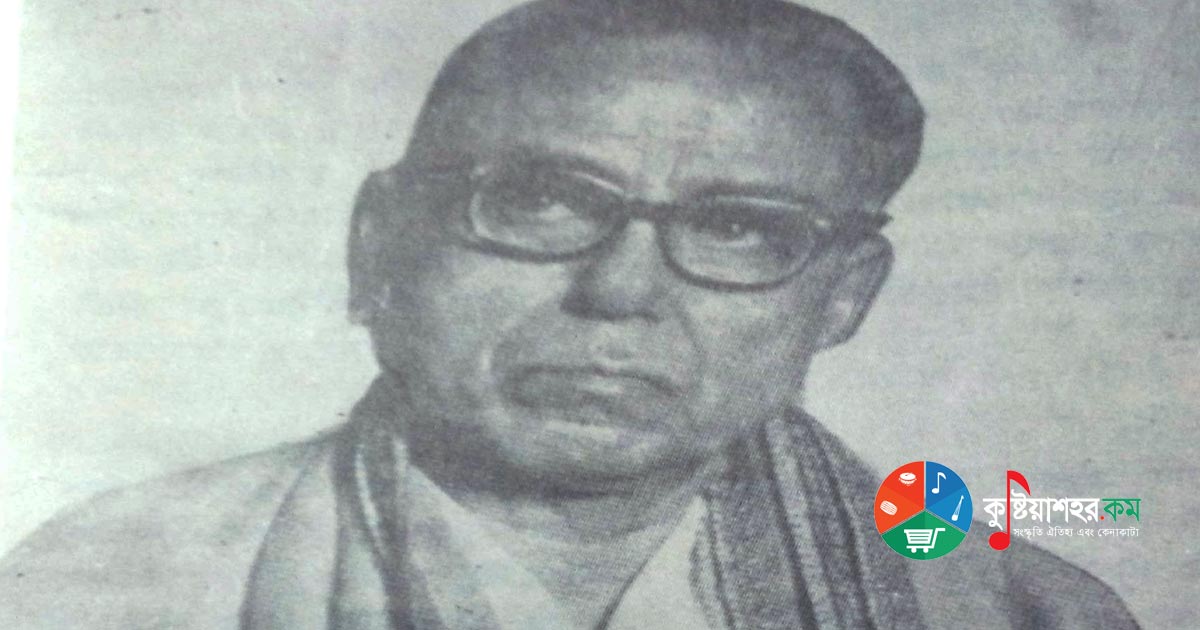
A poor boy born in Kundupara village on the banks of the Gorai at Kumarkhali went on to become, with his pen and his songs alone, the father of two Bengali traditions at once — mofussil or rural journalism, and a distinct school of Baul song. He is Kangal Harinath Majumdar: founding editor of Grambarta Prakashika, owner of the first printing press of eastern Bengal outside Kolkata, a follower of Fakir Lalan Shah, and the literary guru of Mir Mosharraf Hossain, the first Muslim novelist of Bengali literature.
Childhood poverty earned him the epithet 'Kangal' (destitute); yet this destitute man gave nineteenth-century Bengal fearless reports of indigo-planter and zamindar oppression, nearly a thousand Baul songs, and a press from which the songs of Lalan — and even Bishad Sindhu — were printed for the first time. Here is the complete life-story of Kumarkhali's great son, together with the present condition of his memorial museum.
A Childhood in Poverty
Kangal Harinath Majumdar was born in 1833 in Kundupara village by the Gorai river at Kumarkhali (then in Nadia district). On the birth date two traditions prevail — most sources write 22 July, while Prothom Alo gives 20 July. His father was Harchandra Majumdar (Haldar in some accounts) and his mother Kamlini Devi; he was their only child. Losing his mother within a year of birth and his father at seven, he grew up in deep poverty in the care of near relatives, on boiled rice, colocasia leaves and salt. At twelve he took a job in a cloth shop in the Kumarkhali bazaar for a monthly wage of two paise, then worked as an accounts apprentice at an indigo factory — the head office, it is said, of some fifty-one indigo kuthis. Witnessing the oppression of peasants at the hands of the planters, he gave up the job; that indigo-kuthi experience would return as the very soul of both his writings and his newspaper.
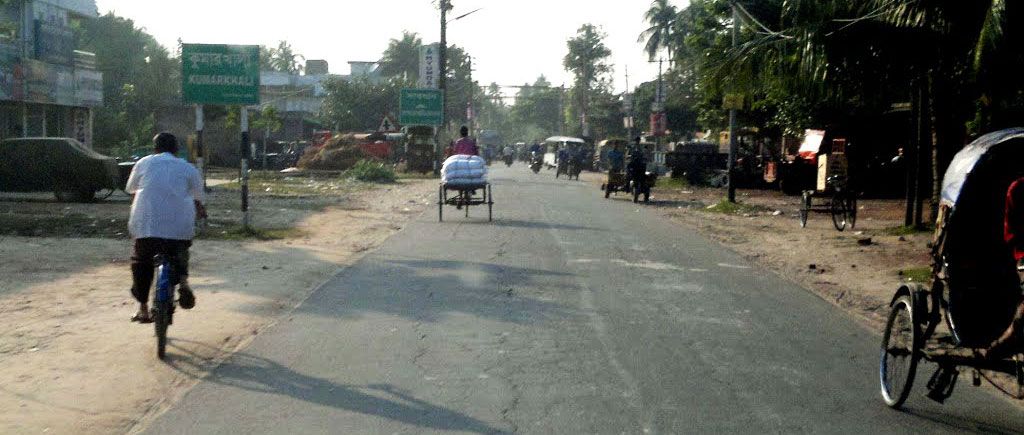
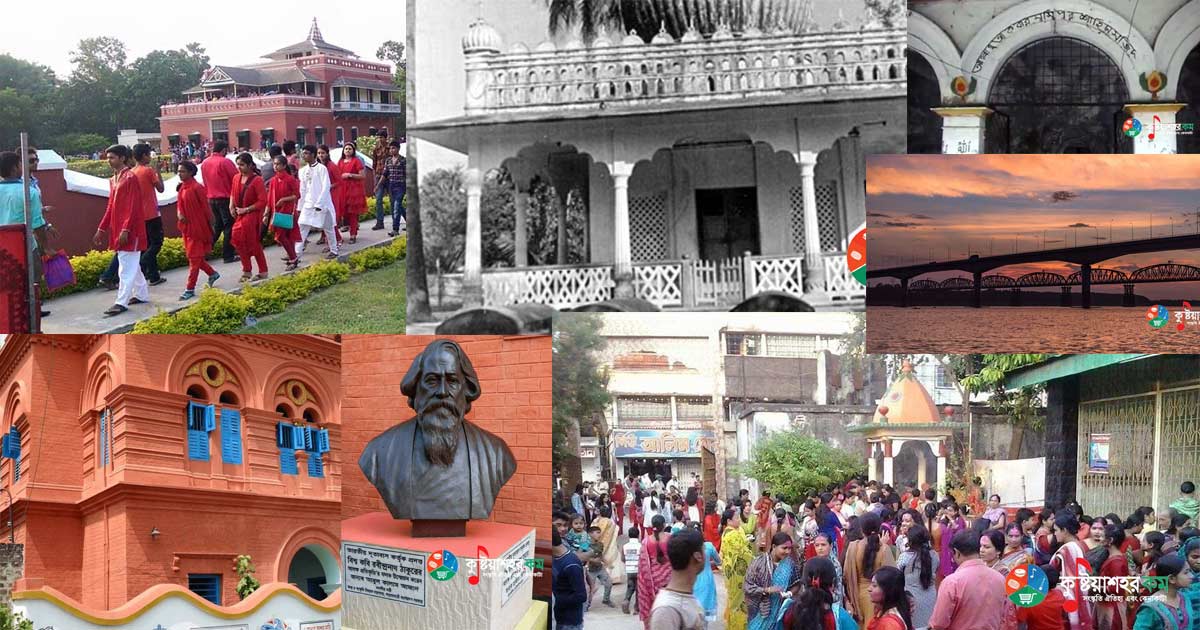
Kumarkhali — Kangal Harinath's birthplace and workplace (photo: kushtiatown.com)
Education and Teaching Without Pay
He had a brief schooling in a local English school run by Krishnanath Majumdar before poverty ended it. According to Banglapedia, from the Brahmo preacher Dyalchand Shiromoni he learned Bangla grammar, Tattwabodhini and Betal Panchabinsati — self-education was his real schooling. On 13 January 1855, helped by friends (Gopal Kundu, Jadab Kundu, Gopal Sanyal), he opened a vernacular school in his own village and taught there without pay. Barely two years later, on 23 December 1856, a girls' school opened with Krishnanath Majumdar's cooperation — the present Kumarkhali Pilot Girls' High School; in the account of Bangla Tribune and Prothom Alo it was the first female-education institution of eastern Bengal, and Harinath was its first teacher. Sources do differ slightly on who founded the girls' school.
At this very school the future celebrated historian Akshaykumar Maitreya began his education — the English Banglapedia notes that Maitreya started his schooling at Kumarkhali under the exemplary Harinath Majumdar. Teacher, then journalist; poet, then Baul — the seeds of that extraordinary shift were sown here.
Grambarta Prakashika: The Father of Mofussil Journalism
His writing began in Ishwar Chandra Gupta's Sangbad Prabhakar. Then, in April 1863, his own paper 'Grambarta Prakashika' appeared from Kumarkhali — first a monthly (five annas for four pages), a fortnightly from 1864, and a weekly priced at one paisa from 1871. Printing began in Kolkata; soon it came down to Kumarkhali itself. For carrying news of the state administration, planters, landlords and mofussil society to village readers through their own pen, Kangal Harinath entered history as the father — or pioneer — of mofussil and rural journalism. One incident testifies to the courage of his reporting: he published a report on the then magistrate of Pabna, Humphrey, under the very headline 'গরুচোর ম্যাজিস্ট্রেট' — 'the cattle-thieving magistrate'.
Between intimidation by planters and landlords and the government's strict printing laws, the paper ran for eighteen years, sustained partly by the patronage of Rani Swarnakumari Devi of Rajshahi. Finally, in financial distress, Grambarta Prakashika closed in Ashwin 1292 BS (1885).
The Mathuranath Press: First Press Outside Kolkata
The greatest institution of this journalistic dream was the printing press. The Mathuranath Press rose in Kumarkhali in 1864; in 1873 it gave way to the 'MN Press'. Two accounts tell of its founding: Mathuranath Maitreya (father of Akshaykumar Maitreya) donated the press to Harinath, or — with Maitreya's financial help — Harinath himself set it up in memory of his late friend Mathuranath Majumdar. In Prothom Alo's account the machine came from London's Climax (Columbia Dixon) company — model 1706, manufactured in 1867 — bought at auction for 600 taka with Rani Swarnakumari's patronage. At the time there was no printing press in Bengal outside Kolkata; this was the first press of eastern Bengal.
Here lies the most important link of this press with Kushtia's cultural history: about twenty-one songs of Fakir Lalan Shah — including 'Khanchar Bhitar Achin Pakhi' — were printed on paper for the first time at this very MN Press. And the first printing of Mir Mosharraf Hossain's Bishad Sindhu also happened here; some accounts even say Mir sat inside the press building and wrote portions of it. In 1971 the Kundupara Kangal Kutir and press building were damaged by bombardment from Pakistani forces.
The Literary Career: Eighteen Printed Books
Banglapedia lists eighteen printed works of Kangal Harinath. The notable ones: Bijoybosonto (1859), Charuchoritro (1863), Kobitakoumodi (1866), Bijoya (1869), Kobikalpo (1870), Okruro Sombad (1873), Sabitri Natika (1874), Chittochopola (1876), Kangaler Brahmandobed (1887–95) and, from his last years, Motrimohima (1896); after his death came Horinath Groonthaboli (1901). He used the bhanita 'Kangal' in his songs — childhood destitution and this epithet together attached the word 'Kangal' to his name.
The Kangal Fakir Sur Sampraday and Baul Song
Kangal Harinath belonged to the follower-community of Fakir Lalan Shah. In 1880 (Ashwin-era 1287 BS), inspired by Akshaykumar Maitreya, he founded the 'Kangal-Fikirchand's group' — known in popular usage as the Kangal Fakir Sur Sampraday. Under the bhanita 'Fakirchand Baul' he composed close to a thousand songs; according to Banglapedia his Gitaboli appeared in sixteen volumes (1290/93–1300 BS). Later his son Satishchandra Majumdar and Jaldhar Sen published separate compilations.
His most famous song still lives on every Bengali's lips — "Hori din to gelo, sondha holo, par koro amare" (The day is spent, evening has come, ferry me across) — the very song used in Satyajit Ray's film Pather Panchali; his 'Dokani Bhai Dokan Sar Na' was recorded as early as 1940. Popular tradition holds that Lalan Shah, hearing Harinath's songs, remarked: "তোমার এ ব্যঞ্জন বেশ হইয়াছে, তবে নুনে কিছু কম আছে" — "Your flavour has come off well, only it lacks a little salt." Akshaykumar Maitreya wrote of his teacher: "এমন যে হইবে তাহা ভাবি নাই। এমন করিয়া যে দেশের জনসাধারণের হৃদয়তন্ত্রীতে আঘাত করা যায়" — "I never imagined one could strike the heart-strings of a nation's common people like this." And in Jaldhar Sen's words, Harinath became known across eastern Bengal, "to children, the old and women alike, purely through his Baul songs."
The Literary Guru of Mir Mosharraf Hossain
It was through Grambarta Prakashika that Mir Mosharraf Hossain — the first Muslim novelist of Bengali literature — began his literary career, as the paper's mofussil correspondent. Banglapedia states directly that the direct inspiration and patronage behind Mir's literary life came principally from Grambarta's editor, Kangal Harinath of Kumarkhali. Mir himself wrote in his autobiography: "হরিনাথবাবু মহাশয় আমাকে কনিষ্ঠ ভ্রাতার ন্যা স্নেহ করিতেন" — "Harinathbabu loved me like a younger brother." The first printing of Bishad Sindhu, too, was done at Harinath's MN Press. This guru-shishya bond of Kumarkhali is one of the finest chapters of the greater Kushtia literary history — our feature on Mir Mosharraf Hossain carries the other side of the story.
In Rabindranath's Eyes
Rabindranath Tagore did not miss Harinath's work: according to a first-hand Prothom Alo account, Tagore read Harinath's two-thousand-page diary, and on the evidence of Sureshchandra Maitra's 'Bangla Kobitar Nobojonmo', Kangal's Baul songs touched Rabindranath too. Another popular legend says Tagore once sent lathials to bring Harinath to the Shilaidaha kuthibari — but as bdnews24 itself notes, this story is historically disputed. It must be taken, therefore, as folk tradition.
The Last Days and Death
His final years were poorer than ever. On 16 April 1896 (5 Baishakh 1303 BS, Akshay Tritiya) he died — Prothom Alo's account places his death on a Thursday afternoon at the Kangal Kutir; some infoboxes give 18 April, but 16 April is Banglapedia's accepted date. His last wish was that the cremation be left incomplete, preserving the little, ring and index fingers of his hand with the ashes, to be enshrined in the household shrine; that shrine still stands at his Kundupara homestead. On his death the Indian Mirror mourned: "নদীয়া জেলাবাসী আজ তাঁদের একজন অত্যন্ত মহান ও নিঃস্বার্থ সুসন্তানকে হারাল" — "The people of Nadia district have today lost one of their greatest and most selfless sons."
The Memorial Museum Today
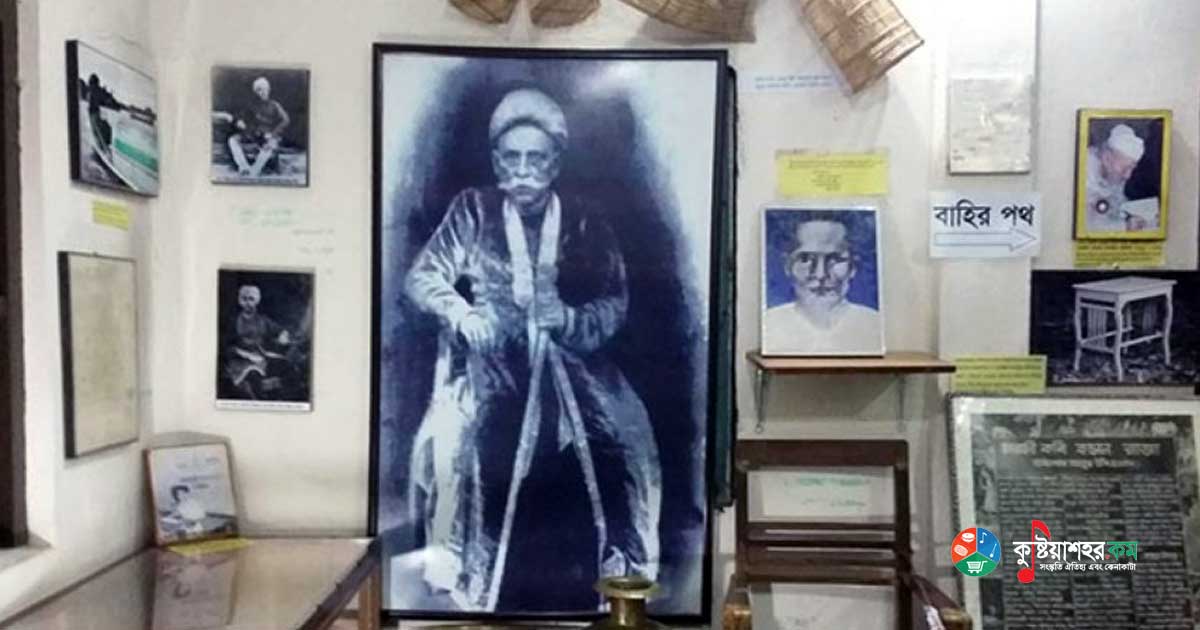
Inside the Kumarkhali municipality stands the Kangal Harinath Smriti Jadughar — opened to visitors on 9 December 2017 as a branch of the Bangladesh National Museum under the Ministry of Cultural Affairs. On about twenty-eight decimals of land, its single gallery holds some 170 artefacts. Its most treasured exhibit, however, is the historic MN Press machine itself: on 16 July 2023 the National Museum bought it from the descendants (for 2 million taka and two jobs), and on his 190th birth anniversary — 20 July 2023 — the press went on public display at the museum.
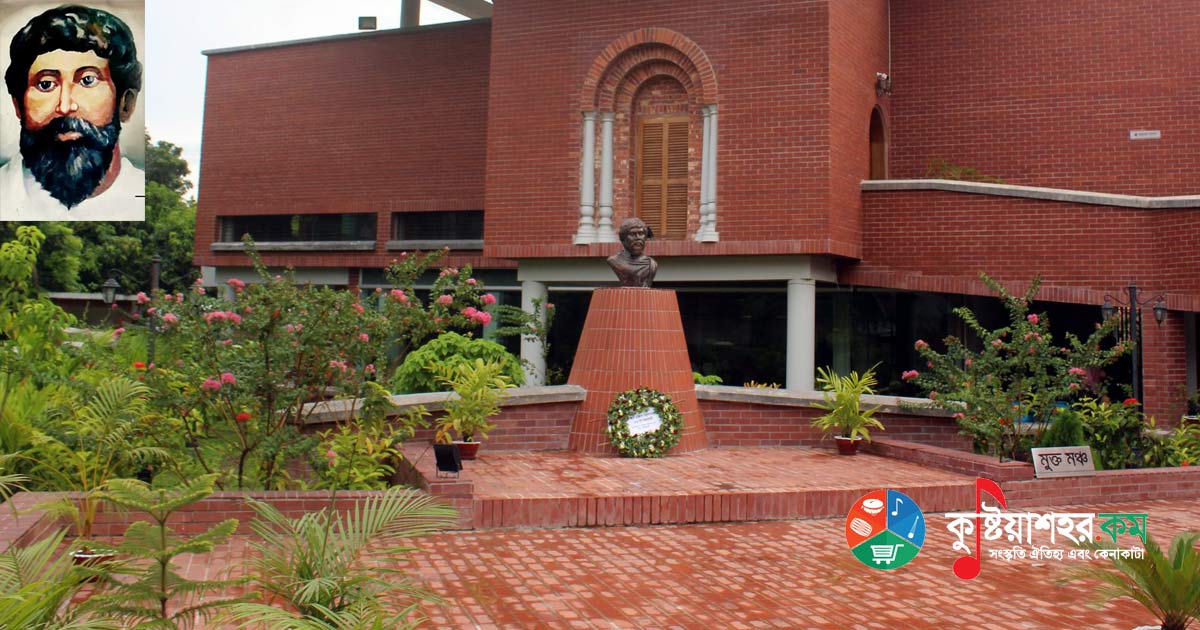
Kangal Harinath Memorial Museum, Kumarkhali — with his bust in front (photo: kushtiatown.com)
Yet the institution has been running short of care — recent years have seen headlines like 'জনবল সংকটে ধুঁকছে কাঙাল হরিনাথ স্মৃতি জাদুঘর' (the museum is gasping amid staff shortage) and 'মুছে যাচ্ছে কাঙাল হরিনাথের স্মৃতি' (the memory of Kangal Harinath is fading) in several papers (Jugantor, Bonik Barta and others, 2025–26). Reports of no state observance on his death anniversary have also appeared. The Kangal Kutir, the MN Press building and the shrine at Kundupara still bear the marks of the same old neglect.
Conclusion
In one life Kangal Harinath Majumdar played four roles — unpaid teacher, pioneer of mofussil journalism, owner of eastern Bengal's first press, and creator of nearly a thousand Baul songs. The pen of his newspaper's first mofussil correspondent produced Bishad Sindhu, and from his press the songs of Lalan were first printed — the more one learns, the more one marvels at how many threads of Kushtia's cultural history are tied to this one poor man of Kumarkhali. The museum at Kumarkhali needs care, the memorials at Kundupara need care — but larger than both is this: as long as his songs keep passing from mouth to mouth, Kangal Harinath will never let any of us go without being ferried across.
Sources and Further Reading
- Banglapedia — "Harinath, Kangal" (Shipra Dastidar): en.banglapedia.org
- Banglapedia (Bangla) — "হরিনাথ, কাঙাল": bn.banglapedia.org
- Banglapedia (English) — "Grambarta Prakashika": en.banglapedia.org
- Bangla Wikipedia — গ্রামবার্ত্তা প্রকাশিকা: bn.wikipedia.org
- Bangla Wikipedia — কাঙ্গাল হরিনাথ স্মৃতি জাদুঘর: bn.wikipedia.org
- Prothom Alo — "কাঙ্গাল হরিনাথের জীবন ও সংগ্রাম" (2026): prothomalo.com
- Prothom Alo — "প্রেস সংরক্ষণের অপেক্ষায় কাঙ্গাল হরিনাথ" (July 2023): prothomalo.com
- Prothom Alo — first-hand essay (2022): prothomalo.com
- bdnews24 Bangla — feature on Kangal Harinath: bangla.bdnews24.com
- Daily Star Bangla — "গুরু কাঙ্গাল হরিনাথ": bangla.thedailystar.net
- Kali O Kalom — "কাঙাল হরিনাথ: বাউলগানের অনন্য সাধক": kaliokalam.com
- The Report — "মফস্বল সাংবাদিকতার জনক কাঙাল হরিনাথ": bn.thereport.live